
Psychiatric Evaluation for Cannabis-Induced Psychosis in Los Angeles: A 2026 Clinical Guide
What if the terrifying "bad trip" your loved one is experiencing isn't just a temporary reaction to a high-potency edible, but a critical diagnostic window that could determine their mental health for years to come? You’re likely feeling a paralyzing mix of confusion and fear as you watch someone you care about drift into a reality you don’t recognize. In a city where 2026 potency levels have reached unprecedented highs, it's natural to worry about permanent brain damage or wonder if this episode marks the beginning of a lifelong struggle. You aren't alone in this uncertainty, and your fear is a valid response to a complex clinical crisis.
This guide will show you exactly how to navigate this moment with clarity and hope. You'll learn what a professional evaluation for cannabis induced psychosis Los Angeles specialists provide to ensure your family finds a path back to stability. We'll preview the specific diagnostic steps used by experts to distinguish temporary symptoms from emerging disorders, identifying the "conversion gap" where intervention is most effective. By understanding this process, you can move past the uncertainty of local dispensaries and access the specialized, non-rehab care needed to protect your loved one’s future.
Key Takeaways
- Understand why 2026 THC concentrations require specialized diagnostic expertise to distinguish between acute drug effects and emerging primary thought disorders.
- Learn the exact clinical steps involved in a professional evaluation for cannabis induced psychosis Los Angeles specialists use to provide a clear differential diagnosis.
- Discover the significance of the "conversion gap" and how identifying specific neurobiological markers can help prevent a transition to chronic schizophrenia.
- Find out how to prepare essential documentation and behavioral timelines to help your clinical team build a precise history of the episode.
- See how specialized outpatient programs move beyond the initial diagnosis to restore normalcy through supported education and social rehabilitation.
What is a Psychiatric Evaluation for Cannabis-Induced Psychosis?
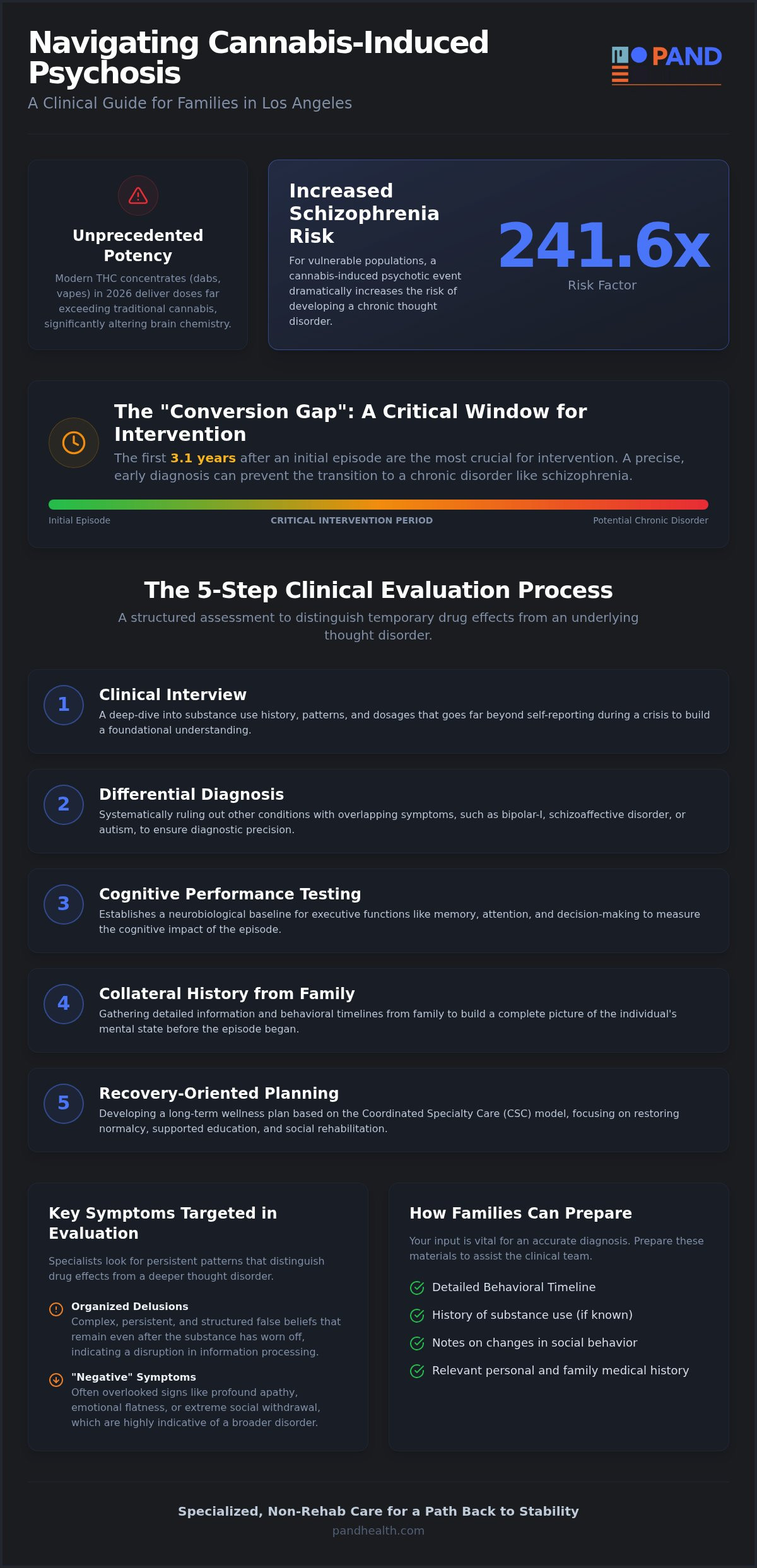
In the 2026 clinical landscape, the stakes are exceptionally high. Research indicates that the first 3.1 years following an initial episode, known as the "median window," are the most critical for long-term recovery. Intervening during this period can drastically change a person's life trajectory, preventing the chronic decline often associated with untreated psychosis. Getting a precise diagnosis early is the only way to ensure the treatment plan matches the actual condition.
The Role of High-Potency THC in 2026
The cannabis landscape in Los Angeles has shifted dramatically. Modern concentrates, such as dabs and high-purity vapes, deliver THC levels that far exceed traditional flower. These products don't just produce a stronger high; they alter brain chemistry in ways that significantly increase the risk of substance-induced psychosis. Clinical data suggests a staggering 241.6x risk factor for developing schizophrenia following a cannabis-induced event in certain vulnerable populations. For Los Angeles residents, the sheer availability of these potent products makes expert diagnostic oversight a necessity rather than an option.
Key Symptoms Targeted During Evaluation
During the evaluation, specialists look for specific markers that distinguish acute drug effects from more "organized" delusional thinking. While simple paranoia might fade as the drug leaves the system, organized delusions are often more complex and persistent. Evaluators also assess "negative symptoms," such as profound apathy or social withdrawal, which are often overlooked but highly indicative of a broader struggle. In this context, a thought disorder is defined as a persistent disruption in the way a person processes information and perceives reality, leading to fragmented logic and a breakdown in communication. By identifying these patterns early, families can move toward a clear diagnostic path and specialized care.
The Evaluation Process: What to Expect in a Los Angeles Clinic
The journey toward stability begins with a structured, multi-phase clinical assessment. When seeking an evaluation for cannabis induced psychosis Los Angeles families should expect more than a simple intake form. Our process is designed to peel back the layers of the crisis, moving from immediate symptom management toward a clear understanding of the thought disorder underneath. This methodical approach ensures that no detail is overlooked during a highly stressful time.
- Step 1: Clinical Interview. This initial session involves a deep dive into substance use history that goes beyond what a patient might self-report during a crisis.
- Step 2: Differential Diagnosis. We work to rule out other conditions such as bipolar-I, schizoaffective disorder, or autism, which can sometimes present with overlapping symptoms.
- Step 3: Cognitive Performance Testing. This establishes a vital baseline for executive function, helping us understand how the neurobiology of cannabis and psychosis has impacted memory, attention, and decision-making.
- Step 4: Collateral History. We gather detailed information from family members to build a complete picture of the individual's baseline before the episode began.
- Step 5: Recovery-Oriented Planning. Finally, we develop a plan based on the Coordinated Specialty Care (CSC) model, focusing on long-term wellness and community reintegration.
Clinical vs. Biochemical Assessment
While urine toxicology provides a snapshot of recent use, it's only the beginning of a thorough evaluation. A true assessment monitors how symptoms persist or evolve once the substance has cleared the system. We use validated metrics like the Brief Psychiatric Rating Scale (BPRS) and the Positive and Negative Syndrome Scale (PANSS) to track progress objectively. This data-driven approach allows us to adjust care in real-time. If you're feeling overwhelmed by the diagnostic process, you can reach out for specialized guidance to find a clear path forward.
The Importance of Collateral Information
Family members act as essential co-evaluators because they often notice the "prodromal" signs. These are the subtle shifts in personality or social withdrawal that may have occurred before cannabis use even began. Identifying these patterns is key to successful Social Skills Training in Los Angeles, as it allows us to tailor social rehabilitation to the person's unique history and strengths. By combining clinical data with your lived experience, we create a more accurate and hopeful diagnostic picture.
Understanding the 'Conversion Gap' and Schizophrenia Risk
The "conversion gap" refers to the critical timeframe between an initial substance-induced event and the potential onset of a chronic schizophrenia-spectrum disorder. Clinical data indicates a 47.4% transition rate in young adults, meaning nearly half of those who experience a cannabis-induced episode will eventually face a primary psychotic diagnosis. During a specialized evaluation for cannabis induced psychosis Los Angeles clinicians identify specific markers of executive dysfunction that signal this risk. These neurobiological markers, such as deficits in working memory or processing speed, often persist even after THC has left the system, providing a diagnostic window into the person's long-term vulnerability.
Early intervention during the first episode is not just about symptom relief; it effectively determines the next 30 years of a patient's life. By catching symptoms in the prodromal phase, the period of subtle decline before a full break, we can implement protective strategies. This is why a formal diagnosis based on Cannabis-Induced Psychotic Disorder according to DSM-5 is so vital. It provides a clinical roadmap for intervention before the "conversion" becomes permanent, shifting the focus from crisis management to long-term stability.
Predictors of Diagnostic Transition
Several variables influence whether a cannabis-induced event will evolve into a chronic condition. The age of onset is a primary factor, as the developing adolescent brain is uniquely vulnerable to the high-potency THC products found in Los Angeles dispensaries. Frequency of use and genetic predisposition also play significant roles in determining relative risk. While we can't change genetics, we can address the environmental triggers that exacerbate symptoms in a high-stress urban environment. Adopting a "wait and see" approach during a psychotic episode is a dangerous clinical strategy that allows neurobiological damage to consolidate rather than heal.
Cognitive Remediation as a Preventive Tool
Recovery is the expectation when we use the right clinical tools during the conversion window. Cognitive remediation, which involves computer-assisted brain training, helps "protect" the brain by strengthening neural pathways weakened by psychosis. This isn't just mental exercise; it is a clinical intervention that improves executive function and daily living skills. We combine these APA-recommended protocols with high-intensity coaching and physical fitness to support overall brain health. As the only Southern California program with certified Metacognitive Training instructors, we focus on the thought disorder underneath the drug use. This comprehensive evaluation for cannabis induced psychosis Los Angeles residents receive at our West Olympic Blvd clinic ensures the brain is treated as a dynamic, healing organ capable of full restoration.
Preparing for Your Evaluation: A Guide for Families
Preparing for a psychiatric evaluation for cannabis induced psychosis Los Angeles families often find themselves in a state of high alert. You are the most important historian in this process. Your observations provide the clinical context that a patient in crisis might not be able to share. By organizing your observations now, you help the clinical team move quickly from uncertainty toward a stable treatment path.
Start by gathering a clear timeline of events. When did the cannabis use increase, and when did the first subtle behavioral shifts occur? Document any previous ER visits or the length of any inpatient stays. This data helps the psychiatrist determine if the symptoms are substance-exclusive or indicative of a primary thought disorder. During the evaluation, don't hesitate to ask specific questions about the diagnostic transition risk and how the team plans to bridge the "conversion gap" mentioned earlier. Understanding insurance is also vital. Many specialized psychosis programs operate as out-of-network providers, so check your benefits for "out-of-network mental health coverage" to understand how to access this premium level of intervention.
What to Bring to the Clinic
Bring a comprehensive list of current medications and any history of adverse reactions to substances. School or work performance records are equally invaluable. These records help us assess "functional decline," which is a key metric in identifying the thought disorder underneath the drug use. If the individual has seen other therapists or school counselors, having their contact information allows for a more holistic review of their baseline. This level of detail ensures the evaluation for cannabis induced psychosis Los Angeles specialists conduct is as precise as possible.
Navigating the Los Angeles Mental Health System
Many families in Southern California get stuck in standard "dual diagnosis" programs. These programs often focus heavily on addiction but fail to treat the underlying cognitive and thought disorders. For lasting recovery, you need a Coordinated Specialty Care (CSC) program like California OnTrack for Teens or Adults. These models are designed specifically for early intervention, providing a lifeline when other avenues have failed. If you're ready to move beyond the crisis and start the journey toward stability, you can Contact Pand Health for immediate intake questions.
The Pand Health Approach: Recovery Beyond the Diagnosis
At Pand Health, we view a psychiatric evaluation for cannabis induced psychosis Los Angeles families undergo not as a final label, but as a vital gateway to restoration. Our clinical model is built on the augmented Coordinated Specialty Care (CSC) framework. This approach moves beyond the "wait and see" strategy often found in traditional settings, focusing instead on the thought disorder underneath the substance use. By addressing the cognitive shifts caused by high-potency THC, we help individuals reclaim their logic and their lives.
Our results reflect this commitment to functional recovery. Between 2022 and 2024, participants in our programs achieved an 85% employment or education participation rate within six months of enrollment. Most strikingly, our specialized intervention has seen rehospitalization rates drop to just 6%, a significant contrast to the 50% rate typically seen prior to enrollment. These outcomes are possible because we treat the brain as a dynamic organ capable of healing when provided with the right clinical environment.
We integrate the SEE Curriculum (Supported Education and Employment) directly into the recovery process. This ensures that a diagnosis doesn't mean a pause in a young adult's future. Alongside this, we utilize Metacognitive Training (MCT) to help patients identify and correct "thinking errors." These are the cognitive biases, such as jumping to conclusions, that cannabis can exacerbate. By sharpening these mental tools, we provide a defense against future episodes and the conversion to chronic conditions.
The Only Outpatient CSC Program of its Kind in LA
Located at 11500 W. Olympic Blvd, our clinic serves as a specialized hub for Southern California families. We are the only program in the region featuring certified MCT instructors, ensuring the highest level of clinical fidelity in our cognitive remediation efforts. Our "Clubhouse Model" provides a supportive social environment where young adults can practice social skills in a real-world setting. This social rehabilitation is essential for overcoming the apathy and withdrawal that often follow a psychotic break.
Where Recovery is the Expectation
We believe that managing symptoms is only the beginning. Our true goal is functional restoration, where the individual returns to their community with confidence and purpose. To support this journey, we offer family psychoeducation through resources like the Mind Exposed Podcast, helping loved ones understand the science of the recovery process. If you are ready to move from crisis to a clear path forward, you should schedule a comprehensive psychiatric evaluation today to begin the healing process.
Taking the First Step Toward Functional Recovery
The journey from a cannabis-induced crisis to long-term stability requires more than just abstinence; it demands a precise clinical roadmap. By identifying the thought disorder underneath the drug's effects during the critical conversion gap, we can prevent a temporary episode from becoming a lifelong struggle. As the only Southern California program with certified MCT instructors, we focus on restoring the cognitive tools needed for a successful, independent life. We don't just manage symptoms; we rebuild the foundation for a meaningful future.
Our results reflect the profound impact of this specialized intervention. We've seen an 85% participation rate in school and work after six months, alongside an industry-leading 6% rehospitalization rate. You don't have to navigate this storm alone. You can schedule a specialized psychiatric evaluation for cannabis-induced psychosis at our Los Angeles clinic to begin the restoration process. A professional evaluation for cannabis induced psychosis Los Angeles families trust is the first step in turning fear into a definitive plan. Recovery is not just a possibility; it's the expectation.
Frequently Asked Questions
How long does a cannabis-induced psychosis evaluation typically take?
An initial evaluation for cannabis induced psychosis Los Angeles specialists perform typically takes between 90 minutes and two hours for the clinical interview. Reaching a definitive diagnosis often requires a few weeks of observation to see how symptoms evolve after THC has cleared the system. This period allows our team to establish a clear baseline and determine if the episode was an isolated event or the start of a broader thought disorder.
Can a psychiatrist tell the difference between drug-induced psychosis and schizophrenia?
Yes, a psychiatrist uses differential diagnosis to distinguish between substance-induced symptoms and schizophrenia-spectrum disorders. The primary indicator is the duration and nature of the symptoms once the person is sober. If hallucinations or organized delusions persist beyond the acute intoxication phase, it suggests an underlying vulnerability. We utilize standardized tools like the PANSS scale to track these patterns with clinical precision and objective data.
Is cannabis-induced psychosis permanent, or will it go away if they stop using?
Cannabis-induced psychosis can be temporary, but it often serves as a critical warning sign for future mental health challenges. While symptoms may fade with abstinence, the underlying neurobiological impact can persist. This is why immediate intervention is vital to protect executive function. About half of young adults who experience these episodes may eventually face a chronic diagnosis without specialized early-intervention care and targeted cognitive remediation.
What is the 'conversion rate' for young adults in Los Angeles?
The conversion rate for young adults experiencing cannabis-induced psychosis is approximately 47.4% according to current clinical research. This means nearly half of those affected will transition to a schizophrenia-spectrum disorder within a few years. In Los Angeles, the high potency of available THC products in 2026 makes this "conversion gap" a particularly high-risk window that requires expert diagnostic monitoring to prevent long-term functional decline.
Does insurance cover specialized psychiatric evaluations for psychosis?
Many specialized psychiatric evaluations for psychosis are covered under out-of-network mental health benefits, though specific coverage varies by provider. At Pand Health, we operate as a private-pay clinic to maintain the highest standard of specialized care and clinical fidelity. We recommend families contact their insurance carrier to ask about "out-of-network behavioral health" reimbursement rates for initial psychiatric assessments and ongoing Coordinated Specialty Care (CSC) programs.
What happens if my child refuses to participate in the evaluation?
If your child refuses an evaluation, we focus on family psychoeducation and non-confrontational engagement strategies to build trust. We understand that paranoia and fear are often part of the condition, making traditional interventions feel threatening. By involving the family early, we can create a supportive environment that eventually allows the individual to feel safe enough to participate in their own recovery and long-term functional restoration.
Why is Pand Health different from a standard drug rehab center?
Pand Health differs from standard rehab centers because we prioritize the thought disorder underneath rather than focusing solely on addiction. While rehabs center on sobriety, our evaluation for cannabis induced psychosis Los Angeles model addresses cognitive remediation and Metacognitive Training (MCT). We treat the neurobiological impact on the brain, helping patients correct thinking errors and regain the executive function necessary for school and work.
What is the California OnTrack program for teens and adults?
California OnTrack is a Coordinated Specialty Care (CSC) program designed for teens and adults experiencing their first episode of psychosis. It is an evidence-based model that combines psychiatric care, family therapy, and supported education and employment. Unlike traditional outpatient care, it provides a dedicated team focused on functional recovery, ensuring that young people can return to their lives with the social and cognitive skills they need to thrive.
Disclaimer
This article is for information and educational purposes only, and can NEVER replace a proper medical evaluation. If you or a loved one may be suffering from psychosis or the prodomal symptoms of psychosis, get evaluated by a professional as soon as possible. Early diagnosis and treatment can be life-saving.