
Independent Living Skills Training in Los Angeles: The Essential Recovery Checklist
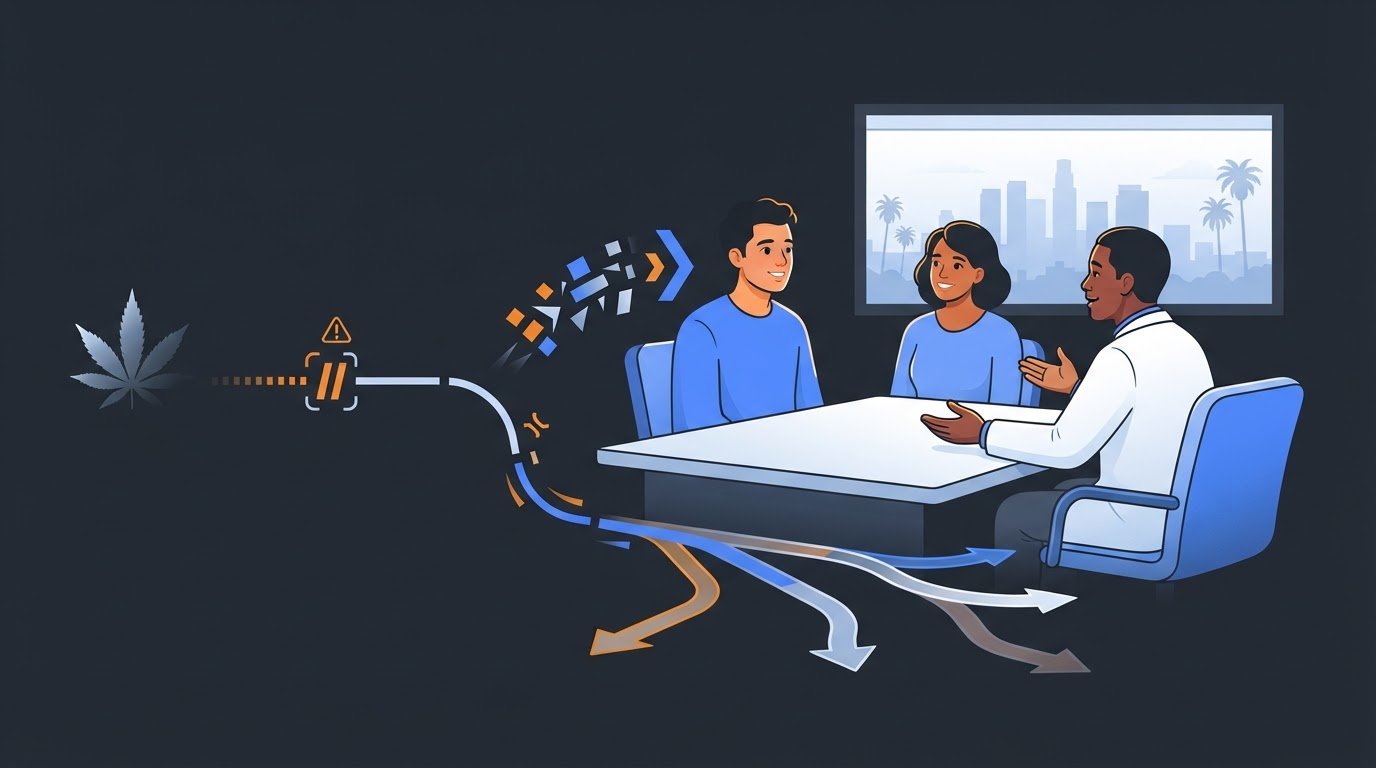
What if the true secret to living on your own after a mental health crisis isn't just learning how to cook, but actually retraining the way your brain processes daily life? For many individuals navigating the path after psychosis, the transition from clinical support to the complex rhythm of Southern California can feel like an impossible leap. It's understandable to feel overwhelmed by executive dysfunction or social anxiety. Accessing specialized independent living skills training Los Angeles residents trust is the first step toward reclaiming your autonomy and building a stable future.
We recognize that the journey from a clinical setting to daily independence is filled with uncertainty. This article provides a definitive checklist of the functional and cognitive masteries required for long term success. We'll explore how specialized training bridges the gap between stabilization and a thriving life. By focusing on cognitive remediation alongside practical tasks, you can significantly reduce the risk of rehospitalization and move confidently toward work or school. We'll outline exactly what to look for in a program to ensure you find a dedicated guide for this transformative process.
Key Takeaways
- Learn how specialized independent living skills training Los Angeles offers a sophisticated form of psychosocial rehabilitation tailored for those recovering from psychosis.
- Identify the critical mastery areas for autonomy, including sophisticated financial budgeting and the maintenance of structured daily routines in a high-cost environment.
- Understand the vital link between cognitive remediation and functional outcomes, ensuring that skills learned are successfully applied in real-world scenarios.
- Discover the essential criteria for selecting a high-standard program, such as the inclusion of Supported Education and Employment (SEE) to facilitate a return to work or school.
- Gain insight into evidence-based intervention models that prioritize community reintegration and long-term wellness over simple clinical stabilization.
What is Independent Living Skills Training (ILST) in Los Angeles?
Independent Living Skills Training (ILST) represents a specialized branch of psychological and social rehabilitation designed for individuals managing complex conditions like psychosis or autism. Unlike generic life skills classes that might focus solely on the mechanics of a task, this clinically-augmented approach addresses the cognitive and emotional hurdles that often hinder progress. It's about more than just completing a chore. It's about restoring the executive function required to sustain a life of purpose. For those seeking independent living skills training Los Angeles provides a demanding yet rewarding backdrop where professional guidance must meet the practical demands of a high-density city. This specialized training ensures that residents can navigate the specific pressures of our local environment while building a foundation for long-term wellness.
The primary objective of ILST is to move beyond the survival mode of crisis management toward a state of genuine community reintegration. We focus on achieving mastery over Activities of daily living (ADLs), which include both basic self-care and more complex instrumental tasks like managing a personal budget or organizing a medication schedule. By integrating clinical expertise with practical application, we ensure that recovery isn't just a distant hope but a tangible, daily reality. Success is measured by an individual's ability to function reliably within their own home and neighborhood.
The Clinical Foundation of ILST
Effective training is rooted in evidence-based frameworks such as the NIMH NAVIGATE model. This approach recognizes that psychiatric stability is the essential foundation for learning new behaviors. Without addressing the underlying thought disorders or cognitive challenges, skill acquisition remains superficial. At Pand Health, we operate under the firm belief that recovery is the expectation. Our curriculum is designed to support the brain's ability to plan, focus, and execute tasks. This clinical rigor ensures that the transition from intensive care to the community is both safe and permanent.
Why Local Context Matters for LA Residents
Living in Southern California presents a specific set of challenges that generic programs often overlook. Navigating the LA Metro or understanding the complexities of public transit in West Los Angeles are not just logistical hurdles; they're core skills for independence. The high cost of living and the intense sensory environment of a high-density urban center can be significant stressors for someone in recovery. Our training is grounded in the local reality, helping individuals access community resources near our 11500 W. Olympic Blvd location. We teach our clients how to manage the unique pace of Los Angeles while maintaining the psychological stability needed to thrive.
The Essential Checklist for Independent Living After Psychosis
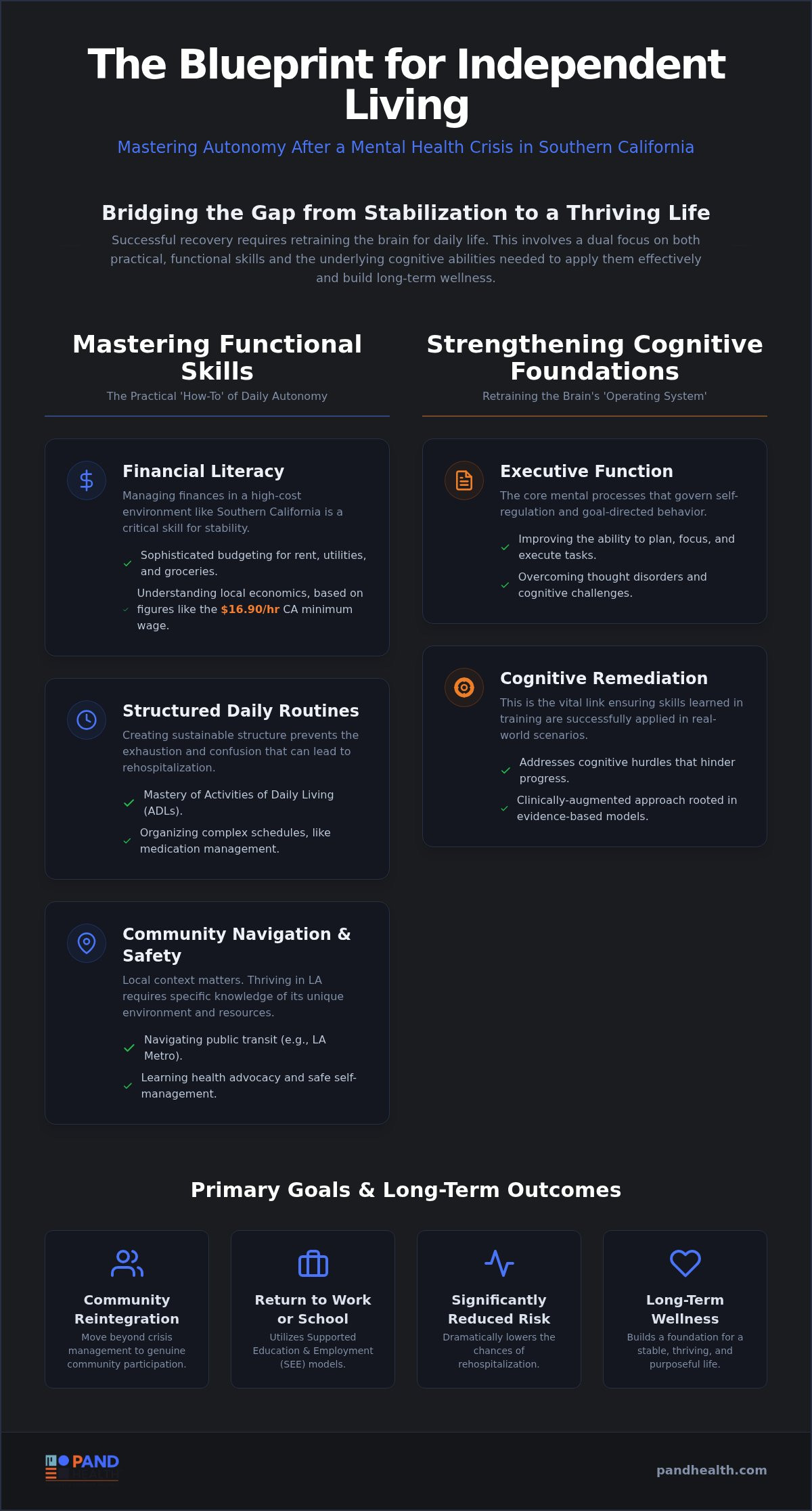
Transitioning to a life of autonomy after a psychotic episode requires more than a simple desire for freedom. It demands a rigorous, personalized blueprint that addresses both the practical and cognitive barriers to success. While clinical stabilization is the first step, true independence is built on the mastery of daily routines and the ability to manage one's environment with confidence. This is where specialized independent living skills training Los Angeles residents rely on becomes a vital bridge. Our checklist focuses on creating a sustainable structure that prevents the exhaustion and confusion that can lead to rehospitalization.
Financial literacy is a cornerstone of this process. Budgeting for a residence in Southern California requires a sophisticated understanding of local economic realities. As of 2026, the California minimum wage is $16.90 per hour, a figure that serves as a baseline for many of our vocational and financial planning exercises. We work with individuals to ensure they can manage rent, utilities, and grocery costs without becoming overwhelmed by the city's high cost of living. This practical application aligns with the standards for California's Independent Living Skills services, which emphasize money management and community resource awareness as essential for stability.
Health advocacy and safety are equally critical. We teach clients how to manage their medications independently and, more importantly, how to communicate effectively with their medical team. In a high-density urban setting like Los Angeles, safety also means having a clear plan for emergencies and knowing how to navigate public spaces safely. If you or a loved one needs support building these foundations, you can connect with our clinical team to explore how we personalize this checklist for every individual.
Executive Function and Organization
Success in the community depends heavily on executive function. Our training includes specific checklist items to bolster these cognitive skills:
- Daily scheduling: Using time-blocking techniques to ensure all responsibilities are met without burnout.
- Digital literacy: Managing online banking, secure communication, and professional email etiquette.
- Nutritional planning: Grocery shopping with a focus on brain health, ensuring that meals support psychological stability and physical energy.
Self-Regulation and Symptom Management
Maintaining independence means becoming an expert in one's own wellness. We focus on three key areas of self-regulation:
- Early warning signs: Learning to identify subtle shifts in mood or thought patterns during daily tasks.
- Public stress management: Practicing grounding techniques to manage social anxiety or sensory overload in crowded LA spaces.
- Sleep hygiene: Establishing a non-negotiable rest routine, which is one of the most effective ways to prevent a relapse of psychosis.
Functional vs. Cognitive Skills: Why Recovery Requires Both
True independence is often misunderstood as a simple checklist of chores. While mastering laundry or cooking is necessary, these functional tasks represent only half of the equation. Many individuals in recovery struggle with execution even when they possess the knowledge of how to perform a specific task. This gap between knowing and doing is typically rooted in executive dysfunction. High-standard independent living skills training Los Angeles residents choose must address these cognitive barriers directly. Without targeting the brain's ability to plan, focus, and shift attention, the most basic daily responsibilities can become insurmountable obstacles.
The state of California recognizes that Independent Living Skills (ILS) services should encompass a broad spectrum of needs, from money management to health care advocacy. However, we believe that functional success is a byproduct of cognitive health. At Pand Health, we utilize an augmented Coordinated Specialty Care model that integrates cognitive remediation with practical application. This ensures that the progress made in a clinical setting translates into reliable behavior in the real world. By treating the underlying cognitive deficits, we help individuals move from being able to perform a task to being able to sustain a life.
The Role of Social Cognition
Living autonomously in a high-density urban environment requires more than just self-care; it requires the ability to navigate complex social landscapes. Social cognition involves the mental processes we use to perceive and interpret the intentions of others. If a person cannot accurately read social cues, they may struggle to maintain a lease, resolve conflicts with neighbors, or keep a job. We utilize Social Cognition and Interaction Training (SCIT) and Metacognitive Training (MCT) to help individuals refine these essential skills. For a deeper look at how these interventions support community reintegration, you can explore our Social Skills Training guide.
Computer-Assisted Brain Training
Daily cognitive remediation is a cornerstone of our curriculum. We use computer-assisted tools to accelerate functional gains by improving processing speed and memory. In Los Angeles, these skills are critical for safety. For example, faster processing speed is essential for navigating the complexities of LA driving or managing a multi-step commute on public transit. Enhancing memory allows for the successful completion of multi-step independent tasks, such as managing a complex medication schedule while coordinating a work or school calendar. This rigorous brain training builds the mental stamina required to thrive in a demanding city.
Choosing the Right ILST Program in Southern California
Selecting a provider for independent living skills training Los Angeles families can trust is a decision that impacts the entire trajectory of a loved one's recovery. While many general practitioners offer basic support, the intensity required for successful reintegration after psychosis demands a specialized framework. You should prioritize programs that utilize an augmented Coordinated Specialty Care (CSC) model. This clinical standard ensures that every aspect of recovery, from psychiatric stability to practical autonomy, is addressed by a multidisciplinary team. It moves beyond simple task completion to address the cognitive foundations of independence.
A high-caliber program must also integrate Supported Education and Employment (SEE). In the competitive landscape of Southern California, having a dedicated curriculum for returning to school or the workforce is essential for long-term stability. At Pand Health, our commitment to these evidence-based protocols, including NAVIGATE and Metacognitive Training (MCT), has led to an 85% participation rate in employment or education after just six months of intervention. Furthermore, our 6% rehospitalization rate, compared to the industry average of 10%, demonstrates the power of a rigorous, outcome-focused approach. These documented results prove that the right intervention transforms the expectation of recovery into a lived reality.
Questions to Ask Potential Providers
When evaluating local resources, it's vital to examine the specific methodology used. Basic life skills coaching is often insufficient for complex thought disorders. Ask these specific questions to ensure the program meets a premium standard of care:
- Do you offer certified Metacognitive Training (MCT) and Social Cognition and Interaction Training (SCIT) as part of the curriculum?
- How do you track and document functional progress over a 6 to 12 month period?
- Is there a specific, local curriculum for navigating the unique educational and vocational systems within Los Angeles?
The Importance of Family Involvement
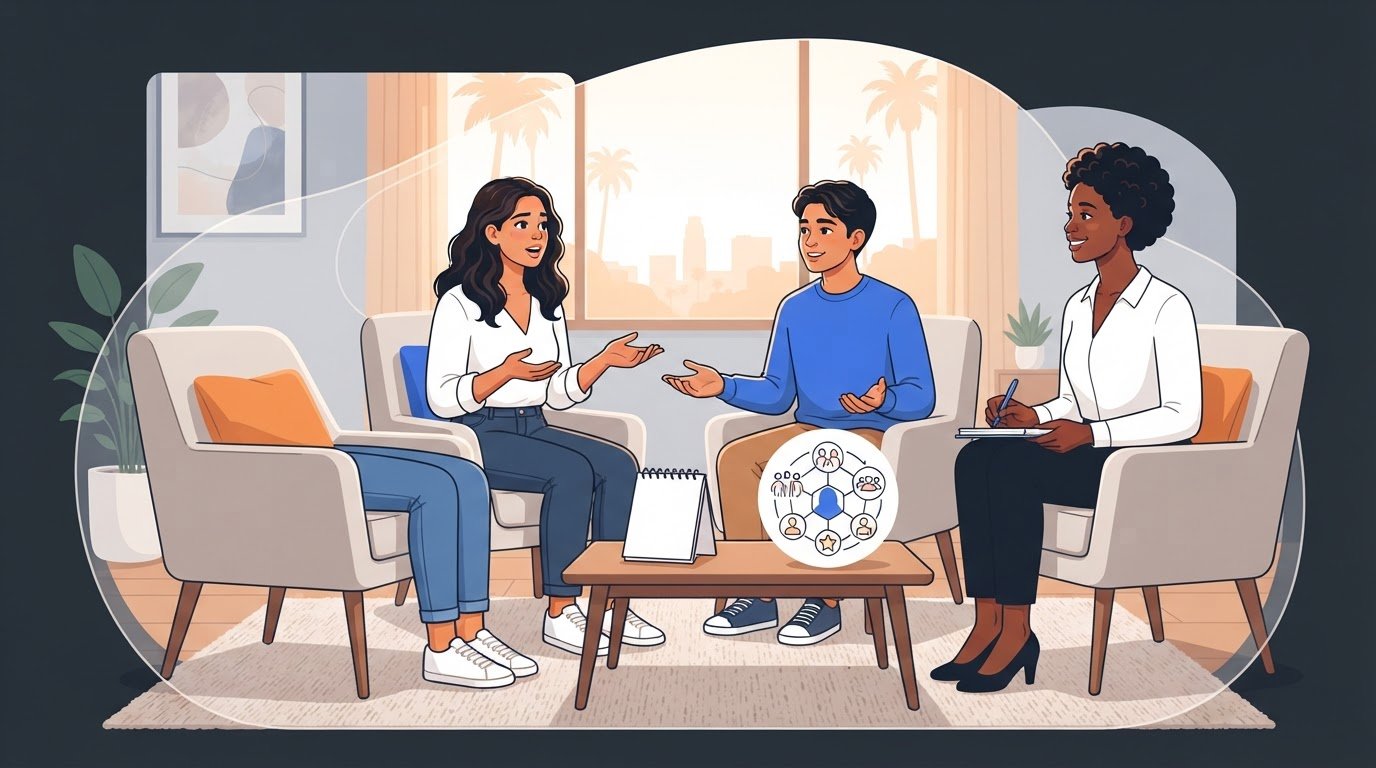
Independence does not imply isolation. Family psychoeducation is a core component of effective ILST, providing the necessary tools for families to act as a supportive scaffolding during the transition to autonomy. Multi-Family Group Therapy also plays a crucial role, allowing families to share experiences and learn collective problem-solving strategies. This holistic approach ensures that the home environment supports the progress made in training. If you're ready to explore a specialized path for your family, you can contact us for a comprehensive family evaluation. This assessment helps us map out a personalized strategy for successful community reintegration.
Bridging the Gap with Pand Health’s OnTrack Program
Pand Health’s California OnTrack program represents a paradigm shift in how we approach the transition to autonomy. For teens and adults alike, the program serves as a comprehensive bridge between clinical stabilization and a life of full community participation. It isn't enough to simply manage symptoms; we must actively build the capacity for a meaningful life. This is the core philosophy behind the independent living skills training Los Angeles residents receive through our augmented Coordinated Specialty Care model. By aligning clinical intervention with real-world goals, we ensure that recovery becomes a sustainable lifestyle rather than a temporary state.
Our California OnTrack Work-Study Program is specifically designed to link skill acquisition with professional ambition. We don't view employment or education as the final step of recovery, but rather as a vital component of the recovery process itself. The effectiveness of this approach is reflected in our documented outcomes. 85% of our participants are actively engaged in work or school after six months in the program. This success stems from our ability to provide a lifeline of expertise that guides individuals through the complexities of the Los Angeles job market and educational systems. We act as a steady hand, offering direction when other avenues have failed to provide a clear path forward.
SEE Curriculum: Beyond Basic Skills
The Supported Education and Employment (SEE) curriculum moves far beyond basic task lists. We focus on high-level workplace advocacy and resume building that accounts for gaps in employment history. For college students, we provide the specific scaffolding needed to return to campus life; this includes navigating academic accommodations and managing the social stressors of university environments. Motivational interviewing is woven throughout this process. This helps individuals set and maintain long-term goals that align with their personal values and professional aspirations, ensuring they have the internal drive to succeed independently.
Physical Fitness and Health Coaching
Permanent independence is supported by physical vitality. We recognize a profound synergy between high-intensity fitness and cognitive recovery. Exercise isn't just about physical health. It's a powerful tool for enhancing neuroplasticity and executive function. Our nutrition coaching focuses on metabolic health, ensuring the body provides the stable energy levels required for demanding cognitive tasks. By building a lifestyle that prioritizes wellness, our clients develop the resilience needed to maintain their autonomy. To start the evaluation process, visit our site at 11500 W. Olympic Blvd. Our clinical team is ready to map out a personalized strategy for your long-term success.
Reclaiming Autonomy and Building a Future
Reclaiming a life of purpose after psychosis is a journey that requires both clinical precision and a compassionate hand. We've explored how true independence relies on more than just basic chores; it requires the integration of cognitive remediation and social cognition training to navigate the specific demands of Southern California. With our certified MCT and SCIT instructors on-site, we offer the specialized independent living skills training Los Angeles residents need to thrive in a complex urban environment.
The results of our California OnTrack model illustrate the power of this integrated approach. We're proud that 85% of our clients are back in school or work within 6 months. Our focus on long term wellness has led to a 6% rehospitalization rate, which stands in stark contrast to the 10% industry average. You don't have to navigate this transition alone. Our team is dedicated to acting as your steady guide through every step of community reintegration and personal growth.
Begin your journey to independence with a comprehensive evaluation at Pand Health. Transformation is possible, and a stable, autonomous future is within your reach.
Frequently Asked Questions
What is the difference between ILST and occupational therapy?
ILST focuses on psychosocial rehabilitation and cognitive remediation specifically for mental health recovery, while occupational therapy (OT) is a broader field addressing physical or developmental barriers to daily living. In our Los Angeles program, ILST is clinically augmented to address executive dysfunction following psychosis. While OT might focus on physical adaptations, our training targets the brain's ability to plan and execute complex tasks required for community reintegration.
How long does independent living skills training typically take?
The duration of independent living skills training Los Angeles residents receive varies based on individual goals, but most participants see significant functional gains within 6 to 12 months. Recovery is a methodical and deliberate process. Our California OnTrack program is designed for long term stability, ensuring that skills like financial literacy and social navigation are deeply ingrained before a client transitions to full independence.
Does insurance cover independent living skills training in Los Angeles?
Coverage for independent living skills training Los Angeles families seek depends on your specific provider and plan, though many PPO insurance plans may reimburse for components of our clinical rehabilitation services. We recommend contacting our team for a detailed benefit verification. While state funded regional centers provide some services, our clinically augmented model often requires a private pay or PPO structure to maintain its premium standard of specialized care.
Can ILST help someone with chronic schizophrenia or just first-episode psychosis?
ILST is highly effective for individuals managing chronic schizophrenia as well as those experiencing a first episode of psychosis. While the California OnTrack model is optimized for early intervention, the core principles of cognitive remediation and functional skill building are universal. We adapt our intensity and focus to meet the unique needs of individuals at any stage of their recovery journey, ensuring everyone has a path to independence.
Is family participation required for the OnTrack program?
While not strictly mandatory, family participation is strongly encouraged because it significantly improves long term outcomes and reduces the risk of relapse. Our model includes family psychoeducation and multi family group therapy to ensure the home environment supports the client's progress. Families act as a vital support system, and their involvement helps bridge the gap between clinical training and real world application in the community.
How do you measure progress in independent living skills?
We measure progress through standardized functional assessments and the successful completion of real world milestones, such as maintaining a budget or securing employment. Our team tracks data over 6 to 12 months, looking for improvements in executive function and social cognition. We celebrate tangible victories, like a client successfully returning to campus or managing their own medication schedule without reminders, ensuring every goal is met.
What happens if a client relapses during training?
If a relapse occurs, we immediately adjust the intensity of clinical support while maintaining the focus on long term recovery goals. A relapse is a clinical event, not a failure. Our 6% rehospitalization rate is low because we identify early warning signs quickly. We provide a steady hand during these times, ensuring the individual remains safe while we recalibrate their training plan to prevent future setbacks.
Is the training conducted in a group or individual setting?
Our program utilizes a blend of both individual sessions and group settings to provide a comprehensive learning experience for every participant. Individual sessions allow for personalized attention on specific functional goals, while group settings are essential for social skills training and conflict resolution. This dual approach ensures that clients can practice new behaviors in a supportive community before applying them in the broader Los Angeles area.
Disclaimer
This article is for information and educational purposes only, and can NEVER replace a proper medical evaluation. If you or a loved one may be suffering from psychosis or the prodomal symptoms of psychosis, get evaluated by a professional as soon as possible. Early diagnosis and treatment can be life-saving.