
Cannabis Psychosis: How to Support Someone and Find Care
Cannabis-related psychosis is more than feeling unusually high. It can involve hallucinations, delusions, paranoia, confusion, disorganized thinking, or changes in how time and space feel. Symptoms may begin soon after cannabis use and persist for days. Knowing how to support someone with cannabis psychosis starts with taking these changes seriously, staying calm, and arranging a professional assessment.
It can be frightening to see someone you care about lose their sense of what’s real. Listen respectfully without arguing about or dismissing their experience. Focus on helping them stay safe while arranging care.
This article explains cannabis-induced psychosis, possible risk factors, and how treatment and recovery can unfold. You’ll also learn how families can support a teen, recognize when urgent help is needed, and understand the roles of clinical care, family support, and ongoing recovery planning.
Key Takeaways
- Notice changes in thinking, mood, or behavior after cannabis use, and take them seriously even if they seem temporary.
- High-THC products, frequent use, and personal or family vulnerability can raise concern; understanding these factors can guide prevention and care.
- Recovery may involve stopping cannabis, professional assessment, ongoing follow-up, and treatment for related mental health or substance-use needs.
- Antipsychotic medication should be used only under medical supervision, with treatment shaped around the person’s symptoms and circumstances.
- Families can support a teen by staying calm, helping maintain safety, and learning how to recognize early signs that additional care may be needed.
What is Cannabis-Induced Psychosis?
Cannabis-induced psychosis describes psychotic symptoms associated with cannabis use, including changes in perception, beliefs, and thinking. In a teen, a sudden shift from usual behavior to fear, confusion, or unusual perceptions deserves careful attention.
Common Cannabis-Induced Symptoms
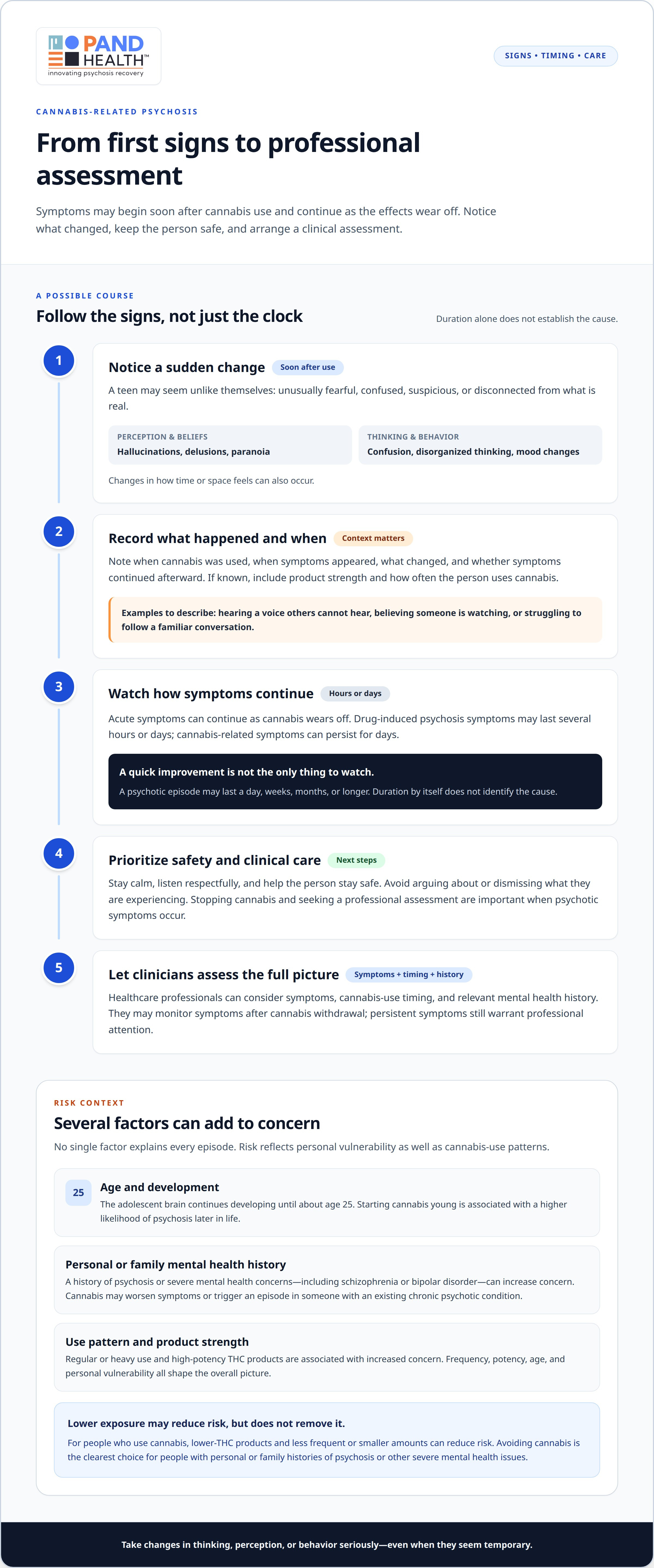
Symptoms can include hallucinations, delusions, paranoia, disorganized thinking, confusion, mood changes, and altered perceptions of time or space. A teen might hear a voice others cannot hear, become convinced someone is watching them, or struggle to follow a familiar conversation.
These experiences can be distressing and may affect a young person’s ability to communicate or understand their surroundings. Respond respectfully and without judgment. Arguing with or dismissing what they perceive can add strain without resolving the experience.
Early Warning Signs
Early warning signs include noticeable changes in perception, behavior, or thinking, such as increasing suspicion, confusion, or difficulty organizing thoughts. For example, a teen who suddenly interprets ordinary events as threatening may be experiencing paranoia, rather than simply acting withdrawn.
Consider the change in context: symptoms may begin shortly after cannabis use, and the person may seem unlike themselves. Note what changed and when it began, including any reported hallucinations or unusual beliefs. Those observations can help a healthcare professional assess the symptoms and timing.
Acute and Persistent Symptoms
Acute symptoms can emerge around cannabis use and continue as the drug wears off. Drug-induced psychosis symptoms may last several hours or days, and cannabis-related symptoms can persist for days. Don’t rely on immediate improvement as the only sign to watch.
A psychotic episode may last a day, weeks, months, or longer. Duration alone doesn’t establish the cause. Healthcare providers may monitor symptoms after cannabis withdrawal. A reduction after stopping cannabis can support an assessment of cannabis-induced psychosis, but persistent symptoms still warrant professional attention.
For a teen, clearly describe when cannabis use occurred, when symptoms appeared, and whether they continued afterward. A clinician can consider that timeline alongside the person’s symptoms and history. Don’t dismiss hallucinations, delusions, or confusion because they followed cannabis use or seem to be easing.
Risk factors, including vulnerability and cannabis use patterns
Cannabis-related psychosis risk reflects both a person’s vulnerability and their pattern of use. No single factor explains every episode, but several circumstances can make cannabis more concerning, especially for a young person whose brain is still developing.
Personal and family mental health history matters. A family history of psychotic disorders is associated with increased risk. Someone with schizophrenia or bipolar disorder may experience worsened symptoms or a cannabis-triggered episode. A personal or family history of psychosis or severe mental health concerns is a strong reason to avoid cannabis, rather than treating a lower dose as protection.
Age is another consideration. The adolescent brain continues developing until about age 25, and psychotic conditions are most likely to develop during this period. Starting cannabis young is associated with a higher likelihood of psychosis later in life. For a teen, delaying or avoiding cannabis can reduce exposure during a period of continued development.
Use patterns also influence risk. Regular or heavy cannabis use is associated with increased psychosis risk, and high-potency THC products are an added concern. Frequent exposure can matter alongside personal vulnerability: a young person with a family history of psychosis who regularly uses high-THC cannabis faces several risk factors at once. Cannabis can also trigger an episode in someone with an existing chronic psychotic condition.
Reducing risk means addressing both exposure and vulnerability. Avoiding cannabis is the clearest choice for people with personal or family histories of psychosis or other severe mental health issues. For those who use cannabis, lower-THC products and less frequent or smaller amounts can reduce risk, but they don’t remove it. A young person’s age, mental health history, potency, and frequency all shape the overall picture.
Families can discuss these factors without blame. Instead of focusing only on whether a teen used cannabis, ask about product strength, frequency, and changes in mood or thinking. That information can help clarify what may have contributed and what support is appropriate. Risk factors aren’t proof of a diagnosis, and a cannabis-related episode can still require professional assessment.
If symptoms appear after cannabis use, don’t assume they’ll resolve simply by reducing use. Stopping cannabis and seeking a clinical assessment are important steps when psychotic symptoms occur. A professional psychosis evaluation can assess symptoms and relevant history.
Treatment and recovery
Treatment for cannabis-induced psychosis starts with professional assessment, because symptoms, cannabis use, and mental health history all matter. Recovery may include stopping cannabis, therapy, follow-up care, and support for related substance-use or mental health needs.
In an emergency room, clinicians can assess psychological symptoms and review medical history, including cannabis use and when symptoms began. Diagnosis may take place in a hospital setting, where the team can monitor symptoms as cannabis wears off or after use stops.
Stopping cannabis is an immediate step in care when psychosis is linked to its use. Avoiding other psychoactive substances also supports longer-term management. For a small subset of people, stopping cannabis resolves psychosis; many need ongoing treatment for underlying mental health or substance-use concerns.
That distinction matters even when symptoms improve. A clinician can consider whether hallucinations, delusions, or disorganized thinking ease after cannabis withdrawal while also assessing other explanations and a history of conditions such as schizophrenia or bipolar disorder. Improvement after stopping cannabis can support a diagnosis of induced psychosis, but it doesn’t replace a full clinical assessment.
Treatment can address both distressing symptoms and patterns that may contribute to another episode. Cognitive-behavioral therapy can help a person examine thought patterns and develop ways to manage symptoms. When cannabis use has become difficult to control, treatment for cannabis addiction is a critical part of care, not a concern to postpone.
Recovery also involves learning what changes may signal a return of psychosis or substance use. The person and family can work with mental health professionals to identify early warning signs, such as new suspiciousness, disrupted thinking, or renewed cannabis use. Regular follow-ups help clinicians monitor stability and adapt care as needs change.
Daily routines can provide practical support alongside clinical treatment. Regular exercise, a balanced diet, adequate sleep, and stress-reduction techniques are recommended components of long-term management. These habits don’t replace therapy or other care. They provide a steadier foundation for recovery, especially when stress or poor sleep makes everyday coping harder.
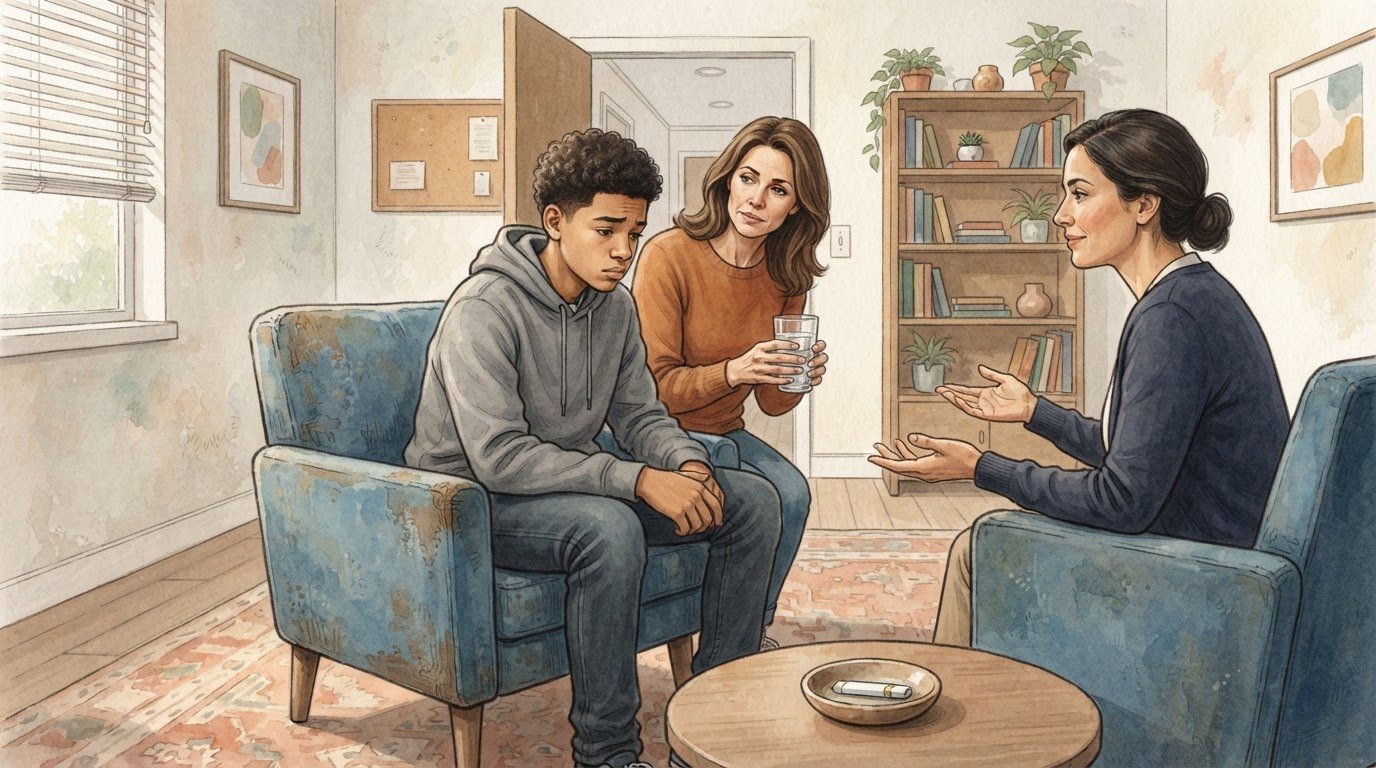
Family involvement can make a care plan easier to sustain. Relatives can learn to respond calmly to symptoms, support cannabis abstinence, and recognize when professional help is needed. Family psychoeducation and therapy can help relatives understand psychosis, communicate constructively, and create a supportive home environment. If a teen has experienced a psychotic episode, a shared plan for follow-up, warning signs, and substance-use support can clarify next steps.
Antipsychotic medication under medical supervision
Antipsychotic medication may be considered when psychosis symptoms need treatment, but it should be used only under strict medical supervision. A clinician assesses the person’s symptoms, cannabis use, mental health history, and current needs before determining an appropriate plan. Don’t use someone else’s medication or make medication decisions without clinical guidance.
Prompt assessment matters because hallucinations, delusions, or disorganized thinking can have different causes. A clinician can review when symptoms began, whether cannabis was used, and how symptoms change over time. They may also consider whether a developing or existing disorder, such as schizophrenia or bipolar disorder, needs further evaluation. A cannabis-related episode alone doesn’t establish a diagnosis.
Medication response doesn’t follow one fixed timeline. Psychosis symptoms can sometimes lessen within hours or days after medication begins, while medications may take weeks to reach their full effect. That difference makes early follow-up important: a person may show some change before the full effect is apparent. The treating professional can monitor progress and guide next steps.
Families can help by sharing clear observations with the clinician. Note when unusual beliefs or hallucinations appeared, whether cannabis use occurred beforehand, and what changes followed. Describe specific effects on sleep, communication, or daily activities rather than trying to diagnose the cause. This information supports assessment and gives the care team a clearer picture of the person’s experience.
Medication management is only one part of care. Cognitive-behavioral therapy can help a person understand and change thought patterns connected with symptoms. Therapy may complement medication by offering structured ways to make sense of distressing experiences and manage symptoms. The right approach depends on the person’s presentation and clinical assessment, not a single plan for every episode.
Ongoing care can also address cannabis use and other mental health needs. Even if symptoms improve, follow-up helps the care team track changes and review the plan. If symptoms persist, return, or change, report those developments promptly rather than adjusting medication independently. For a teen, caregivers can support this process by sharing observations and encouraging attendance at planned appointments.
When a young person is reluctant to discuss treatment, keep the conversation specific and calm. Explain that an assessment can clarify what symptoms may mean and what care could help. Avoid promising that medication will work immediately or assuming that improvement means treatment is complete. A supervised, collaborative plan helps the clinician and family respond as the teen’s needs develop.
How can clinicians work with parents, families, and caregivers to help a teen who is having a psychotic episode?
Clinicians can help caregivers focus on safety, communicate with a teen, and plan support after a psychotic episode. Staying calm and speaking respectfully are central to how to support someone with cannabis psychosis.
Emergency Help for Immediate Danger
Seek emergency help if a teen’s actions create immediate danger to themselves or someone else. Severe agitation, threats of harm, or uncontrollable aggression call for urgent action, rather than waiting for symptoms to pass.
In the United States, caregivers can call 988 for the Suicide and Crisis Lifeline as an alternative to 911 for mental-health crisis support, according to the Substance Abuse and Mental Health Services Administration. If there’s immediate danger, such as a threat or uncontrollable aggression, calling 911 may be necessary.
Take any mention of self-harm seriously. Tell the responder what the teen said or did, whether anyone faces immediate danger, and whether you know about recent substance use.
Emergency Response and Safety
During a crisis, reduce immediate risks while connecting the teen with appropriate help. Keep your voice steady, give them space, and move other people away if the setting feels unsafe.
If a teen is frightened and pacing, avoid crowding them or making sudden movements. Keep sentences brief and clear, and don’t try to physically restrain them. If aggression or threats create danger, move to a safer place and seek emergency assistance.
When responders arrive, share when the episode began, the symptoms you observed, any known cannabis use, and relevant mental health history. These details can help clinicians understand the situation and plan the next steps for support.
Helpful and Unhelpful Communication
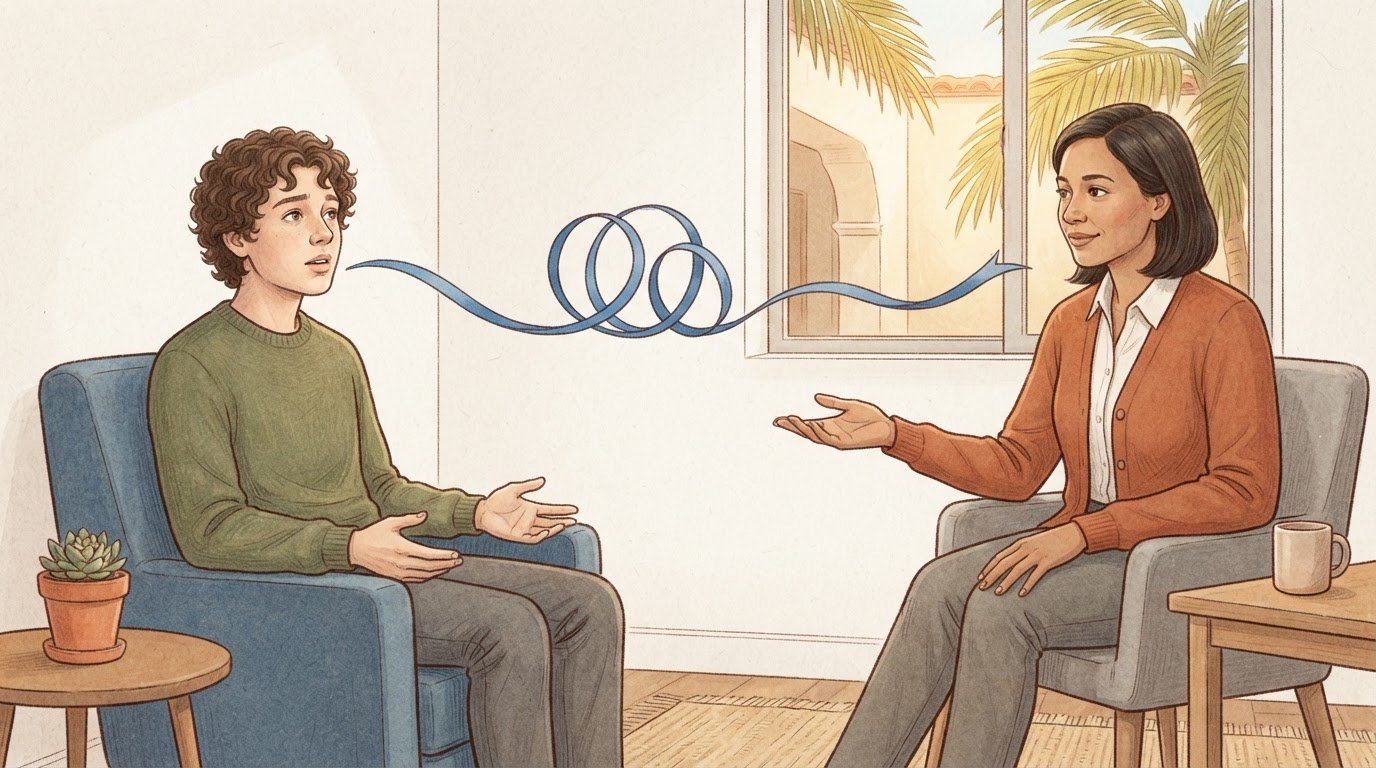
Listen without judgment and acknowledge distress without agreeing that a hallucination or delusion is real. You could say, “I can see this feels frightening,” or, “I’m here with you while we find help.” Calm, respectful language is one practical part of how to support someone with cannabis psychosis.
Avoid saying, “That’s not real,” “You’re making it up,” or “Just calm down.” Dismissing the teen’s experience or arguing about reality may heighten distress instead of helping them feel heard.
After the immediate crisis, clinicians can work with caregivers on ongoing communication and recovery planning. Family therapy or psychoeducation can help relatives build a supportive home environment. To arrange a psychosis evaluation for a teen in Los Angeles, contact Pand Health.
Pand Health: Cannabis induced psychosis rehab
Pand Health provides cannabis-induced psychosis rehabilitation for people and families seeking focused support after cannabis-related psychotic symptoms. Consider this care when symptoms or recovery needs call for structured clinical attention beyond an immediate crisis response.
Support may also include social skills training and psychological and social rehabilitation, which address functioning and participation in daily life. If questions remain about a teen’s symptoms, Pand Health also offers evaluation for thought disorders and autism.
For a conversation about care options, contact Pand Health.
Build a steadier path forward
Supporting a teen through a frightening change in perception can leave a family unsure what to do next. Learning how to support someone with cannabis psychosis also means recognizing that you don’t have to manage every decision alone. Stay present, share concerns with a qualified professional, and help your teen take recovery one step at a time. Progress may involve adjusting to new routines, rebuilding trust, and making room for honest conversations without blame. Your steady presence matters, even when you can’t resolve the situation immediately.
If your family is ready to discuss care, contact Pand Health for support. A thoughtful conversation can help clarify a path forward for your teen and family. Asking for guidance is a constructive next step, and support can help your family approach what comes next with greater confidence.
Frequently Asked Questions
How can I help?
Start by easing pressure: speak calmly, limit extra voices, and avoid demanding explanations while the person is distressed. If they can talk, ask what would help them feel safer right now. Keep track of when symptoms began and any cannabis use they mention, then share those details during a clinical assessment. If they may harm themselves or someone else, seek urgent crisis support rather than managing the situation alone.
How do you talk with kids who have had a psychotic event about their marijuana use?
Choose a calm moment after the immediate distress has eased, and approach the conversation with curiosity rather than blame. You might say, “Can you tell me what you remember about using cannabis and how you felt afterward?” Listen without interrupting, then explain that understanding the timing can help clinicians provide support. Agree on a next step together, such as discussing the episode with a mental health professional.
What are the signs and symptoms of cannabis-induced psychosis?
Possible symptoms include hallucinations, delusions, paranoia, confusion, disorganized thinking, mood changes, and altered perceptions of time or space. A teen may hear something others can’t hear or feel certain that ordinary events carry a hidden threat. Symptoms may begin soon after cannabis use, but timing alone doesn’t confirm the cause. A healthcare professional can assess what happened and consider the person’s history.
When is cannabis psychosis a medical emergency, and when should I call 911?
Call 911 when a person’s psychotic symptoms involve immediate danger, such as threats of harm, uncontrollable aggression, or severe agitation that makes the situation unsafe. In the United States, caregivers can also call 988 for the Suicide and Crisis Lifeline as an alternative to 911 for mental-health crisis support, according to the Substance Abuse and Mental Health Services Administration. Tell the responder what is happening and where help is needed.
How can I keep someone experiencing cannabis psychosis safe right now?
Stay calm, reduce noise and the number of people nearby, and give the person room rather than crowding them. Use short, reassuring sentences, and avoid arguing about what they see or believe. Don’t make sudden movements or touch them without warning. If their actions or threats create immediate danger, move to a safer place and call for emergency help. When possible, note changes responders should know.
Can cannabis-induced psychosis last after someone stops using cannabis?
Yes. Cannabis-related symptoms may continue for days after use, and a psychotic episode can last longer. Stopping cannabis doesn’t make ongoing hallucinations, delusions, or confusion safe to ignore. Track whether symptoms are easing, persisting, or changing, and arrange a professional assessment. A clinician can consider the timeline and other relevant information; duration alone doesn’t establish the cause or predict recovery.
What are the risks of recurrence or developing a long-term psychotic disorder after cannabis psychosis?
Risk is more concerning with frequent or heavy cannabis use, high-THC products, younger age, or personal and family histories of psychosis. These factors don’t determine what will happen to one person, but they strengthen the case for avoiding cannabis and seeking assessment if symptoms recur. Clinicians consider the person’s course and history. Diagnosing a primary psychotic disorder usually requires only a limited medical workup unless clinical indicators suggest otherwise.
How can I help someone stop using cannabis and find addiction treatment?
Begin with a nonjudgmental conversation about what cannabis does for the person and what concerns them about stopping. Offer to help raise those concerns with a clinician, who can assess cannabis use alongside psychotic symptoms and discuss appropriate treatment for cannabis addiction. Agree on practical support, such as attending an appointment together or identifying situations linked to use. Recovery planning should address both substance use and mental health needs.
Disclaimer
This article is for information and educational purposes only, and can NEVER replace a proper medical evaluation. If you or a loved one may be suffering from psychosis or the prodomal symptoms of psychosis, get evaluated by a professional as soon as possible. Early diagnosis and treatment can be life-saving.