


Psychiatric Evaluation for Psychosis in Los Angeles: What to Expect
What can a psychiatric evaluation clarify, and what happens next? If you’re searching for “psychiatric evaluation for psychosis Los Angeles,” you may be worried about what an assessment will uncover or whether it will lead to a label without a practical plan.
Those concerns are understandable. An evaluation is a starting point for understanding symptoms and care needs, not a single test or a promise of a particular diagnosis. A clinician may ask about current experiences, health and family history, substance use, and changes in daily life. Sharing what you’ve noticed and bringing questions can make the conversation more useful.
This guide explains what an evaluation may cover, how to prepare, and what to ask about follow-up care. It also explains the difference between an outpatient assessment and emergency services, so you can consider an appropriate next step in Los Angeles. Pand Health offers psychiatric evaluations and specialized assessments for thought disorders. Depending on the person’s needs, follow-up may include specialized outpatient psychosis care and family support. The aim is to help clarify possible paths forward.
Key Takeaways
- A psychiatric evaluation for psychosis Los Angeles clinicians provide can help clarify symptoms, history, daily functioning, and possible care needs. It isn’t one test or a guaranteed diagnosis.
- The assessment process can vary by person and service. Ask what the clinician will cover and what the evaluation can clarify.
- Before the appointment, prepare a brief timeline of concerns and changes, questions, and relevant care or medication history, if available.
- Compare services by asking who conducts the assessment, what concerns they evaluate, who they serve, and what follow-up or family involvement may be appropriate.
- Discuss possible next steps with the evaluating clinician, including whether California OnTrack for teens or adults may be relevant. Confirm program fit and eligibility.
What a Psychiatric Evaluation for Psychosis in Los Angeles Can Clarify
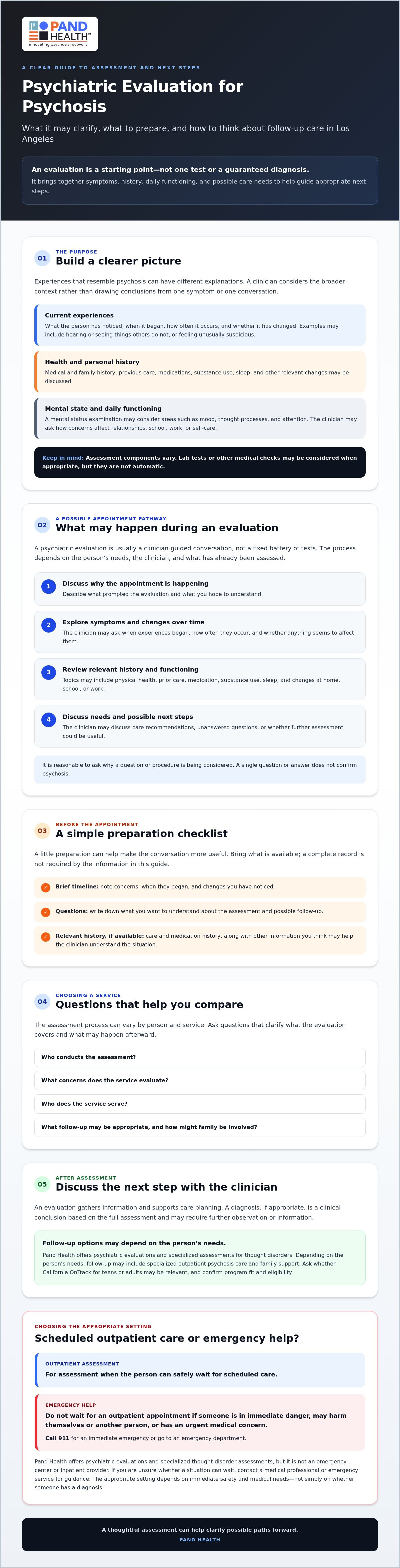
A psychiatric evaluation is a clinician-led process for understanding a person’s experiences, personal and medical history, daily functioning, and possible care needs. A psychiatric evaluation for psychosis Los Angeles residents seek is not one test, and it doesn’t guarantee a particular diagnosis. Its purpose is to build a clearer picture and help guide appropriate next steps.
Experiences that resemble psychosis, such as hearing or seeing things others don’t, or feeling unusually suspicious, can have different explanations. A clinician may consider mental health symptoms alongside medical history, substance use, sleep, and other changes. Looking at the full picture helps avoid drawing conclusions from one symptom or one conversation.
What questions can a psychosis evaluation help address?
A psychiatric evaluation considers a person’s symptoms, history, mental state, and functioning to understand their needs and inform care planning. Clinicians may ask what the person has been experiencing, when it began, whether it has changed, and how it affects relationships, school, work, or self-care. They may also explore medical and family history, medications, substance use, and previous care. These questions aren’t about assigning blame. They help the clinician understand context and consider what support may be appropriate.
The process may include a mental status examination, which is a clinician’s assessment of areas such as mood, thought processes, and attention. The components can vary. The overview of psychiatric assessment describes common elements, including history-taking and a mental status examination.
How is an evaluation different from a diagnosis or crisis assessment?
An evaluation gathers information and supports care planning. A diagnosis, if appropriate, is a clinical conclusion based on the full assessment and may require further observation or information. The evaluation is also distinct from ongoing treatment, although recommendations may identify follow-up options to discuss with the clinician.
A routine outpatient appointment is for assessment when the person can safely wait for scheduled care. If someone is in immediate danger, may harm themselves or another person, or has an urgent medical concern, seek emergency help rather than waiting for an outpatient appointment. Call 911 for an immediate emergency or go to an emergency department. Pand Health offers psychiatric evaluations and specialized thought-disorder assessments, but it isn’t an emergency center or inpatient provider.
If you’re unsure whether the situation can wait, contact a medical professional or emergency service for guidance. The appropriate setting depends on immediate safety and medical needs, not simply on whether someone has a diagnosis.
What Happens During a Los Angeles Psychiatric Evaluation for Psychosis?
A psychiatric evaluation is usually a conversation guided by a clinician, not a fixed battery of tests. The clinician gathers information about current concerns, how they have changed, relevant history, and daily functioning. The process varies according to the clinician, the person’s needs, and what has already been assessed.
A general pathway may include:
- Discussing the reason for the appointment. The person can describe what prompted the evaluation and what they hope to understand.
- Exploring symptoms and changes over time. The clinician may ask when experiences began, how often they occur, and whether anything seems to affect them.
- Reviewing relevant history and functioning. Topics may include physical health, previous care, medication, substance use, sleep, and changes at home, school, or work, when clinically relevant.
- Considering needs and possible next steps. The clinician uses the information to discuss care recommendations, unanswered questions, or whether further assessment may be useful.
Not everyone will be asked the same questions or receive the same assessments. Lab tests or other medical checks may be considered when appropriate, but they aren’t automatic. A single question or answer doesn’t confirm psychosis. Honest, specific answers help the clinician understand the whole picture. It’s also reasonable to ask why a question or procedure is being considered.
What information may the clinician ask about?
It can help to describe the main concerns in the person’s own words, when they started, and what has changed in routines, relationships, or responsibilities. The clinician may ask about relevant health and family history, current and past medications, substance use, and previous treatment. Share what you know, and say when you’re uncertain. The purpose is to understand context and care needs, not to judge or assign blame.
Can a family member participate in the evaluation?
With the individual’s agreement and when circumstances allow, a family member may offer useful context about changes they have observed. Their perspective can supplement, not replace, the person’s account. Ask the provider in advance how family involvement may work and what information can be discussed. For local information about early-psychosis services, see Los Angeles County Early Psychosis Services. Pand Health offers psychiatric evaluations in Los Angeles. Contact the provider to confirm the evaluation’s scope and whether it fits your needs. You can review Pand Health evaluation information to explore that option.
Choosing a Psychiatric Evaluation in Los Angeles: Questions That Matter
Look for a service equipped to assess the concern you’re bringing forward and explain possible next steps. Before booking a psychiatric evaluation for psychosis Los Angeles residents can ask about the evaluator’s role, the assessment’s scope, and whether the service is designed for outpatient care. Clear answers help you choose a practical next step without assuming every provider offers the same services.
How do you know whether a provider fits your needs?
Ask whether the service evaluates psychosis-related concerns and who will conduct the assessment. You can also ask about the clinician’s qualifications relevant to your concerns, what the evaluation may include, and what follow-up options can be discussed. Pand Health lists psychiatric evaluations and assessments for thought disorders and autism. Confirm directly that the current assessment scope and clinician qualifications match your needs.
Questions to compare before scheduling
| Topic | What to ask |
|---|---|
| Evaluation scope | Does the service assess psychosis-related concerns? What can and can’t this evaluation clarify? |
| Age range | Which ages does the provider currently assess? |
| Follow-up | Will recommendations be discussed, and what next steps can the service support? |
| Family involvement | Can a family member contribute information, and how is participation arranged? |
| Access | How do appointments work? What location, insurance, or records questions should I confirm? |
What should Los Angeles families ask about access and follow-up?
Practical details matter, especially when coordinating care. Confirm the location, appointment process, whether insurance is accepted, and whether records or medication information would be useful to bring. Ask whether the provider offers outpatient evaluation only and what guidance they can give if the person’s needs appear to call for a higher level of care. A responsible service should explain its scope and how to seek appropriate help beyond it.
Pand Health lists same- or next-day psychosis evaluation services, but availability can change and isn’t guaranteed. Contact the provider to confirm current scheduling, age eligibility, and whether the evaluation is appropriate for the concerns involved. Ask what follow-up may be discussed, including whether family support is available. These questions can help you understand both how to access an assessment and how its recommendations may connect to ongoing care.
How to Prepare for a Psychosis Evaluation in Los Angeles
You don’t need a perfect timeline or the right clinical terms. If you’re considering a psychiatric evaluation for psychosis in Los Angeles, a few notes can help keep the conversation focused, especially if stress makes details difficult to recall.
What should you write down before the appointment?
Use this checklist as a prompt, not a diagnostic tool. Share observations in plain, factual language and leave conclusions to the clinician.
- Concerns: Note the experiences that led you to seek an evaluation and what you hope to understand.
- Changes over time: Record when you or your family first noticed a difference, whether it has changed, and any patterns you’ve observed.
- Daily life: Include relevant changes in sleep, routines, relationships, school, work, or self-care.
- Care history: If available, bring a medication list, details about past or current care, or relevant records. Don’t delay an appointment just to gather paperwork.
- Questions: Ask what the evaluation can assess, what its limits are, what recommendations may follow, and how to clarify anything you don’t understand.
It’s normal to feel unsure about what matters. You can say, “I’m not certain when this started,” or ask the clinician to explain a term or next step. If the person would find it helpful, ask the provider whether a support person can attend and how that participation would work.
How can family members offer helpful context?
Family members can prepare a few brief examples of changes they’ve directly observed, such as a shift in routines or difficulty keeping up with usual responsibilities. Focus on specific observations rather than labels or assumptions, and make space for the individual’s own account. Whether a family member participates depends on the person’s circumstances and the provider’s clinical process, so confirm arrangements with the service beforehand.
Families may also want guidance on how to offer support while respecting the person’s perspective. Ask the clinician whether family psychoeducation or other family support is appropriate and available. Preparation isn’t about building a case. It’s about helping the clinician understand the situation and discuss useful next steps.
If you’re considering an evaluation with Pand Health, you can contact Pand Health about evaluation questions, including what information to bring and how to arrange an appointment.
After the Evaluation: Exploring Psychosis Care with Pand Health in Los Angeles
An evaluation can clarify what support may be appropriate, but recommendations depend on the person’s findings and circumstances. Ask the evaluating clinician to explain what they learned, what remains uncertain, and which next steps they recommend. If a recommendation is unclear, ask for an explanation or ask what other options may be worth considering.
How can an evaluation connect to ongoing outpatient support?
Assessment findings may guide a conversation about treatment, rehabilitation, and support for daily functioning. Pand Health offers specialized early-psychosis care through California OnTrack for Teens and California OnTrack for Adults. California OnTrack is an augmented Coordinated Specialty Care model. Participation isn’t automatic, so ask whether the program’s current criteria and services fit the person’s needs.
Depending on an individual care plan, it may also be useful to ask about family therapy, family psychoeducation, psychological and social rehabilitation, or social skills training. Pand Health offers these services, but they aren’t guaranteed components of every recommendation. If someone wants support with everyday interactions, ask whether social skills training could be relevant and how it might connect with other supports. The evaluating clinician can explain how recommendations relate to the person’s goals and functioning.
What is a practical next step with Pand Health?
If you’re considering a psychiatric evaluation for psychosis in Los Angeles, ask the provider whether the evaluation scope matches your concerns, who the service is designed for, what follow-up may be discussed, and whether family support is available. Pand Health’s stated early-psychosis target audience includes teens and adults ages 13-40. Confirm current age eligibility and program fit directly.
Before making plans, confirm access details, including the appointment process and current availability. Don’t assume a particular appointment time, insurance coverage, diagnosis, or outcome. A direct conversation can help you understand what the service can assess and whether it may be an appropriate outpatient next step.
Contact Pand Health about a psychiatric evaluation to ask about evaluation scope, access, and current availability.
Take the Next Step Toward Clearer Care
A psychiatric evaluation for psychosis Los Angeles residents pursue can help organize concerns, clarify what a clinician may need to assess, and guide a conversation about possible care. It isn’t a single test or a guaranteed diagnosis. Preparing observations and questions can make it easier to understand recommendations and decide what to explore next.
Pand Health offers psychiatric evaluations and assessments for thought disorders and autism. For people exploring ongoing early-psychosis support, California OnTrack serves teens and adults. Confirm individual eligibility and current access directly. Ask how the evaluation’s findings may relate to follow-up options, including family or functional support where appropriate.
If you’re ready to discuss whether an evaluation may fit your needs, contact Pand Health to discuss an evaluation. Ask about assessment scope, access, and what information may be helpful to bring. Taking one informed step can help make the path forward feel more manageable.
Frequently Asked Questions
What happens during a psychiatric evaluation for psychosis?
A clinician typically asks about the person’s current experiences, when they began, how they’ve changed, and how daily life is affected. They may also discuss relevant medical and family history, medications, substance use, and previous care. The process depends on the person and clinician. The goal is to understand concerns and possible care needs, so it’s appropriate to ask questions or request clarification during the appointment.
Can a psychiatric evaluation diagnose psychosis?
A psychiatric evaluation may help a clinician determine whether symptoms fit a psychotic disorder or another explanation, but it doesn’t guarantee a diagnosis. The clinician considers the full picture, including symptoms, history, functioning, and relevant health factors. Sometimes more information or follow-up is needed before reaching a conclusion. An evaluation can still be useful without a definitive diagnosis because it may clarify concerns and inform discussions about next steps.
How do I find a psychosis evaluation in Los Angeles?
To find a psychiatric evaluation for psychosis in Los Angeles, ask prospective providers whether they assess psychosis-related concerns, who conducts the evaluation, which ages they serve, and what follow-up they can discuss. Pand Health offers psychiatric evaluations and assessments for thought disorders and autism in Los Angeles. Confirm directly that the service fits your needs, along with current age eligibility, evaluation scope, appointment process, and availability.
Can a family member attend a psychiatric evaluation?
A family member may be able to attend or share observations if the individual agrees and the provider’s process allows it. Their perspective can help describe changes over time, while the person’s own experiences remain central to the assessment. Ask the provider in advance how family participation works and what information can be shared. If attending isn’t possible, a family member can ask how to provide relevant background for the clinician to consider.
What should I bring to a psychiatric evaluation?
Bring notes about the concerns prompting the appointment, when changes began, and how they affect daily routines or responsibilities. If available, bring a medication list and relevant records from previous care. You don’t need to delay seeking an evaluation to collect paperwork. It may also help to write down questions about the assessment, recommendations, and follow-up. If a support person may be helpful, ask the provider whether they can attend.
Does Pand Health offer same- or next-day psychosis evaluations?
Pand Health lists same- or next-day psychosis evaluation services, but timing depends on current availability and isn’t guaranteed. Contact the provider to ask whether an appointment is available and whether the evaluation fits the concern. You can also confirm the assessment’s scope, who it is intended for, and any access or referral requirements. If the situation involves immediate danger or urgent medical concerns, seek emergency help instead of waiting for an outpatient appointment.
What happens after a psychiatric evaluation for psychosis?
After the evaluation, the clinician can discuss findings, areas that remain uncertain, and recommendations based on the individual’s needs. Possible next steps may include additional assessment or ongoing outpatient care. Pand Health offers California OnTrack programs for teens and adults experiencing early psychosis, but eligibility and current access should be confirmed directly. Ask the evaluating clinician how any recommended services may address treatment, daily functioning, or family support.
Disclaimer
This article is for information and educational purposes only, and can NEVER replace a proper medical evaluation. If you or a loved one may be suffering from psychosis or the prodomal symptoms of psychosis, get evaluated by a professional as soon as possible. Early diagnosis and treatment can be life-saving.