
Managing Psychosis at Home: Clinical and Family Guide
When a loved one is experiencing an altered reality, trying to reason them out of a delusion is often the quickest way to escalate the crisis. If you are physically exhausted from sleepless nights, hypervigilance, and the paralyzing fear that one wrong word will trigger an aggressive reaction, your distress is completely valid. Safely managing psychosis symptoms at home does not begin with debating what is real. Instead, it starts with de-escalating intense fear, lowering household stimulation, and protecting everyone's safety.
You don't have to carry this uncertainty alone, nor should you have to guess whether symptoms stem from acute stress, cannabis use, or an emerging psychiatric disorder. In this guide, you will discover evidence-based strategies to stabilize distressing episodes, proven communication scripts that acknowledge emotions without reinforcing delusions, and clear clinical boundaries for when to call for crisis response versus managing safely within your living room.
From immediate crisis containment to the critical shift into specialized care, this guide outlines the practical roadmap families need to transition from short-term home stabilization into structured outpatient recovery.
Key Takeaways
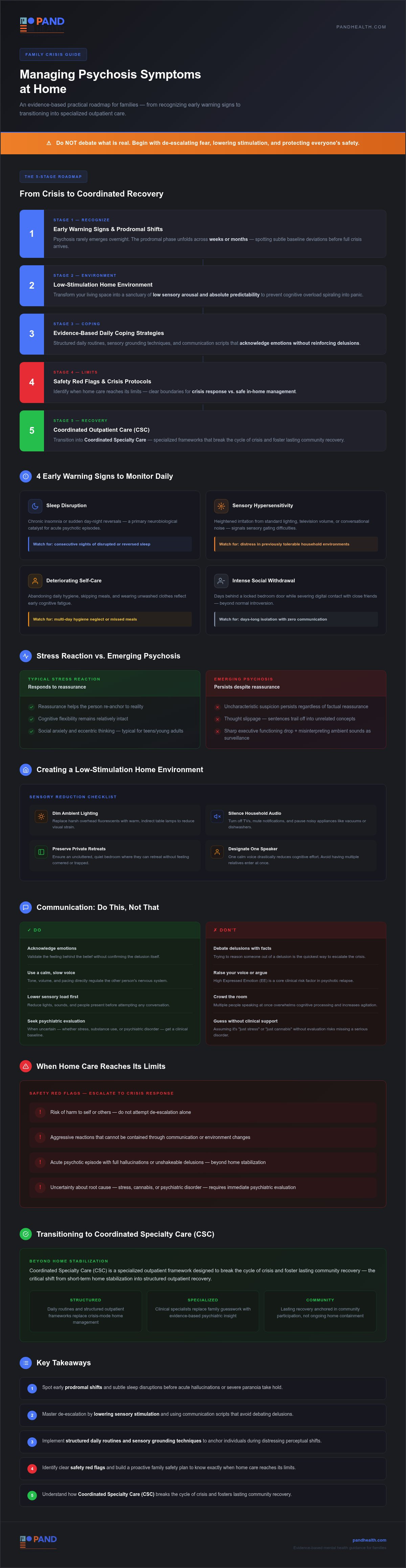
- Spot early prodromal shifts and subtle sleep disruptions before acute hallucinations or severe paranoia take hold.
- Master the clinical art of managing psychosis symptoms at home by lowering sensory stimulation and using de-escalation scripts that avoid debating delusions.
- Implement structured daily routines and sensory grounding techniques that help anchor individuals during distressing perceptual shifts.
- Identify clear safety red flags and build a proactive family safety plan to know exactly when home care reaches its limits.
- Understand how specialized outpatient frameworks, such as Coordinated Specialty Care, break the cycle of crisis and foster lasting community recovery.
Recognizing Early Warning Signs and Prodromal Shifts at Home
Psychosis rarely emerges overnight. While popular depictions suggest sudden breaks from reality, the initial shift is typically insidious, unfolding across weeks or months. Clinicians call this the prodromal phase. Understanding what is psychosis in its earliest stages allows families to intervene before mild perceptual shifts calcify into unshakeable delusions. Successfully managing psychosis symptoms at home begins with spotting these subtle baseline deviations long before a full crisis arrives.
Behavioral and Sensory Changes to Monitor Daily
The earliest markers of a prodromal shift frequently manifest as sensory dysregulation and fragmented sleep patterns. You might notice your family member struggling to process routine household environments that were never an issue before. Keep a structured record of these specific observations:
- Consecutive sleep disruption: Chronic insomnia or sudden day-night reversals often serve as the primary neurobiological catalyst for acute psychotic episodes.
- Sensory hypersensitivity: Heightened irritation from standard room lighting, television volume, or conversational noise points toward sensory gating difficulties.
- Deterioration in routine self-care: Abandoning daily hygiene, skipping meals, and wearing unwashed clothes reflect early cognitive fatigue.
- Intense social withdrawal: Spending days behind a locked bedroom door while severing digital contact with close friends.
Differentiating Stress Reactions from Emerging Psychosis
Teenagers and young adults often experience acute stress, social anxiety, or eccentric thinking. However, differentiating typical adolescent distress from an emerging thought disorder requires examining cognitive flexibility and sensory processing. When a young person faces severe stress, reassurance usually helps them re-anchor. In emerging psychosis, uncharacteristic suspicion persists regardless of factual reassurance.
Watch for thought slippage, where sentences trail off into unrelated concepts, or instances where a loved one misinterprets ambient shadows and floorboard creaks as targeted surveillance. If executive functioning drops sharply and school work becomes unmanageable alongside these odd perceptions, home observation must give way to clinical insight. When you are uncertain whether symptoms stem from stress, substance use, or a psychiatric disorder, seeking an immediate psychiatric evaluation removes the guesswork, giving your household a clear baseline for managing psychosis symptoms at home while securing the right clinical backing.
Creating a Low-Stimulation, De-escalating Home Environment
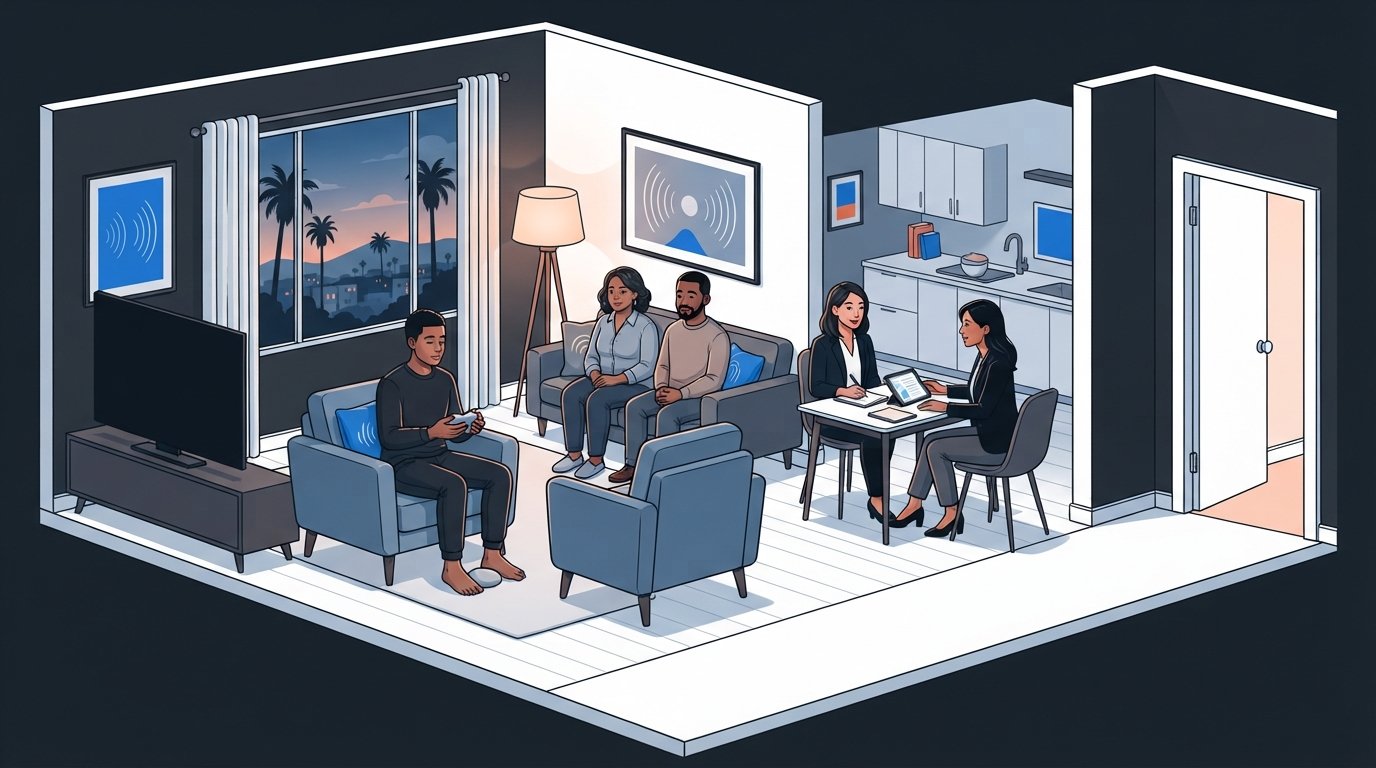
When an individual navigates altered realities, their brain struggles to filter incoming sensory data. Sounds register louder, lights glare brighter, and everyday household chatter can feel like an overwhelming assault on their cognitive processing. Standard advice often rushes families toward emergency rooms at the first sign of agitation, but knowing how to lower neurological load provides a vital intermediate layer of safety. Successfully managing psychosis symptoms at home requires transforming your living environment into a sanctuary of low sensory arousal and absolute predictability.
Environmental De-escalation and Sensory Reduction Techniques
Reducing environmental friction prevents cognitive overload from spiraling into panic or defensive anger. Take immediate physical steps to soften the surrounding sensory landscape:
- Dim ambient lighting: Turn off harsh overhead fluorescents and replace them with warm, indirect table lamps to reduce visual strain.
- Silence household audio: Shut off blaring televisions, mute tablet notifications, and pause noisy appliances like vacuums or dishwashers.
- Preserve private retreats: Ensure your loved one has an uncluttered, quiet bedroom where they can retreat without feeling cornered or trapped.
- Designate a single speaker: Avoid having multiple relatives enter the room at once. One calm voice drastically reduces the cognitive effort needed to process conversation.
Communication Strategies to Avoid Confrontation and Delusional Debates
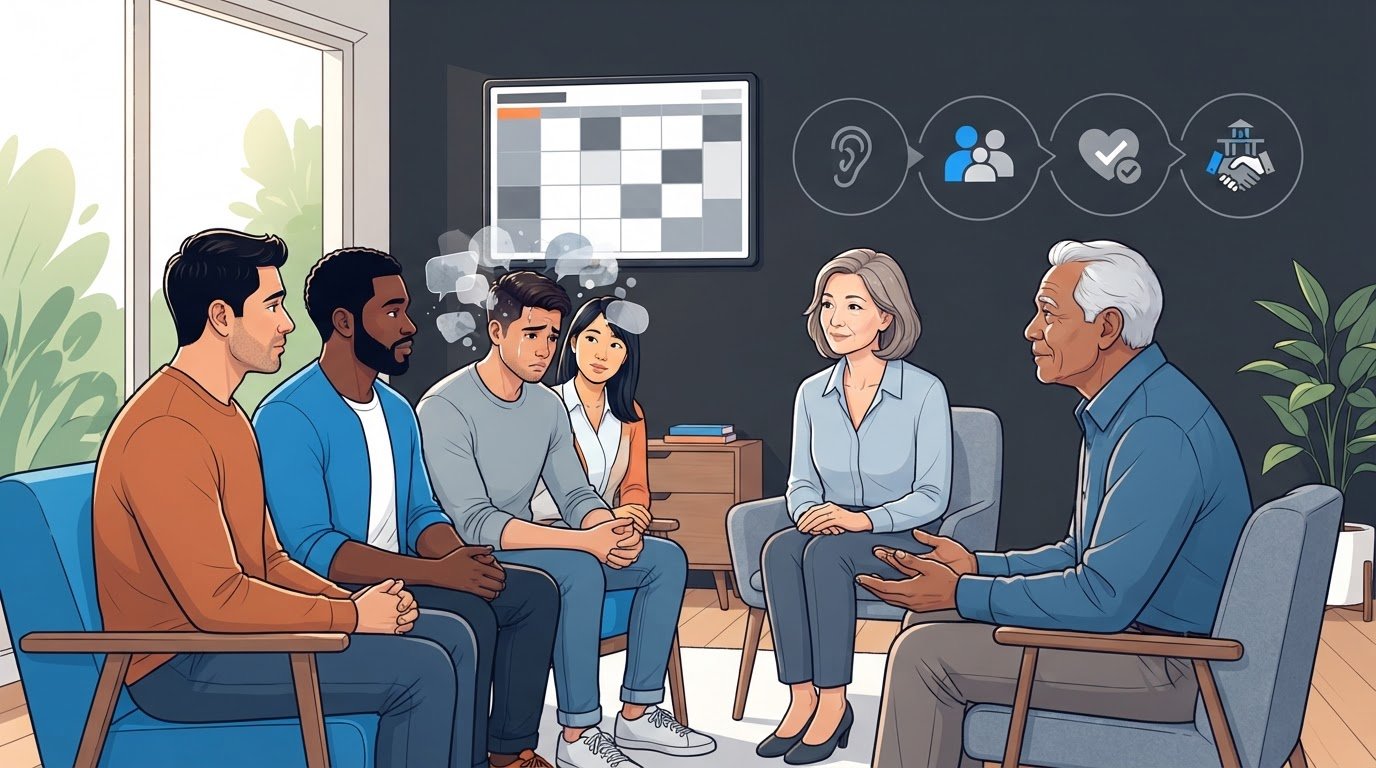
A central pillar of clinical stabilization involves eliminating High Expressed Emotion (EE), a communication pattern defined by overt criticism, personal hostility, and emotional over-involvement. When you argue with a delusional statement, the brain interprets that pushback as an existential threat. Never tell someone their delusion is impossible, and never pretend you experience it yourself. Instead, validate the underlying emotional state. A phrase like, "I don't hear the voices you are hearing, but I can see how terrified you are, and you are safe here," disarms defensiveness immediately.
Speak in concise, low-tempo sentences. Give them ten to fifteen seconds to process what you said before speaking again. Avoid whispering in adjacent hallways, making sudden movements, or blocking exits, as these actions trigger persecutory thoughts. Mastering these nuanced relational skills takes dedicated clinical guidance. Families seeking deeper structural support can connect with our team through a personalized family psychoeducation program to replace household distress with clinical confidence.
Evidence-Based Daily Coping and Reality-Testing Strategies
Living through sensory distortions feels intensely real to the person experiencing them. Medication can calm underlying neurochemistry, but practical cognitive tools teach individuals how to regain footing during moments of perceptual distress. Safely managing psychosis symptoms at home requires active daytime coping strategies that bridge the gap between clinical appointments and domestic life.
Grounding and Compensatory Cognitive Exercises
Sensory grounding redirects neural bandwidth away from internal misperceptions and back toward concrete physical reality. When distress peaks, structured exercises offer an immediate cognitive anchor:
- The 5-4-3-2-1 method: Guide your family member to verbally identify five visible objects, four tangible textures, three distinct sounds, two scents, and one taste in the immediate room.
- Auditory competition: Using over-ear headphones to play preferred instrumental music or spoken audiobooks provides competing sensory input that helps drown out intrusive auditory hallucinations.
- Tactile temperature shifts: Splashing cold water on the face or gripping an ice cube stimulates the vagus nerve, lowering physiological panic and resetting focal attention.
- Collaborative reality testing: When unusual thoughts surface, encourage them to ask, "I'm sensing something threatening right now; are you noticing it too?" This builds trust without challenging their integrity.
Establishing Predictable Routines and Sleep Hygiene
Chaotic environments accelerate cognitive disorganization. A predictable circadian structure stabilizes metabolic rhythms and directly protects brain function. Establish non-negotiable anchors: wake up at the exact same hour each morning, eat balanced meals at consistent times, and turn off stimulating screens two hours before bed. Daytime physical movement, such as a brisk afternoon walk, burns restless nervous energy and promotes restorative sleep. For young people struggling to rebuild daily confidence outside the home, exploring structured social skills training helps restore functional independence and healthy interpersonal connections.
Managing Substance and Cannabis Relapse Risks at Home
Modern high-potency cannabis presents severe risks for individuals vulnerable to thought disorders. High-THC concentrates, vapes, and edibles disrupt dopamine regulation, frequently triggering persecutory ideation, panic, and rapid symptom relapse. Managing psychosis symptoms at home requires establishing an explicit, substance-free agreement for the entire household.
Address substance use with empathy rather than moral judgment. Many young people reach for cannabis to numb their anxiety, quiet internal voices, or force themselves to sleep, completely unaware that it worsens the underlying pathology. If chemical dependency and thought disruptions intertwine, securing specialized dual-focus support, such as targeted cannabis induced psychosis rehab, ensures recovery proceeds safely on both fronts.
When Home Care Reaches Its Limits: Safety, Red Flags, and Crisis Protocols
While environmental modifications and low-arousal communication offer powerful de-escalation support, they cannot substitute for urgent clinical intervention during acute psychiatric decompensation. Successfully managing psychosis symptoms at home requires an objective recognition of clinical boundaries. When perceptual distress transforms into imminent safety risks, continuing home management alone places both the individual and the entire family in jeopardy.
Recognizing Acute Risk and Medical Red Flags
Families must establish clear, non-negotiable boundaries where domestic containment stops and emergency care begins. Transition to acute crisis protocols immediately if you observe any of the following clinical indicators:
- Overt threats of harm: Any explicit statements regarding suicide, self-inflicted injury, or physical violence toward household members.
- Command hallucinations: Auditory voices instructing the individual to carry out dangerous, reckless, or destructive acts.
- Severe functional catatonia: Complete cessation of speech, immobility, or prolonged refusal of fluids and food leading to physical dehydration.
- Extreme behavioral disorganization: Wandering into traffic, leaving the house unclothed, or engaging in high-risk acts driven by persecutory beliefs.
Building a Family Safety and Emergency Action Plan
Formulate an emergency action plan before high-stress escalations occur, rather than attempting to organize logistics in the middle of a frightening episode. Store a consolidated crisis binder containing current psychiatric prescriptions, diagnostic history, baseline behavioral notes, and clinician phone numbers. Decide ahead of time which single family member acts as the designated communicator to keep external interactions serene.
Proactively remove lethal means from the living space, including securing household cutlery, locking away all prescription medications, and restricting access to vehicle keys. When immediate emergency support is necessary, calling or texting 988 serves as the primary gateway to mobile crisis response teams. If calling 911 becomes inevitable due to imminent physical violence, clearly state to the dispatcher: "This is an acute mental health crisis; please dispatch a Crisis Intervention Trained (CIT) officer or a mental health clinician."
Hospital emergency rooms excel at short-term physical containment, but families often find themselves back home days later without lasting answers. If symptoms are escalating rapidly but physical safety remains intact, you can bypass chaotic waiting rooms by scheduling same or next day psychosis evaluation services to initiate structured psychiatric care before a total emergency unfolds.
Transitioning from Home Support to Coordinated Outpatient Care
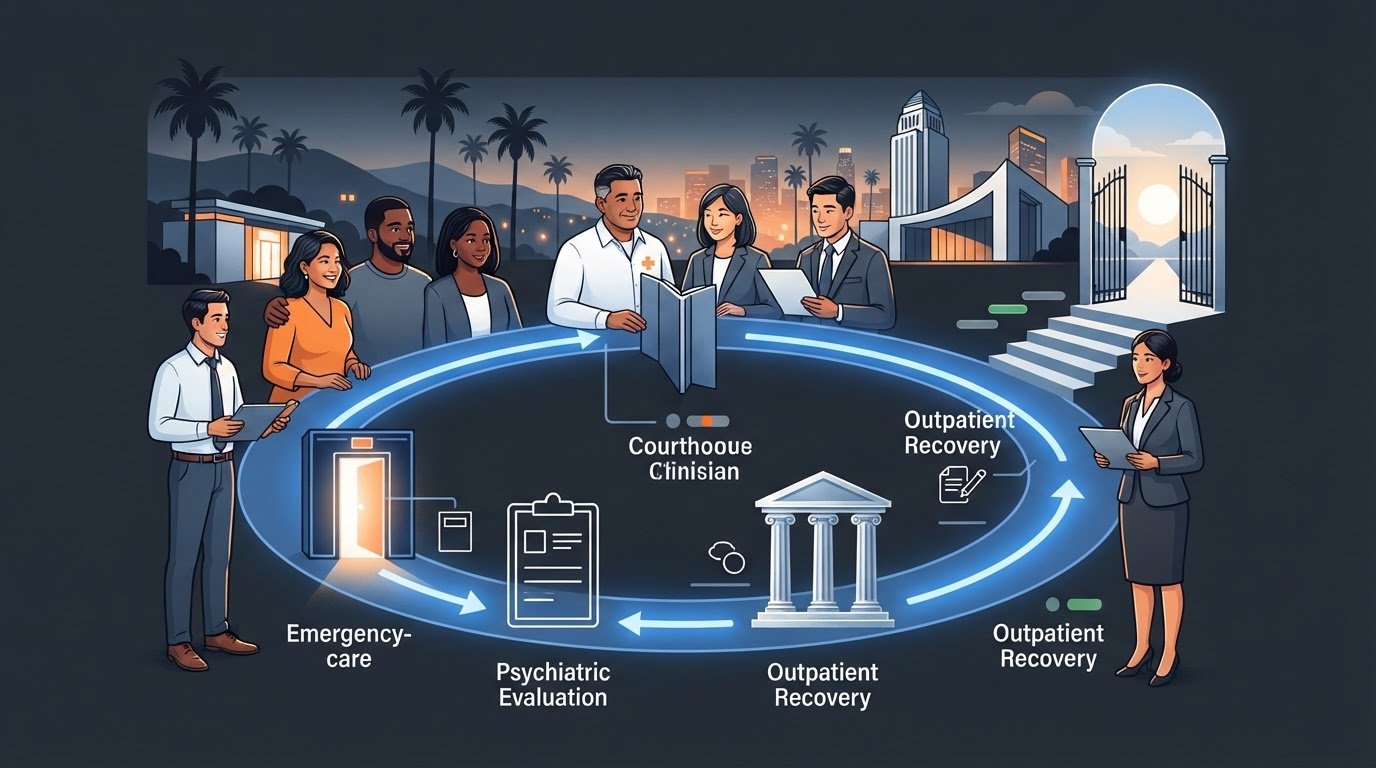
While managing psychosis symptoms at home creates vital domestic stability, home care is never meant to replace comprehensive psychiatric treatment. Domestic de-escalation acts as a bridge, stabilizing the immediate environment so clinical healing can take root. Sustained recovery requires moving beyond crisis management into an evidence-based outpatient framework designed to keep young individuals thriving in their everyday communities.
The Augmented Coordinated Specialty Care (CSC) Framework
Coordinated Specialty Care, modeled on national research from the National Institute of Mental Health (NIMH), represents the gold standard for treating first-episode psychosis. In Los Angeles, Pand Health delivers this specialized care through the California OnTrack program for teens and young adults ages 13 to 40. Rather than offering isolated weekly visits, this intensive outpatient model delivers 24 to 32 hours of comprehensive care per client, surrounding the individual with a dedicated multidisciplinary team.
This structured level of community intervention dramatically changes long-term trajectories. Post-enrollment rehospitalization rates drop to 6% compared to a baseline exceeding 50%, while average inpatient hospital stays decline from 40 days down to just 7 days. Clinicians integrate targeted modalities such as Metacognitive Training (MCT) and Cognitive Behavioral Therapy tailored specifically for psychosis. These therapies help young people identify cognitive biases, question persecutory thoughts safely, and regain agency over their internal narratives.
Comprehensive Rehabilitation and Family Partnership in Los Angeles
True psychiatric stabilization reaches beyond symptom reduction; it focuses on restoring normal life milestones. Through comprehensive psychological and social rehabilitation, individuals rebuild practical life skills and reconnect with their peers. The California OnTrack Work-Study Program offers supported education and employment coaching, empowering young adults to return to competitive high school, college, and workplace environments without falling behind.
Families remain core clinical partners throughout every stage of this journey. Behavioral Family Therapy and multi-family psychoeducation groups lower household tension, teaching parents and siblings how to communicate without provoking distress. By combining daily computerized cognitive remediation with targeted physical fitness coaching, clients experience measurable cognitive restoration, including a 19-point clinically significant improvement on the PANSS scale and a 40% reduction in SANS negative symptom scores over nine months of care.
Effective care transforms the home from a fragile crisis center into a safe foundation for long-term growth. When your household is ready to move past acute stabilization and establish lasting clinical momentum, contact the Pand Health team to access specialized outpatient care designed to keep your family whole.
Moving Beyond Crisis: Your Next Steps Toward Lasting Recovery
Safely managing psychosis symptoms at home gives your family the breathing room needed during an acute crisis. By lowering sensory overload, validating underlying emotions without debating delusions, and implementing structured daily routines, you create an immediate sanctuary of calm. Domestic de-escalation secures the present, but specialized clinical intervention rebuilds the future. True healing requires moving from temporary crisis containment into structured, evidence-based care.
Through the California OnTrack program, Pand Health delivers Coordinated Specialty Care that fundamentally transforms outcomes. By integrating APA-recommended Metacognitive Training and cognitive remediation, 85% of enrolled participants return to school or work within six months, while rehospitalization rates drop from over 50% down to 6%. A psychotic episode is a medical event, not a life sentence. With the right clinical partnership, recovery and community reconnection are entirely within reach. Connect with the Pand Health team for expert outpatient psychosis care and take the first decisive step toward restoring your loved one's independence and hope.
Frequently Asked Questions
Can psychosis symptoms be completely managed at home without medical intervention?
No, domestic strategies cannot replace comprehensive clinical treatment. While managing psychosis symptoms at home stabilizes sensory distress and de-escalates agitation, unmanaged biological neurochemistry requires clinical oversight. Delaying medical intervention extends the duration of untreated psychosis, which complicates long-term prognosis. At-home containment acts as a temporary stabilizer while arranging coordinated outpatient care, psychiatric evaluation, and therapy.
What is the best way to talk to someone who is actively experiencing a delusion?
Acknowledge their emotional distress without directly agreeing with or disputing their false belief. Never argue, debate evidence, or attempt to prove the delusion wrong, as this fuels defensiveness and fear. Instead, use grounding validation: "I understand that feels terrifying to you, but you are completely safe in this room with me." Keep your voice low, steady, and unhurried.
How do I know when it is time to seek emergency help instead of managing at home?
Seek immediate crisis response when safety cannot be guaranteed within the house. Clear red flags include explicit statements of self-harm, physical threats directed at others, command hallucinations instructing destructive behavior, or complete physical catatonia. In these moments, contact the 988 Suicide & Crisis Lifeline to request a mobile crisis team or ask 911 for Crisis Intervention Trained (CIT) officers.
What role does sleep deprivation play in worsening psychosis symptoms at home?
Sleep deprivation is one of the most potent biological drivers of psychotic escalation. Consecutive nights without sleep impair prefrontal cortex functioning, heighten baseline paranoia, and degrade sensory gating. When a loved one remains awake for multiple nights, domestic calming techniques become far less effective, signaling that immediate medical sleep stabilization from a psychiatric provider is urgently required.
How does outpatient Coordinated Specialty Care differ from psychiatric hospitalization?
Psychiatric hospitalization serves as short-term crisis containment, whereas outpatient Coordinated Specialty Care (CSC) keeps individuals living at home while receiving intensive, multi-layered treatment. In Los Angeles, Pand Health delivers California OnTrack, an augmented CSC model providing 24 to 32 hours of outpatient care weekly. This community-based approach helps teens and young adults rebuild life skills without the trauma of repeated inpatient hospitalizations.
Can cannabis use trigger a relapse of psychosis symptoms while recovering at home?
Yes, cannabis consumption significantly elevates the risk of severe symptom recurrence. Modern high-potency THC products alter brain dopamine pathways, often precipitating paranoia, thought slippage, and auditory distortions even in individuals making steady recovery progress. Successful home stabilization requires establishing a clear, substance-free living environment supported by specialized cannabis induced psychosis rehab when dual-diagnosis challenges are present.
How can family members avoid emotional burnout while supporting a loved one with psychosis?
Families must establish firm personal boundaries and participate in structured family psychoeducation rather than carrying the burden alone. Chronic hypervigilance rapidly drains emotional resilience. Utilizing external clinical teams, dividing household caregiving responsibilities among relatives, and attending behavioral family therapy groups ensures caregivers preserve their own well-being while effectively managing psychosis symptoms at home.
Disclaimer
This article is for information and educational purposes only, and can NEVER replace a proper medical evaluation. If you or a loved one may be suffering from psychosis or the prodomal symptoms of psychosis, get evaluated by a professional as soon as possible. Early diagnosis and treatment can be life-saving.