

How to Find a Job After Psychosis Recovery: A Practical Guide
What if the right pace for a job search after psychosis recovery isn’t the fastest one, but the one you can sustain? If you’re wondering how to find a job after psychosis recovery, it’s understandable to feel unsure about when to begin, how to explain a gap in your résumé, or what kind of work will fit your energy and concentration right now. You don’t have to answer every question before taking a first step.
A manageable search can start with your current goals, strengths, and support needs, then build gradually. You can prepare applications and interviews without sharing more about your mental health than you choose. As you compare roles, consider practical details such as the schedule, commute, task demands, and whether workplace adjustments or vocational guidance could help.
This guide offers a practical approach to pacing your search, identifying roles that may suit you, and preparing to discuss your experience with confidence. It also explains supported employment options, including California OnTrack’s Work-Study Program in Los Angeles, so you can explore structured support alongside your recovery goals. Your job search doesn’t need to follow someone else’s timeline.
Key Takeaways
- Success can mean exploring interests, learning, volunteering, or paid work. Choose a goal that feels meaningful to you.
- Check in on routines, energy, concentration, and support preferences to help decide what pace may be manageable.
- When comparing roles, consider the schedule, sensory demands, commute, flexibility, and supervision, not only the job title.
- Use a practical sequence for setting a goal, preparing materials, identifying roles, applying, and reviewing progress.
- Explore whether case-managed employment support could connect vocational goals with clinical and psychosocial care.
Starting a job search after psychosis recovery: define success on your terms
Wanting to work and needing continued support can both be true. Recovery doesn’t require you to choose between caring for your wellbeing and building a meaningful working life. There’s no single deadline for returning to work, and employment isn’t a test of recovery or a measure of your worth.
Instead, define progress by what matters to you. Success might mean exploring an interest, taking a course, volunteering, returning to education, or accepting paid work. Psychosis can affect people in different ways. The Psychosis overview offers general background, but your own goals and support needs are individual.
What does returning to work after psychosis recovery mean?
Exploring work is not the same as deciding you’re ready to accept a particular role. You might start by learning about an occupation, talking with someone in that field, or considering what kind of environment feels comfortable. These steps can help you compare possibilities without committing to a job before you’re ready. For example, you could ask someone about the tasks they do each day, the schedule, or the kind of training involved.
People choose different paths, schedules, and levels of support. One person may want to study before applying; another may prefer volunteering or a gradual return to paid work. Needing support doesn’t make a goal less meaningful, and choosing not to work right now doesn’t diminish your progress. Recovery-oriented employment means pursuing work in line with goals you choose, with a pace and support that work for you.
How can you set a first employment goal?
Start with curiosity rather than a deadline. Write down interests, strengths, tasks you enjoy or find manageable, and environments you’d like to explore. For example, you might prefer predictable tasks, a quieter setting, or opportunities to work with people. These preferences can help you identify possibilities without needing to settle on a specific job title.
Then choose one small next step. You could look up a training option, update one section of your résumé, or ask someone about a role you’re curious about. Make the step specific, such as writing down three skills you want to highlight or researching one occupation. You can decide what comes next after trying it.
- Interest: What would you like to learn more about?
- Strength: What skills or experiences would you like to use?
- Environment: What setting or schedule might suit you?
- Next step: What is one action you feel ready to take?
If it would help, discuss your ideas with a trusted supporter or care provider. They can help you think through what feels manageable and what support you may want, while the decision remains yours. A flexible starting point makes how to find a job after psychosis recovery a personal process, not a race to meet someone else’s timeline.
How to assess your readiness and pace a job search
Readiness isn’t a pass-or-fail judgment. It’s a personal snapshot of what feels manageable now, what might need support, and what you’d like to explore. A reflective check-in can help you plan, but it can’t diagnose a condition or predict exactly how a job will affect you.
Consider these areas without expecting every answer to be “yes”:
- Routines: How steady do your sleep, meals, appointments, and daily activities feel?
- Energy: What kinds of tasks leave you feeling engaged, and which tend to drain you?
- Concentration: How long can you focus comfortably, and do written reminders or breaks help?
- Support: Would you prefer to manage applications independently, ask someone to review them, or receive more structured guidance?
Readiness is individual and is best considered in the context of your goals, health, and available support. If you have a treatment team, discussing work goals with them may help you think through possible stressors and ways to keep work plans aligned with your care. You might talk about changes in sleep, rising anxiety, difficulty concentrating, or other signs you’d want to monitor. This is planning, not a reason to assume that challenges will occur.
What questions can help you plan a sustainable return?
Picture the practical demands of a role. What schedule, commute, environment, and task demands would you feel comfortable exploring? How might work fit around appointments, sleep routines, caregiving, and other commitments? Before applying, note which conditions seem workable and which questions you’d want answered. For instance, you could ask whether a role has set shifts, how training is provided, or how often priorities change. Informational interviews, short shifts, or part-time roles may be options to explore, not steps everyone needs to take.
How can you adjust the pace if job searching feels overwhelming?
Make the process smaller. Instead of “find a job this week,” choose one concrete task, such as spending a short block of time researching roles, drafting a résumé section, or reviewing an application. Set a weekly goal that leaves room for rest and other priorities, then check whether it felt manageable. If not, reduce or change the next step.
A pause can be useful information, not failure. You might ask a trusted supporter or care provider to help identify what feels difficult and whether practical support could make the task easier. If you’re exploring structured employment support in Los Angeles, you can ask Pand Health about program information. A paced plan gives you room to adapt while keeping your goals in view.
Choosing a job and handling disclosure after psychosis recovery
A suitable role is about more than its title or pay. Day-to-day conditions matter: schedule, sensory demands, commute, flexibility, task structure, and how supervision and feedback are handled. Compare these details with your preferences instead of assuming one type of work is right for everyone. A job description may not answer every question, so consider asking about the routine, training, and expectations before accepting an offer.
How do you identify work that fits your current needs?
Full-time, part-time, temporary, remote, and training options may each suit different circumstances. Consider whether you’d prefer predictable tasks or frequent variety, planned breaks or a continuous workflow, and written instructions or in-person feedback. A long or crowded commute may also affect how manageable a role feels. These are questions to explore, not a checklist you must pass.
Preferences can shift as your circumstances change. You can reassess a role after learning more about its actual demands, or revisit your work preferences as you gain experience. If workplace communication is a concern, ask about social skills training in Los Angeles and whether it may be relevant to your goals.
Do you need to tell an employer about psychosis?
Disclosure is a personal decision, and the right choice depends on your circumstances. You can discuss your skills, experience, availability, and the tasks you’re prepared to do without sharing private health information. If you’re considering disclosure to request an adjustment or want to understand the possible implications, seek guidance before deciding.
Workplace rights and accommodation rules depend on the circumstances and can change. Avoid relying on general advice for a decision that affects your situation. For current guidance, consult a qualified employment-rights resource, such as a government civil-rights agency, or an employment attorney.
It may help to separate two questions: “What information do I want to share?” and “What conditions would help me do this job well?” You can prepare a clear description of your work-related needs without disclosing a diagnosis, if that feels right for you. For example, you might ask about predictable scheduling or written instructions, then decide separately whether to share any personal context.
Stigma can make these choices feel weighty. You deserve time to consider them, and you don’t have to disclose simply to show that you’re ready to work. As you consider how to find a job after psychosis recovery, focus on the fit between the role and your needs, and get qualified advice when workplace rights or accommodations are part of the decision.
A practical step-by-step plan for applications, interviews, and early work
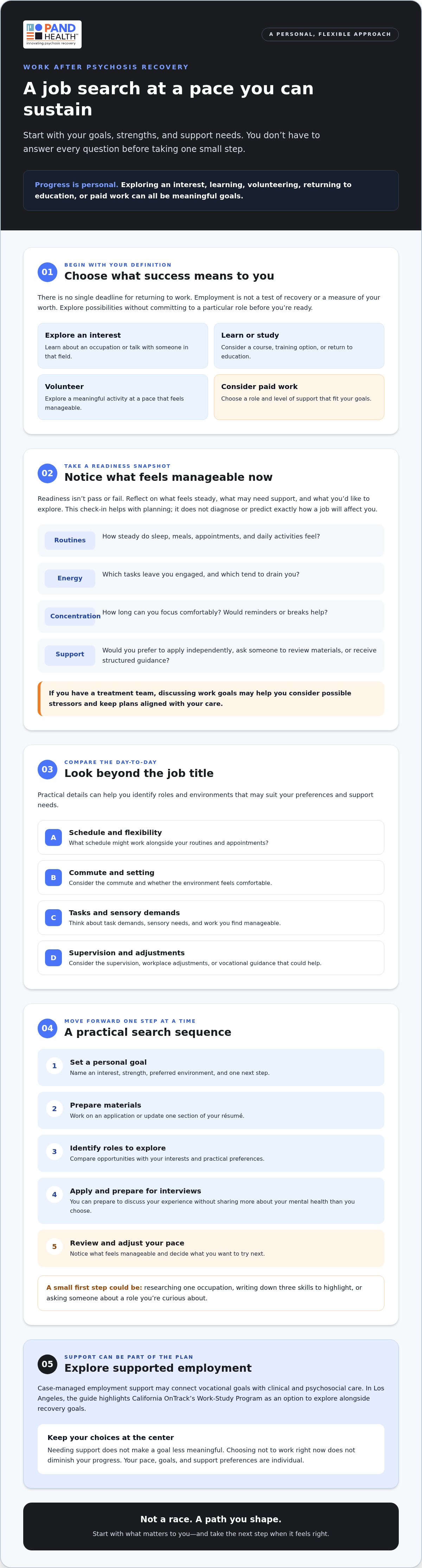
A clear sequence can make the job search easier to manage. Treat each step as a guide, not a deadline. You can ask a trusted supporter or employment specialist to help plan, review materials, or practice interviews if you want assistance.
- Set a goal. Decide what you want to explore, such as a particular type of role, a part-time schedule, or a training opportunity.
- Prepare your materials. Build a résumé around relevant skills, experience, education, and strengths.
- Identify roles. Look for openings that match your interests and practical preferences.
- Apply. Tailor your materials to each role and keep track of where and when you applied.
- Review progress. Notice what’s working, what feels difficult, and whether you want to adjust your approach.
How can you prepare a résumé and find suitable openings?
Start with what you can offer. Include prior employment, coursework, volunteering, projects, and transferable skills such as organizing, communicating, or solving problems. You don’t need to list every experience. Read each job description and identify the qualifications you can demonstrate. Then tailor your résumé so those details are easy to find. A simple application tracker can include the role, employer, application date, and any follow-up task, helping you keep the search organized without relying on memory.
For local guidance, the City of Los Angeles operates WorkSource Centers and Portal Offices that provide services such as résumé building, career guidance, and job assistance. Contact a center to confirm current services and eligibility before relying on a particular resource.
How can you prepare for interviews and the first weeks?
Practice concise examples that show a strength, teamwork, problem-solving, or how you learned something new. For each example, think about the situation, what you did, and the result. Prepare a few questions about training, supervision, daily tasks, and the schedule. If a trusted person can help you rehearse, ask them to keep practice focused and at a pace that feels manageable.
Plan practical details ahead of time, including transportation, your morning routine, and what you may need to bring. After starting, give yourself time to learn the role. Check in with yourself about workload, communication, and support needs, and consider raising questions with an appropriate supervisor or supporter. Adjusting to a new workplace is part of learning, not proof that you’ve failed.
These steps offer a flexible way to approach how to find a job after psychosis recovery, while leaving room to adapt as you learn. If you’re interested in structured employment and education support alongside recovery, contact Pand Health to ask about program information.
How supported employment can help after psychosis recovery in Los Angeles
A job search can involve more than finding openings and submitting applications. Supported employment connects vocational goals with clinical and psychosocial care, so practical steps such as preparing a résumé can be considered alongside broader recovery goals. This kind of structured help is one option for people who want support while exploring work or education in Los Angeles.
What does supported education and employment support include?
Pand Health’s Supported Education & Employment (SEE) curriculum includes case-managed job and education support. Depending on a person’s goals, it may involve counseling, motivational interviewing, résumé building, social-skills training, and workplace or school advocacy. For example, case management can help organize application steps or prepare for workplace communication while keeping vocational goals connected to care.
Support can also involve trusted loved ones, if the individual wants them included. Family psychoeducation may help family members understand how to offer support while respecting the person’s own choices and goals.
Pand Health reports that, in a 2022 to 2024 cohort of 41 patients, employment or education participation was 6% at enrollment, 40% after three months, and 85% after six months. These figures describe participation observed in that cohort. They are not a prediction or guarantee of any individual’s employment, education, or recovery outcome.
How can you explore California OnTrack in Los Angeles?
California OnTrack is an augmented Coordinated Specialty Care program that integrates employment and education support with clinical and psychosocial care. Pand Health’s Los Angeles program supports teens and adults experiencing early psychosis. The California OnTrack Work-Study Program may be relevant for people exploring vocational goals alongside recovery. Participation should not be understood as a promise of a job.
To learn more about the program’s approach, look for Pand Health’s published LA Work-Study Guide for Mental Health Recovery. Program eligibility, availability, and intake details can change, so verify current information directly with Pand Health. As you consider how to find a job after psychosis recovery, you can contact Pand Health about program fit and ask whether its current support may align with your goals.
Take your next step at a pace that supports you
Finding work after psychosis recovery doesn’t have to follow a fixed timetable. Start with a goal that feels meaningful, consider what conditions may help you sustain it, and break applications into manageable steps. You can also choose how much personal information to share and seek qualified guidance if you have questions about workplace rights or accommodations.
If you want structured support, Pand Health’s Supported Education & Employment curriculum includes résumé building, counseling, social-skills training, and workplace or school advocacy. In a 2022 to 2024 cohort of 41 patients, employment or education participation was 6% at enrollment and 85% after six months. These are cohort observations, not a prediction or guarantee of an individual outcome.
Learning how to find a job after psychosis recovery can begin with one practical step and the support you choose. Explore support for your employment goals and ask about current program information. Your path can be gradual, flexible, and shaped around what matters to you.
Frequently Asked Questions
How soon can someone return to work after psychosis?
There’s no universal timeline for returning to work after psychosis. The right time depends on your goals, health, daily routines, and the support available to you. You might begin by exploring interests or training before applying, or consider a gradual work option if it fits your circumstances. If you have a treatment team, discuss work goals and possible stressors with them as you plan how to find a job after psychosis recovery.
Can working after psychosis recovery cause a relapse?
Work doesn’t automatically cause a relapse, but job demands and stress can affect wellbeing differently for each person. Consider the schedule, workload, commute, and support available, and pay attention to changes in sleep, concentration, or stress that concern you. You can discuss these observations with your care team and review whether the role or your plan needs adjusting. A change in pace isn’t a failure.
Do I have to tell an employer that I experienced psychosis?
In California, employees generally aren’t legally required to disclose a disability to an employer. You can discuss your skills, experience, and availability without sharing private health information. If you’re seeking a workplace accommodation, disclosure may be relevant to that request, and legal protections depend on the circumstances. For advice about your rights or a specific situation, consult a qualified employment-rights resource or attorney.
What jobs are suitable after psychosis recovery?
No single job type is suitable for everyone. Consider roles by schedule, commute, sensory environment, task structure, breaks, flexibility, and the supervision or feedback offered. Full-time, part-time, temporary, remote, or training options may each be worth exploring, depending on your preferences and circumstances. Start by identifying conditions that may help you work comfortably, then ask questions about the day-to-day demands before accepting a role.
How can I explain a gap in my résumé after psychosis?
You can keep your explanation brief and focus on your readiness and relevant experience. For example, you might say, “I took time away for personal reasons, and I’m now prepared to discuss how my skills match this role.” You don’t have to share a diagnosis to explain a gap. Highlight relevant employment, education, volunteering, projects, or strengths, and prepare a response that feels comfortable and truthful.
What is supported employment for people recovering from psychosis?
Supported employment offers structured help with work goals and job-search tasks, often alongside other recovery support. Pand Health’s Supported Education & Employment curriculum includes case-managed job and education support, résumé building, counseling, motivational interviewing, social-skills training, and workplace or school advocacy. The aim is to connect vocational goals with clinical and psychosocial care. Support can be explored as an option, not a promise of employment.
Does Pand Health help people find work in Los Angeles?
Pand Health’s California OnTrack programs in Los Angeles include Supported Education & Employment support for teens and adults experiencing early psychosis. This can include case-managed job and education guidance, but it doesn’t guarantee a job or a particular outcome. Current eligibility, program availability, and intake details should be confirmed directly with Pand Health. Contact the organization to ask whether its current program may fit your goals and circumstances.
Disclaimer
This article is for information and educational purposes only, and can NEVER replace a proper medical evaluation. If you or a loved one may be suffering from psychosis or the prodomal symptoms of psychosis, get evaluated by a professional as soon as possible. Early diagnosis and treatment can be life-saving.