

How to Convince a Loved One to Get Help for Psychosis
What if the goal isn’t to convince your loved one they’re ill, but to help them feel safe enough to consider support? If they don’t believe anything is wrong, it can be difficult to know what to say. Fear of conflict or rejection may make starting the conversation feel even harder. Convincing a loved one to get help for psychosis takes patience, empathy, and respect for their perspective.
Resistance may not be simple stubbornness. A person experiencing psychosis may not recognize changes in their thoughts or perceptions, so arguing over what’s real can increase tension rather than build trust. A calm conversation focused on their concerns and wellbeing can open a path toward professional support.
This article explains how to choose a time to talk, respond to unusual beliefs without dismissing your loved one, and handle hesitation while respecting their choices. You’ll also learn when the situation may require urgent help and what support can follow, including psychiatric evaluation, family psychoeducation, and coordinated outpatient care such as California OnTrack. You don’t have to solve everything in one conversation. A steady, compassionate next step can matter.
Key Takeaways
- Notice changes in perception, communication, or daily functioning without trying to diagnose your loved one yourself.
- When convincing a loved one to get help for psychosis, focus on their distress, listen without judgment, and offer choices rather than pressure.
- Respond to concerns about stigma, trust, or disruption with respect, then suggest one manageable next step together.
- Know the difference between a difficult conversation and an urgent situation. Contact emergency services if there’s immediate danger or an urgent medical need.
- Explore appropriate support, including psychiatric evaluation, family services, and coordinated outpatient care such as California OnTrack for teens and adults experiencing early psychosis.
Recognizing Concern and Timing the Psychosis Talk
If you’re worried about someone you love, you don’t need to determine what’s happening before you speak with them. A noticeable change from their usual way of thinking, communicating, or managing daily life is a reason to approach the conversation with care, not proof of a particular condition.
An observed concern is a change you’ve noticed; a diagnosis is a clinical assessment of its possible cause. Psychosis describes experiences that can affect a person’s perception or understanding of what’s happening. It can have different causes, including mental health conditions, substance or medication effects, and medical conditions, so a qualified professional needs to assess the full picture. For a foundational overview of what psychosis can involve, remember that general information can’t establish what is happening for one person.
Which changes may signal that professional support could help?
Look for a shift from your loved one’s usual behavior and consider whether it’s affecting their wellbeing or everyday responsibilities. They may describe hearing or seeing things others don’t, express beliefs that are difficult for others to understand, or communicate in a way that seems unusually hard to follow. You might also notice withdrawal from relationships, difficulty keeping up with work or school, or trouble with routines they previously managed.
These observations aren’t a diagnostic checklist. Note specific examples and approximate timelines instead: “You’ve seemed more withdrawn over the past few weeks,” or “You’ve told me several times that someone is sending you messages.” Concrete details can help a clinician understand what has changed and when it began. Record what you observed separately from what you think it might mean.
How can I prepare before raising the subject?
Choose a private, calm moment when neither of you is rushed, exhausted, or already overwhelmed. Consider where your loved one feels most comfortable, whether they’d prefer to speak one-on-one or with someone they trust present, and what practical concerns could make a conversation harder, such as transportation or time away from work.
Before you begin, choose one or two observations and decide on a modest goal. Convincing a loved one to get help for psychosis doesn’t have to mean getting immediate agreement to treatment. It may be enough to open a respectful dialogue or explore whether they’d consider an evaluation.
- “I’ve noticed you haven’t been sleeping much, and I’m concerned about how you’re feeling.”
- “That sounds frightening. Would you be open to talking with someone about what you’ve been experiencing?”
These phrases acknowledge distress without confirming or challenging an unusual belief. Starting with curiosity and care can make room for another conversation, even if your loved one isn’t ready to decide today.
Encouraging a Loved One With Psychosis to Seek Help
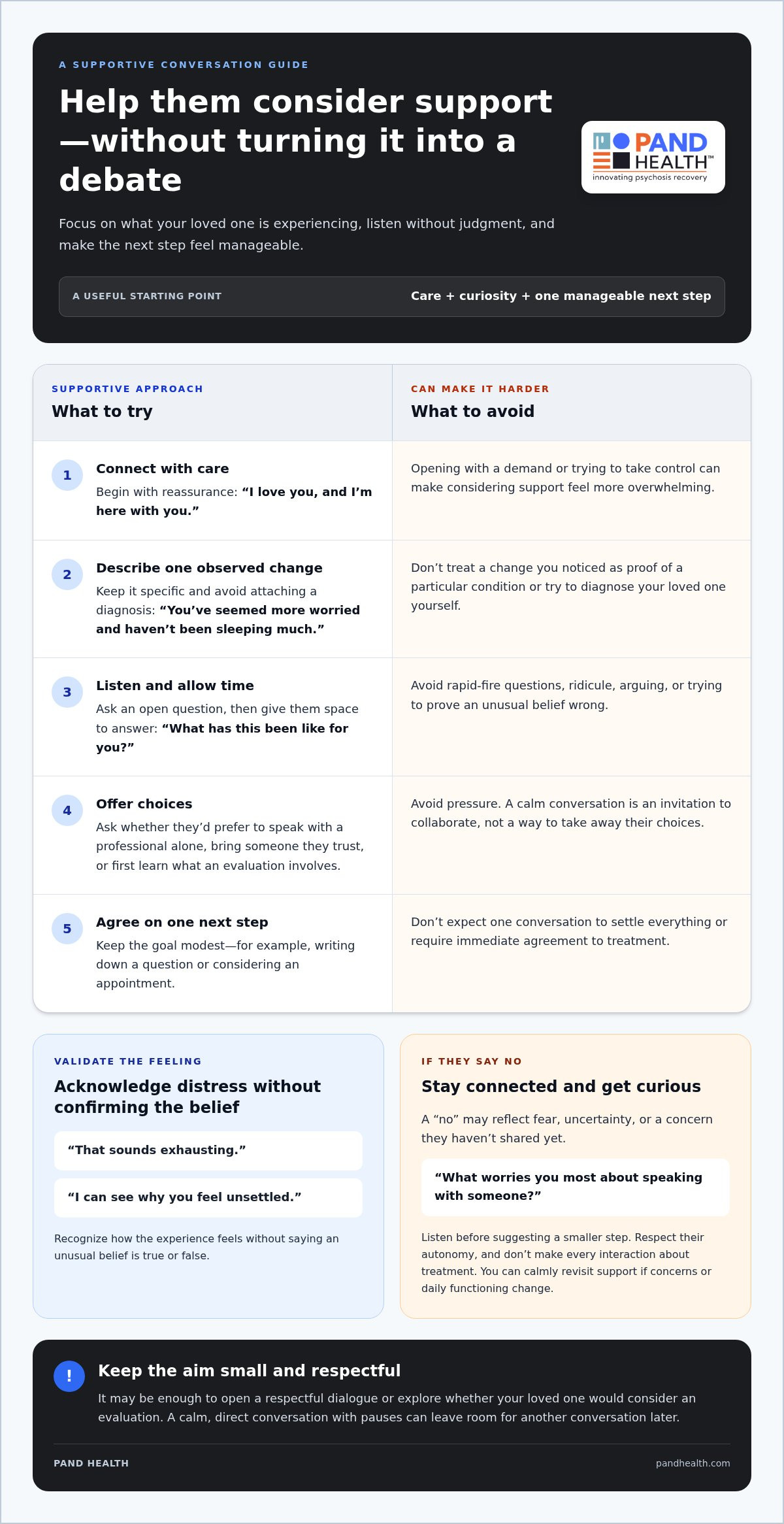
A productive conversation isn’t a debate about what’s real. It’s a chance to understand what your loved one is experiencing and make considering support feel less overwhelming. Keep your words calm and direct, and allow pauses. These five steps can guide the discussion without expecting one conversation to settle everything.
- Connect. Begin with care, not a demand: “I love you, and I’m here with you.”
- Describe. Share one specific change you’ve noticed without attaching a diagnosis: “You’ve seemed more worried and haven’t been sleeping much.”
- Listen. Ask an open question, then give them time to answer: “What has this been like for you?”
- Offer choices. Ask whether they’d rather talk with a professional alone, bring someone they trust, or first learn about what an evaluation involves.
- Agree on one next step. Keep it manageable, such as writing down a question or considering an appointment.
“I care about you, and I want to understand what would feel helpful.” This makes clear that you’re inviting collaboration, not trying to take control. If they’re open to learning more, the National Institute of Mental Health’s Understanding Psychosis offers an overview of symptoms and treatment.
How do I validate feelings without reinforcing a belief?
Separate the emotion from the explanation. You can recognize that an experience feels frightening without saying that an unusual belief is true or false. For example: “That sounds exhausting,” or “I can see why you feel unsettled.” NAMI similarly distinguishes empathy for someone’s distress from agreement with their interpretation. Avoid ridicule, rapid-fire questions, arguing, or trying to prove them wrong. Those responses can make it harder to stay connected.
What if the person says no to help?
A “no” may reflect fear, uncertainty, or a concern they haven’t yet shared. Stay connected and ask gently, “What worries you most about speaking with someone?” Listen before suggesting a smaller step, such as discussing that concern together or learning what a psychiatric evaluation involves. Respect their autonomy, and don’t turn every interaction into a treatment conversation. If their concerns or daily functioning change, you can calmly revisit support. For families in Los Angeles, learning about psychosis evaluation and support can clarify a possible next step without making the decision for your loved one.
Addressing the Biggest Objections to Psychosis Treatment Without Pressure
Resistance often points to a particular fear or need, not a lack of care for you. Pressure and confrontation aren’t substitutes for trust and choice. Ask what’s behind the objection, then respond to that concern rather than trying to win an argument. The National Alliance on Mental Illness offers additional guidance on help for a loved one with psychosis.
| What your loved one may say | A respectful response |
|---|---|
| “Nothing is wrong with me.” | “We may see things differently. I’m concerned because you’ve missed work and seem more distressed. What do you think is going on?” |
| “People will judge me.” | “It sounds like being labeled worries you. What would make it feel safer to learn about support?” |
| “I don’t trust professionals.” | “I hear that trust is a concern. What would you want to know before deciding whether to speak with someone?” |
| “Treatment will take over my life.” | “You’re worried about disruption. We could first find out what an evaluation involves and discuss your priorities.” |
These are invitations, not scripts to repeat until the person agrees. An evaluation is a conversation about what they’re experiencing and what support might be appropriate. It doesn’t, by itself, commit someone to a particular treatment. Avoid promising exactly what care will involve; encourage them to bring questions and describe what matters to them.
What if they do not believe they need help?
You don’t need agreement about a diagnosis to explain why you’re concerned. Describe a specific change and its impact: “You’ve stopped seeing friends, and you told me you feel watched. I’d like to understand how you see it.” Then listen to their explanation, including what they fear might happen if they speak with a professional. You can frame a psychiatric evaluation as a way to understand the experiences and consider options, not as proof that you’re right.
What if they fear stigma, treatment, or losing control?
Ask which part worries them most before offering reassurance. They may fear a label, a treatment they don’t want, or disruption to work, school, or family life. Invite them to share their questions and goals with a qualified professional, and emphasize that their preferences belong in the discussion. If convincing a loved one to get help for psychosis feels stuck, return to curiosity and one manageable question rather than escalating pressure.
When to Seek Urgent Help and How to Plan the Next Step
Not every concerning change calls for an emergency response. If your loved one is distressed but there’s no immediate danger or urgent medical need, you can continue a calm conversation and explore a professional evaluation. If someone may harm themselves or another person, cannot maintain immediate safety, or needs urgent medical attention, contact emergency services. An outpatient program is not a substitute for emergency care.
In California, a 5150 hold may allow an involuntary psychiatric evaluation when a person is assessed as a danger to themselves, a danger to others, or gravely disabled due to a mental health disorder. This is a legal determination, not something a family member can diagnose from one symptom or unusual belief. If you’re unsure what to do and immediate safety is at risk, contact emergency services and describe the situation clearly.
When is the situation urgent rather than a planned conversation?
Focus on what is happening now: Is anyone in immediate danger? Can your loved one stay safe, or is there an urgent medical concern? If the answer points to immediate risk, seek emergency help rather than trying to resolve the situation through persuasion. A disturbing statement or unusual belief alone doesn’t establish the level of risk; consider the full circumstances and prioritize safety.
If it’s safe to do so, keep your words brief and calm, give responders concrete information, and avoid confronting or crowding your loved one. Don’t delay urgent help while trying to secure agreement to an evaluation.
How can family members prepare for an evaluation?
For a planned assessment, a little preparation can make the conversation with a clinician clearer. Write down what you’ve observed, when the changes began, how they affect daily life, and what questions you hope to ask. Separate direct observations from your interpretation, and include relevant concerns about immediate safety or health.
Ask your loved one whom they’d like involved, if it’s appropriate and safe to do so. A family member can offer useful context while keeping the person’s preferences central. Before a difficult moment arises, agree on whom to call and where to seek help, then keep that plan easy to find. Families can also explore family psychoeducation and therapy as part of ongoing care.
If you’re considering a psychiatric evaluation or need help understanding a non-emergency next step, Pand Health provides psychosis evaluations and support in Los Angeles.
How Los Angeles Families Can Explore Ongoing Psychosis Support Together
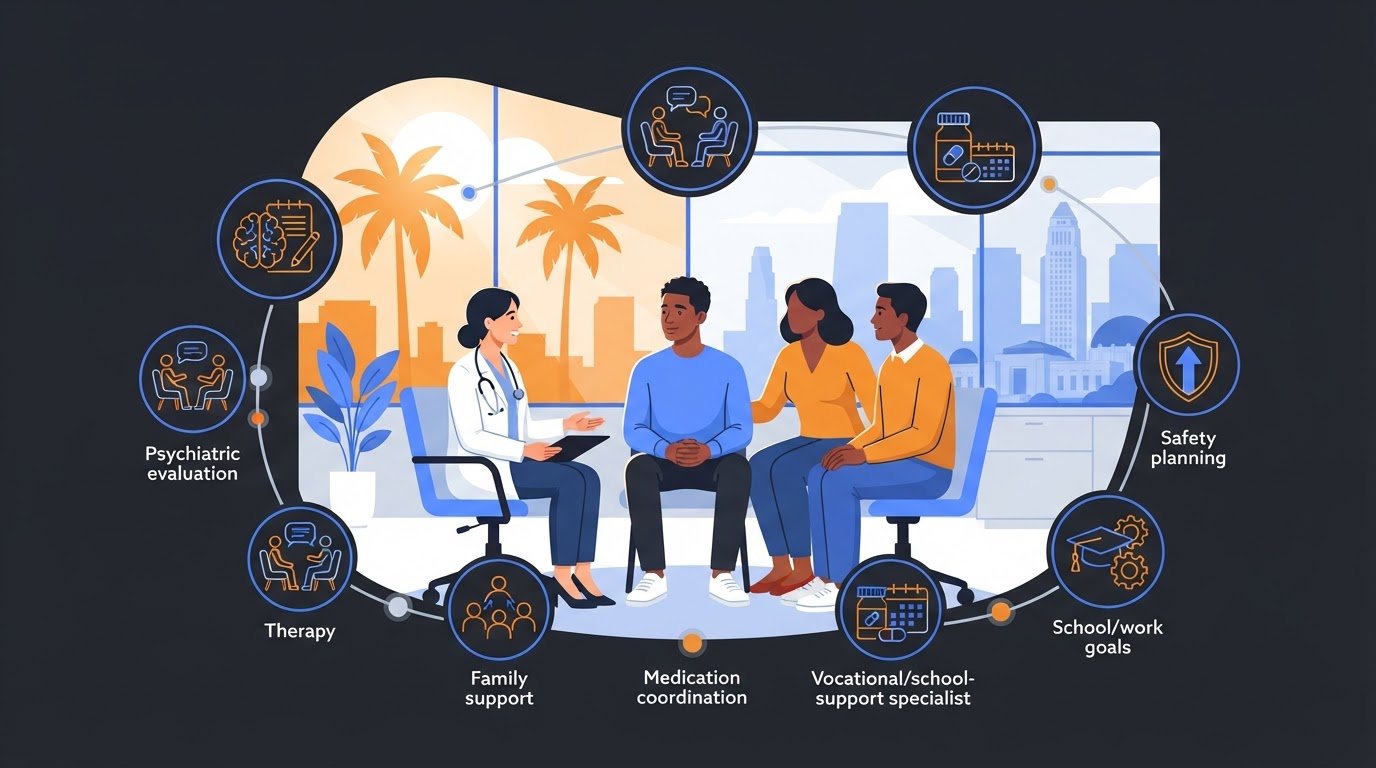
Once your loved one is open to learning about care, the next step can be an evaluation and a discussion of what support might fit their needs and goals. In Los Angeles, Pand Health provides psychiatric evaluations and recovery-oriented outpatient psychosis care. California OnTrack offers coordinated outpatient care for teens and adults experiencing early psychosis. Introduce it as an option to explore, not a decision the family makes on the person’s behalf.
What can coordinated specialty care include?
Coordinated care can bring psychiatric support together with psychosocial interventions, family psychoeducation, and family therapy. The aim is to address more than symptoms alone. With the person’s goals in view, support can also include case-managed education and job support, such as resume building and advocacy at school or work, to help them pursue meaningful roles in their community.
Family involvement should support recovery, not become a way to force treatment. Psychoeducation and family therapy can help relatives understand psychosis and consider how to communicate and participate constructively. The person’s preferences remain important, and the care team can discuss which supports make sense for their situation.
Pand Health reports outcomes from a 2022-2024 cohort of 41 patients. In that group, participation in employment or education rose from 6% at enrollment to 40% after three months and 85% after six months. Rehospitalization declined from more than 50% before enrollment to 6% after enrollment. These are group-level observations, not a promise or prediction of what one individual will experience.
How can a family take a first step with Pand Health?
An evaluation offers an opportunity to discuss experiences, concerns, and possible next steps with a qualified professional. If your loved one is willing, invite them to share what they hope will change and what questions they want answered. Family members can also prepare observations and ask how they might be involved in a supportive way.
Pand Health’s outpatient services are based in Los Angeles and include care for psychosis. They’re for planned assessment and ongoing support, not emergencies. If there’s immediate danger or an urgent medical need, contact emergency services instead of waiting for an outpatient appointment.
If your loved one is ready to explore an evaluation or discuss support options, contact Pand Health to discuss psychosis support. A first conversation can help clarify next steps while keeping your loved one’s needs and preferences at the center.
Take the Next Step Toward Support
Convincing a loved one to get help for psychosis isn’t about winning an argument. A calm, respectful conversation, careful listening, and one manageable next step can help keep the door open, even if they aren’t ready to agree to an evaluation today. Notice changes without trying to diagnose them, and seek emergency services if there’s immediate danger or an urgent medical need.
For teens and adults experiencing early psychosis, California OnTrack offers coordinated outpatient care that can include psychiatric and psychosocial support, family education, and help pursuing education or employment goals. In a 2022-2024 cohort of 41 patients, reported participation in education or employment increased from 6% at enrollment to 40% after three months and 85% after six months. These group results provide context, not a guarantee or prediction for any individual.
If your family is considering an evaluation or wants to discuss ongoing support in Los Angeles, contact Pand Health to discuss psychosis support. You can take this one step at a time, with care and hope.
Frequently Asked Questions
How do I convince someone with psychosis to get help?
Focus on trust and one manageable next step, not winning an argument. Describe changes you’ve observed, ask how your loved one sees the situation, and listen to their concerns. You might offer to help arrange a psychiatric evaluation or discuss what they’d want to ask. Convincing a loved one to get help for psychosis can take more than one conversation. Keep the connection open, and seek emergency services if anyone is in immediate danger.
What should I say to someone who refuses mental health help?
Stay calm and ask what concerns them most about getting help. You could say, “I hear that you don’t want an appointment right now. What feels most difficult about it?” Listen before suggesting a smaller step, such as discussing one concern or learning what an evaluation involves. Avoid threats, repeated arguments, or pressure. If their circumstances or daily functioning change, you can revisit the conversation with care.
Should I agree with a loved one’s delusion to keep them calm?
You don’t need to agree or argue. Acknowledge the person’s emotion without confirming their explanation: “That sounds frightening,” or “I can see this is upsetting for you.” Avoid ridicule, interrogation, or trying to prove them wrong, which can heighten tension. If you’re concerned about immediate safety, prioritize getting help over debating the belief. A qualified professional can assess what the person is experiencing and discuss appropriate support.
Can I make an adult family member get treatment for psychosis?
In general, family members can encourage care and help arrange an evaluation, but they can’t simply require an adult to accept routine treatment. In California, involuntary evaluation may be considered when legal criteria are met, such as danger to self or others, or grave disability due to a mental health disorder. That determination is made through the appropriate emergency process, not by a family member diagnosing the person. Contact emergency services if there’s immediate danger.
When should I call emergency services for someone experiencing psychosis?
Call emergency services if someone may harm themselves or another person, cannot maintain immediate safety, or needs urgent medical attention. Don’t base the decision on one unusual belief alone; consider the immediate circumstances and the risk to everyone involved. Explain what you’ve observed, what has changed, and any specific safety or medical concerns. Emergency services are for urgent situations. Pand Health’s outpatient care is not an emergency response service.
Can families be involved in psychosis treatment?
Yes. Family involvement can be a supportive part of care through family psychoeducation and family therapy, when appropriate. These services can help relatives better understand psychosis, communicate constructively, and support the person’s goals without trying to force treatment. Ask your loved one whom they want involved, when it’s appropriate and safe. In Los Angeles, Pand Health offers family support as part of its recovery-oriented psychosis care.
What is coordinated specialty care for psychosis?
Coordinated specialty care is an outpatient approach that brings different forms of psychosis support together, such as psychiatric care and psychosocial interventions. Support may also address family needs and a person’s goals for education or employment. In Los Angeles, California OnTrack offers coordinated outpatient care for teens and adults experiencing early psychosis. An evaluation can help clarify needs and whether this type of support may be appropriate.
Disclaimer
This article is for information and educational purposes only, and can NEVER replace a proper medical evaluation. If you or a loved one may be suffering from psychosis or the prodomal symptoms of psychosis, get evaluated by a professional as soon as possible. Early diagnosis and treatment can be life-saving.