
Can You Fully Recover From a Psychotic Break? What Recovery Can Look Like
What if a psychotic break doesn’t have to define the rest of a person’s life? If you’re wondering, “can you fully recover from a psychotic break,” it’s understandable to fear that symptoms or changes in daily functioning will last forever. A psychotic episode can be frightening and disruptive, but it doesn’t determine a person’s future. Recovery is possible, though it looks different for each individual and can’t be guaranteed.
It’s also natural to want a clear definition of “fully recovered.” For some people, that means symptoms no longer interfere with daily life. For others, it means managing ongoing challenges while reconnecting with relationships, school, work, or personal goals. Progress may take time, and it isn’t always a straight line.
This article explains what recovery can mean, what may shape it, and how professional assessment, individualized treatment, family support, and rehabilitation can help. It also offers practical questions to raise with a care team and explains how outpatient support in Los Angeles may fit into recovery. The aim is a balanced picture: one that takes psychosis seriously while leaving room for hope.
Key Takeaways
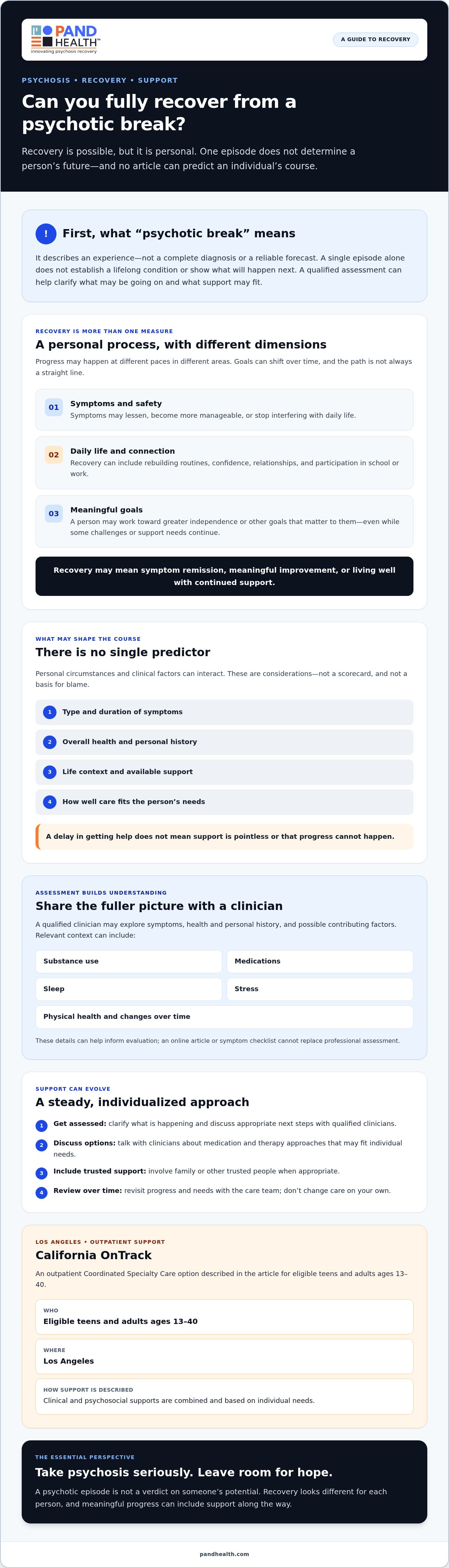
- “Psychotic break” describes an experience, not a diagnosis or a reliable forecast of what comes next.
- The answer to “can you fully recover from a psychotic break” depends on the person. Recovery may mean symptom remission, meaningful improvement, or living well with continued support.
- A qualified assessment can help clarify what’s happening and guide next steps, even if care didn’t begin right away.
- Discuss medication and therapy options with qualified clinicians, involve trusted supports when appropriate, and review progress over time rather than changing care on your own.
- For eligible teens and adults ages 13-40, California OnTrack is an outpatient Coordinated Specialty Care option in Los Angeles, combining clinical and psychosocial supports based on individual needs.
Can you fully recover from a psychotic break? What recovery means
Yes, some people recover substantially after a psychotic episode, but no article can predict what recovery will look like for one individual. The phrase “psychotic break” is commonly used to describe an experience, but it isn’t a complete diagnosis or prognosis. One episode alone doesn’t establish a lifelong condition or reveal what will happen next. An informed answer to “can you fully recover from a psychotic break” depends on an individual assessment and how their needs and functioning change over time.
Recovery from psychosis is a personal process of improving symptoms, safety, daily functioning, relationships, and progress toward goals that matter to the individual. It doesn’t guarantee a cure or require that every challenge disappear.
What does recovery from psychosis mean?
Symptom reduction can be an important part of recovery, but it isn’t the whole picture. A person may also be rebuilding confidence, returning to routines, reconnecting with friends or family, or working toward greater independence. These changes can take time, and progress in one area may not happen at the same pace as progress in another.
Goals are individual and can shift. One person may prioritize feeling safer and sleeping regularly; another may focus on returning to school, work, or a valued relationship. Ongoing symptoms or support don’t automatically mean recovery is impossible. Recovery can include learning ways to manage difficulties while building a meaningful life. The management of schizophrenia overview describes psychological, medical, and social approaches that may be part of care when schizophrenia is diagnosed.
Does a psychotic break always mean a lifelong condition?
No. A single episode doesn’t, by itself, determine a diagnosis or someone’s future. Psychosis can be associated with different conditions or circumstances, so clinicians consider the person’s symptoms, health and personal history, possible causes, and how experiences change over time. A brief online description can’t establish which explanation applies.
Assessment is a way to understand what’s happening and identify appropriate support, not a verdict on a person’s potential. If symptoms return, change, or interfere with safety and daily life, sharing those changes with a qualified clinician can help inform next steps. The aim is not to force a single definition of “normal,” but to support stability, connection, and personally meaningful progress.
What can shape recovery after a psychotic episode?
Recovery is shaped by a combination of personal circumstances and clinical factors, not one detail that can reliably predict the outcome. The type and duration of symptoms, overall health, life context, available support, and how well care fits an individual’s needs may all matter. These factors aren’t a scorecard, and a delay in getting help doesn’t mean someone is to blame or cannot make progress.
Recovery is individual, and understanding its course requires professional assessment and attention to changes over time. That’s why the question “can you fully recover from a psychotic break” can’t be answered for a specific person without learning more about their situation.
Why diagnosis and the cause of psychosis matter
Psychosis can occur in different clinical contexts, so an evaluation helps clinicians understand what may be contributing and what support is appropriate. They may ask about symptoms and health history, as well as substance use, medications, sleep, stress, and physical health. These topics help build a fuller picture; no symptom checklist or online article can replace a professional assessment.
It can help to share changes openly, even if they feel personal or difficult to explain. For example, tell the clinician about a new medication, cannabis or other substance use, several nights of poor sleep, or a recent health concern. This information isn’t about assigning blame. It can help the care team consider relevant possibilities and decide whether further evaluation is needed.
Why early, consistent support can be important
Timely assessment can create an opportunity to understand symptoms and discuss support before more time passes without guidance. But people reach care at different points, and a late start doesn’t make support pointless. Plans may evolve as clinicians and the individual learn more about symptoms, preferences, daily needs, and personal goals.
Where appropriate, care may involve communication among the individual, clinicians, and trusted family or other supports. The National Institute of Mental Health’s Recovery After an Initial Schizophrenia Episode (RAISE) research program examined coordinated specialty care after a first episode. This reflects an approach that can bring clinical and practical supports together, but early intervention cannot guarantee full recovery or prevent every future episode.
At appointments, consider discussing sleep patterns, stressors, substance use, medication effects, and physical health. Ask what changes to monitor and when to follow up. Medication or therapy decisions should be made with qualified clinicians, not changed independently. For information about Pand Health’s psychosis evaluation and care options, visit Pand Health’s contact page.
Full recovery, partial recovery, or ongoing support: how to understand the possibilities
Recovery doesn’t follow one standard path. Some people experience remission, meaning symptoms become much less prominent or no longer meet a clinical threshold. Others make meaningful gains in daily life while some symptoms remain, or continue receiving care as they pursue personal goals. These possibilities aren’t fixed stages, and none can predict what will happen for a particular person.
Ongoing treatment doesn’t automatically mean treatment has failed. Follow-up may help someone maintain progress, address new challenges, or work toward goals such as returning to study, work, or relationships. The question “can you fully recover from a psychotic break” can mean different things to different people, so it can help to define progress together with the care team.
| Possibility | What it may involve |
|---|---|
| Symptom remission | Symptoms are substantially reduced or absent for a period, with clinical follow-up as appropriate. |
| Meaningful improvement | Symptoms or their impact lessen, while the person rebuilds routines, confidence, relationships, or independence. |
| Recovery with ongoing support | The person continues treatment or follow-up while managing challenges and pursuing personally important goals. |
What “fully recovered” can mean to different people
For one person, feeling recovered may mean having few or no distressing symptoms. Another may place greater importance on reconnecting with family, completing a course, or returning to work. These aims can overlap, and they may change as circumstances shift. A person can make meaningful progress while still attending appointments or receiving treatment; there is no single universal threshold that defines recovery for everyone.
Rather than measuring progress only by whether symptoms have disappeared, discuss specific clinical and personal goals with the care team. For example, goals might include improved sleep, more confidence using public transit, or a gradual return to a valued activity. Review what’s changing and what still needs support.
Can psychosis return after someone improves?
Symptoms can change over time, and the possibility of recurrence varies by individual and clinical context. A clinician who understands the person’s history can discuss concerns and help develop a plan for noticing changes and knowing whom to contact. Don’t stop or adjust prescribed medication without discussing it with the prescriber.
Relatives who want to offer support can learn about listening, communication, and helpful involvement through family psychoeducation. A plan developed with the individual and care team can clarify how loved ones may participate while respecting the person’s preferences and privacy.
How to support recovery after a psychotic break
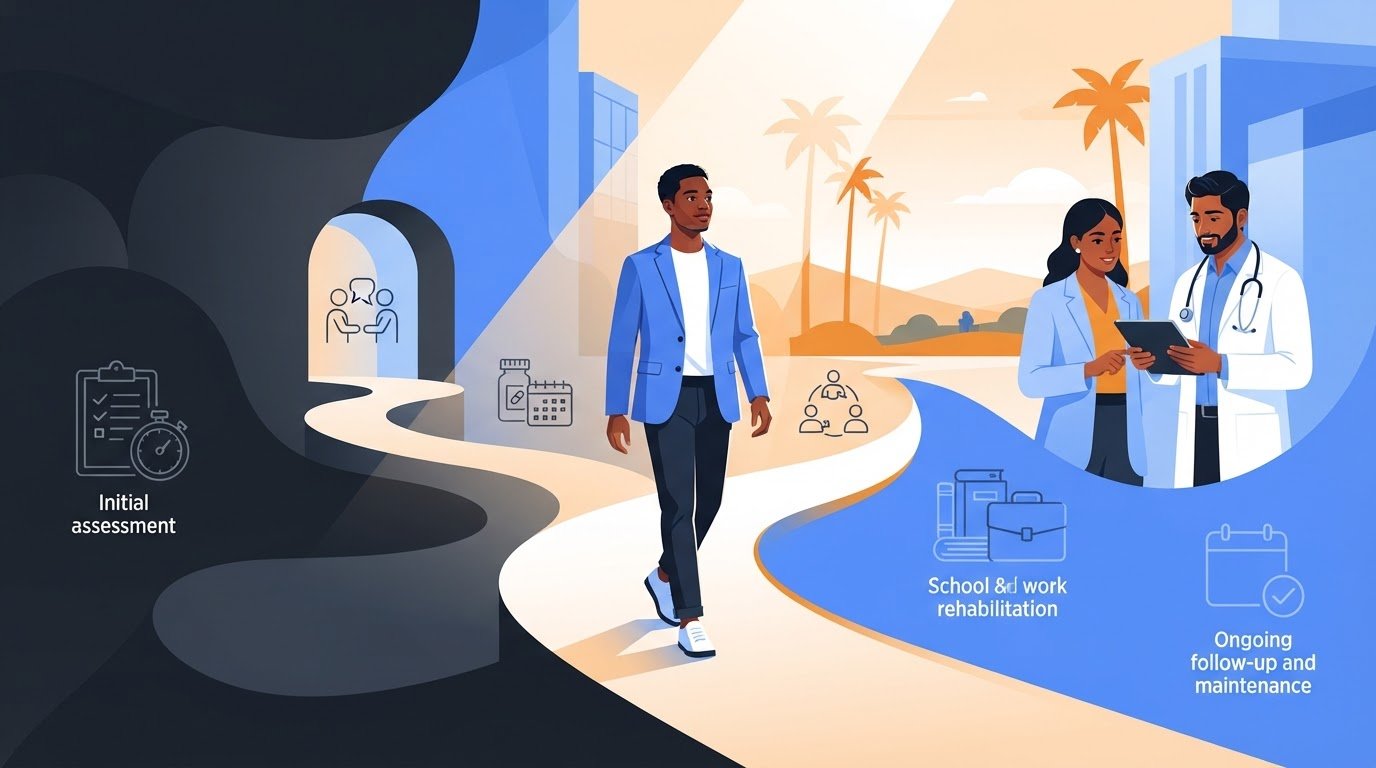
A practical plan can make the next steps feel more manageable. Start with a professional assessment, then work with qualified clinicians to discuss care, identify trusted supports, and review progress. The plan should reflect the person’s needs and preferences, not pressure them to meet a fixed timeline.
Building a recovery plan with a clinician
At an appointment, share what’s been happening, what has helped, and what feels difficult. It can also help to discuss health history, concerns about treatment, personal strengths, and one or two near-term goals, such as improving a daily routine or reconnecting with a trusted person.
Use follow-up conversations to review what’s changing and what still needs attention. Medication and therapy options are decisions to discuss with qualified clinicians. Don’t start, stop, or change prescribed medication on your own. A care plan may be adjusted as the person and clinicians learn more about their needs and goals.
Rebuilding routines, relationships, school, or work
Start with steps that feel realistic to the person. That might mean resuming one familiar activity, setting a manageable sleep routine, or arranging a gradual return to school or work with appropriate support. A step can be adjusted if it feels overwhelming. Family or friends may be helpful, but involve them according to the person’s wishes and respect privacy boundaries.
If social connection is a goal, Pand Health offers social skills training as part of its psychosis care and rehabilitation services. For education or employment support, ask clinicians what options could fit the person’s situation and preferences.
Progress is easier to discuss when the person and care team agree on what they’re tracking. They might review symptoms, daily functioning, relationships, or progress toward an individual goal. These conversations can help clarify what support is working and where adjustments may be needed.
Seek emergency help if someone is in immediate danger or can’t stay safe. Contact local emergency services or go to an emergency department. If the situation is urgent but not immediately life-threatening, use a current, trusted crisis resource in your area. Guidance and local resources can change, so confirm the appropriate option for your location.
For information about arranging an evaluation or discussing outpatient psychosis care in Los Angeles, contact Pand Health.
How specialized outpatient support in Los Angeles can fit into recovery
Recovery may involve more than symptom-focused care. Depending on a person’s needs, specialized outpatient support can bring clinical care together with practical help for relationships, thinking skills, education, or employment. This can connect treatment with everyday goals while allowing the individual to continue living in the community. It isn’t the right fit for everyone, so ask about services, eligibility, and the level of care needed.
For someone asking, “can you fully recover from a psychotic break,” an outpatient program can be one possible source of support, not a promise of a particular outcome. Pand Health’s California OnTrack is an outpatient Coordinated Specialty Care program for teens and adults ages 13-40. Its intensive outpatient model combines clinical and psychosocial interventions. A provider can help determine whether its services may fit a person’s circumstances.
What coordinated specialty care may include
Depending on individual needs, coordinated specialty care may bring together psychiatric care, psychotherapy, family support, cognitive remediation, and psychological or social rehabilitation. These supports address different parts of recovery. For example, a person may need help with clinical symptoms while also working on concentration, social confidence, or daily functioning.
Pand Health’s California OnTrack program includes supported education and employment services. These can involve counseling, motivational interviewing, resume building, social skills training, and advocacy at school or work. They connect care with goals such as returning to classes or exploring employment, but those goals are not requirements or measures of someone’s worth. Ask the provider which services are available and how they relate to the person’s priorities. Delivering these specialized outpatient services also requires strong administrative and financial infrastructure; behavioral health providers seeking dedicated revenue cycle support can learn more about Lumiere Billing. Confirm current program details and eligibility directly.
Questions to ask when considering a Los Angeles program
A conversation with a provider can clarify whether outpatient care is appropriate and what participation involves. Consider asking:
- Which services are included, and who provides them?
- How does the care team review progress and adjust support?
- What are the current eligibility, scheduling, insurance, and referral details?
- How can family members participate, and how are the person’s privacy and preferences respected?
Confirm current program availability and referral steps directly rather than relying on older information. Also clarify the type of care offered: Pand Health provides outpatient psychosis care. It is not a residential or inpatient program, does not provide hospitalization, and is not a 24/7 emergency provider.
If you’re exploring whether California OnTrack may fit, you can contact Pand Health to ask about program fit. For immediate danger or inability to stay safe, seek emergency help instead.
Take the next step toward informed, compassionate support
So, can you fully recover from a psychotic break? Some people make substantial progress, but recovery is personal and no single episode can predict an individual’s future. It may involve symptom relief, renewed confidence and routines, stronger relationships, or continued support while pursuing meaningful goals. A professional assessment and ongoing conversations with clinicians can help shape care around the person, rather than a fixed definition of “fully recovered.”
Among 41 patients in Pand Health’s 2022-2024 cohort, education or employment participation increased from 6% at enrollment to 85% after six months. These are cohort-level figures, not evidence that the program caused the change or a prediction for any individual. California OnTrack combines Coordinated Specialty Care with psychosocial and functional supports; confirm current services and program fit directly.
If you’re exploring outpatient support in Los Angeles, ask whether outpatient psychosis care may fit your needs. Contact Pand Health to discuss California OnTrack and whether its services may suit your circumstances.
Frequently Asked Questions
Can you fully recover from a psychotic break?
Yes, some people recover substantially, but outcomes differ and no article can predict an individual’s future. “Fully recovered” may mean symptoms have remitted, daily life has become manageable, or someone is pursuing meaningful goals with ongoing support. Recovery isn’t necessarily a permanent cure or the absence of every difficulty. A qualified clinician can help assess what’s happening and discuss progress over time.
Does having one psychotic break mean you have schizophrenia?
No. One psychotic episode alone doesn’t establish schizophrenia or another diagnosis. Psychosis can occur in different clinical contexts, and clinicians consider symptoms, health and personal history, possible causes, and changes over time. An evaluation is the way to explore what may be contributing. An online description or symptom checklist can’t diagnose someone, so seek professional guidance rather than assuming one episode determines the future.
How long does it take to recover from a psychotic episode?
There’s no single recovery timeline. It depends on the person’s circumstances, what may be contributing to psychosis, the supports available, and how symptoms and daily functioning change. Some aspects of life may improve before others, and follow-up may continue as goals evolve. A clinician can help set realistic near-term goals and review progress. If symptoms worsen or safety becomes a concern, seek professional or emergency help promptly.
Can psychosis come back after someone has recovered?
Psychosis can return for some people, but the likelihood and circumstances vary. Improvement after an episode doesn’t guarantee symptoms will never recur, and recurrence isn’t inevitable. Ask a clinician what changes to watch for and develop a plan for seeking support if concerns arise. Don’t stop or change prescribed medication without discussing it with the prescriber. Ongoing follow-up can help address questions as a person’s situation changes.
What treatment helps someone recover from a psychotic break?
Care depends on the person’s evaluation and needs. A plan may involve psychiatric care, medication discussions, psychotherapy, family support, and rehabilitation focused on daily functioning. Coordinated Specialty Care is one outpatient approach after first-episode psychosis. In Los Angeles, Pand Health’s California OnTrack serves teens and adults ages 13-40. A qualified clinician can explain appropriate options; medication and therapy decisions should never be changed without professional guidance.
How can family support someone recovering from psychosis?
Offer calm, respectful support and ask what would be helpful instead of assuming. Encourage professional care, listen without arguing about experiences, and help with practical tasks if the person welcomes it. Respect their privacy and preferences about family involvement. Family psychoeducation can help relatives understand psychosis and communicate supportively. If there’s immediate danger or the person can’t stay safe, seek emergency help rather than trying to manage the situation alone.
When should someone seek emergency help during psychosis?
Seek emergency help if someone is in immediate danger, may harm themselves or another person, or can’t stay safe. In the United States, call 911 or go to an emergency department for an immediate, life-threatening emergency. For urgent emotional distress without immediate danger, call or text 988 to reach the Suicide & Crisis Lifeline. Pand Health provides outpatient care, not emergency or 24/7 crisis services.
Disclaimer
This article is for information and educational purposes only, and can NEVER replace a proper medical evaluation. If you or a loved one may be suffering from psychosis or the prodomal symptoms of psychosis, get evaluated by a professional as soon as possible. Early diagnosis and treatment can be life-saving.