

Avoiding Caregiver Burnout in Psychosis: A Comprehensive Prevention Checklist for Families
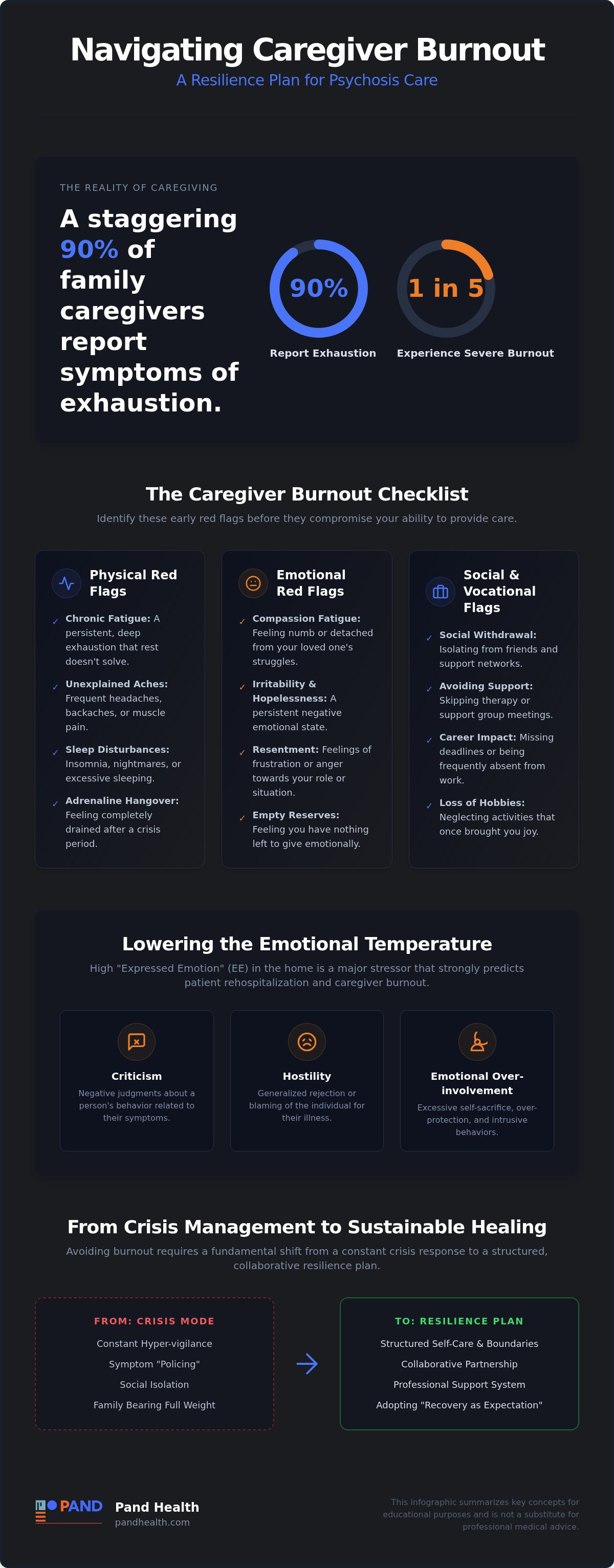
Did you know that as of June 2026, a staggering 90% of family caregivers report symptoms of exhaustion, with one in five describing their condition as severe? Caring for a loved one through the complexities of a thought disorder isn't just a full-time job; it's a profound emotional and physical marathon. You've likely spent countless nights awake monitoring symptoms or felt the heavy silence of social isolation that often follows a diagnosis. It's exhausting, and it's important to recognize that your feelings of overwhelm are a normal response to an extraordinary situation.
Successfully avoiding caregiver burnout psychosis requires moving beyond basic self-care and adopting a clinical-grade resilience plan. Your well-being isn't a luxury; it's a vital component of the recovery ecosystem. We'll show you how to identify early warning signs of depletion while implementing a structured strategy to sustain your health. This article provides a comprehensive prevention checklist, validates your experience, and introduces specialized local programs like California OnTrack to help you transition from crisis management to a sustainable path of healing.
Key Takeaways
- Identify subtle physical and emotional red flags of exhaustion before they compromise your ability to provide care.
- Transition from a state of constant hyper-vigilance to a structured clinical-grade resilience plan designed for long-term stability.
- Master the primary strategies for avoiding caregiver burnout psychosis by establishing a professional support team and setting healthy boundaries.
- Utilize specialized Southern California resources, including the California OnTrack program, to ensure you aren't navigating the healthcare system alone.
- Learn how the "Recovery as Expectation" philosophy shifts the weight of symptom management from the family to a dedicated clinical ecosystem.
The Unique Weight of Psychosis Caregiving: Why Burnout Happens
Caring for a family member experiencing psychosis involves a level of vigilance that few other caregiving roles require. Unlike chronic physical illnesses, psychosis can alter a person’s personality, perceptions, and basic sense of safety. This creates a specific type of Caregiver burden characterized by "ambiguous loss," where your loved one is physically present but psychologically changed. When this state of high alert persists for months or years, the result is burnout: a total exhaustion of your emotional and physical capacity.
This process often begins during First-Episode Psychosis (FEP). Families are thrust into a "crisis mode" cycle, navigating emergency rooms and complex psychiatric evaluations without a map. While this intense focus is necessary during an acute episode, staying in this state indefinitely leads to a breakdown of the caregiver's own health. Successfully avoiding caregiver burnout psychosis requires recognizing that you cannot sustain a crisis-level response for a long-term recovery journey. The weight of this responsibility is often compounded by social isolation. Because of the stigma surrounding thought disorders, many families withdraw from their communities, cutting off the very support networks they need to survive.
Understanding High Expressed Emotion (EE)
In clinical circles, the emotional environment of the home is measured through "Expressed Emotion" or EE. High EE is defined by three specific patterns: criticism, hostility, and emotional over-involvement. While these reactions often stem from deep love and concern, they can inadvertently create a high-stress "pressure cooker" environment. Clinical data shows high EE strongly predicts rehospitalization. Learning to lower the emotional temperature through family psychoeducation isn't just about helping your loved one; it's a primary tool for protecting your own mental health and stability.
The 'New Normal' vs. Sustainable Care
Many families feel a sense of guilt for grieving the life they had before psychosis entered the picture. Validating this grief is essential. It isn't a sign of betrayal; it's an acknowledgment of reality. Chronic burnout happens when we try to force a pre-psychosis reality onto a post-diagnosis world. By shifting toward a recovery-oriented mindset, you move from a role of "policing" symptoms to becoming a collaborative partner in a specialized care team. This transition is essential for anyone committed to avoiding caregiver burnout psychosis while fostering long-term wellness for the entire family unit.
The Caregiver Burnout Checklist: Identifying Early Red Flags
Recognizing burnout isn't always straightforward because it often disguises itself as the "new normal" of life with a thought disorder. However, Understanding the Experiences of Caregivers reveals that the strain is rarely just mental; it manifests in every facet of your daily life. Identifying these red flags early is the most effective way of avoiding caregiver burnout psychosis before it leads to a total collapse of your own health and household stability.
Physical and Emotional Warning Signs
Many families experience what clinical experts call the "Adrenaline Hangover." During the initial crisis of first-episode psychosis, your body stays flooded with stress hormones that keep you functional. Once that initial peak subsides, you might crash into chronic fatigue, unexplained aches, or severe sleep disturbances. Emotionally, you may notice a shift toward compassion fatigue. This is a state where you feel numb or even resentful toward your loved one's struggles. It's a common psychological trap, and it doesn't make you a bad person; it simply means your emotional reserves are empty. If you find yourself trapped in a cycle of hopelessness or irritability, your body is signaling that the current pace is unsustainable.
Social and Vocational Red Flags
Burnout often shows up in your professional life and social circles before it’s acknowledged at home. In a high-pressure environment like Los Angeles, caregiving duties can quickly interfere with your career, leading to missed deadlines or frequent absences. You might also notice a tendency to withdraw from friends or avoid family therapy sessions. While it feels like you're saving energy by isolating, avoidance is actually a primary indicator of advanced burnout.
Use this checklist to evaluate your current state of well-being:
- Cognitive Red Flags: Experiencing "brain fog" or finding it impossible to make even minor decisions about your loved one's care.
- Behavioral Changes: Neglecting your own hygiene, skipping your own medical appointments, or increasing substance use to cope with stress.
- The Circle of Support Test: Counting how many people you can call in a crisis. If you can't name at least three people outside your immediate household, your isolation has reached a critical level.
- Employment Strain: Realizing that your caregiving role has become a second full-time job that is actively jeopardizing your financial security.
Recognizing these signs is the first step toward reclaiming your life. If these red flags feel familiar, it may be time to consult with a specialist who understands the unique needs of families navigating psychosis.
A 5-Step Checklist for Avoiding Caregiver Burnout in Psychosis
Preventing a total collapse of your well-being requires more than just occasional self-care. It demands a structured, clinical-grade approach to how you manage the daily demands of a thought disorder. Moving from a reactive state to a proactive one is the core of avoiding caregiver burnout psychosis. This five-step checklist serves as a roadmap for families ready to move beyond survival mode and into a sustainable recovery ecosystem.
- Step 1: Establish a Clinical Support Team (CSC Model). You shouldn't be the primary "case manager." A Coordinated Specialty Care team distributes the weight of treatment across multiple specialists, ensuring the family isn't the only line of defense.
- Step 2: Implement Family Psychoeducation and Boundary Setting. Knowledge replaces fear. Understanding the biological roots of symptoms allows you to set healthy boundaries without feeling a sense of betrayal.
- Step 3: Schedule 'Radical Respite' and External Support. Respite isn't a luxury; it's a non-negotiable part of the treatment plan. Understanding the nuances of Caregiver Stress and Burnout helps you anticipate when your own system is reaching its limit before a crisis occurs.
- Step 4: Master Communication Strategies for De-escalation. Learning how to talk to someone in an altered state of reality reduces the frequency of high-stress household episodes.
- Step 5: Prioritize Your Own Mental Health Evaluation. Caregivers often ignore their own trauma. A professional evaluation ensures you have the psychological tools to remain a steady guide for your loved one.
Establishing Boundaries and Psychoeducation
Learning about the mechanics of thought disorders is the most effective way to reduce the fear-based burden of caregiving. When you understand that certain behaviors are neurological rather than personal, you can establish "clinical boundaries." These boundaries define what you can and cannot control in the recovery process. Utilizing family therapy in Los Angeles helps restore household balance by teaching every member how to navigate the "new normal" with clarity rather than conflict.
Mastering De-escalation to Reduce Daily Stress
Daily friction is often the primary driver of exhaustion. Utilizing the LEAP principles (Listen, Empathize, Agree, Partner) allows you to connect with your loved one without validating delusions or triggering a defensive response. This method lowers the emotional temperature of the home, which directly reduces your own cortisol levels. By transforming volatile interactions into predictable clinical exchanges, communication training acts as a psychological shield that prevents daily friction from eroding your emotional reserves.
Building a Resilience Toolkit: Resources and Strategies
Resilience isn't an innate trait; it's a toolkit built through deliberate strategies and the clever use of available resources. While the previous sections focused on identifying signs and establishing clinical steps, this phase is about the daily tools that make avoiding caregiver burnout psychosis a reality. By offloading cognitive tasks to technology and emotional weight to community, you preserve the energy required for long-term support.
Leveraging technology is one of the most effective ways to reduce the "hyper-vigilance" that often plagues families. Using digital symptom-tracking applications allows you to record observations in real-time rather than mentally cataloging every shift in mood or behavior. This data-driven approach provides a clear overview for psychiatric evaluations, ensuring that you don't have to rely on memory during high-stress clinical appointments. It transforms you from a constant monitor into an informed observer.
Physical health serves as the bedrock of your psychological foundation. The fitness-cognition link is well-documented; maintaining your own cardiovascular health and strength directly impacts your brain's ability to process stress and regulate emotions. When your body is resilient, your mind is better equipped to navigate the complexities of a thought disorder without succumbing to exhaustion.
The Mind Exposed: Learning from Others
Isolation often breeds "only one" syndrome, the belief that your family’s struggle is unique and insurmountable. Listening to The Mind Exposed Podcast serves as a powerful antidote to this feeling. Hearing other families' recovery stories and expert insights helps normalize the psychosis journey. For parents navigating first-episode psychosis, specialized episodes provide a sense of direction and validation that is often missing from traditional medical brochures. This shared knowledge empowers you to move forward with a sense of hope rather than fear.
Respite Care and Professional Advocacy
Respite care provides essential, planned breaks by bringing in trained professionals to manage care temporarily. In Southern California, accessing these services allows you to attend to your own needs without the constant worry of a safety lapse. Beyond physical breaks, professional advocacy is crucial for offloading administrative burdens. Working with advocates through the SEE Curriculum can help manage school or workplace accommodations for your loved one. This shift is vital for transitioning from the exhausting role of a "Case Manager" back to your primary role as a supportive family member.
If you're ready to build a more robust support system for your household, reach out to our clinical team to explore specialized family resources and programs tailored to your needs.
How Pand Health Protects Families Through California OnTrack
At Pand Health, we recognize that a family in crisis requires more than just advice; they need a clinical partner to share the weight of the journey. Our California OnTrack program is built on the Coordinated Specialty Care (CSC) model, which is specifically designed to distribute the responsibility of treatment across a multi-disciplinary team. By shifting the primary management of symptoms from the parents to our specialists, we create a sustainable environment for avoiding caregiver burnout psychosis. Our mission is rooted in the belief that recovery is the expectation, not the exception. This philosophy transforms the home environment from one of constant survival to one of progress and hope.
The effectiveness of this approach is reflected in our clinical outcomes. Pand Health maintains a documented 6% rehospitalization rate, which is significantly lower than the 10% industry average. For families, this statistic represents more than just data; it provides the peace of mind that their loved one is on a stable, long-term path toward wellness. Our family-specific services, including intensive psychoeducation, Multi-Family Group Therapy (MCT), and Behavioral Family Therapy, are designed to give you the tools to support recovery without sacrificing your own mental health.
Augmented Coordinated Specialty Care (CSC) in Los Angeles
We provide the only augmented CSC model in Southern California, integrating medication management with intensive psychosocial rehabilitation and social skills training. This holistic structure ensures that every aspect of the individual’s recovery is addressed under one roof. Our psychiatric evaluation for psychosis Los Angeles serves as the entry point for this relief, allowing our clinicians to craft a plan that treats the family unit as a whole. By integrating clinical authority with profound empathy, we ensure that no family has to navigate the healthcare system in isolation.
Taking the First Step Toward Family Recovery
When you visit our site on West Olympic Blvd for an initial family consultation, the focus is on restoring household balance. We utilize the SEE curriculum to support your loved one’s vocational and educational goals, effectively offloading the stress of job searching and school planning from the caregiver. This allows you to return to your primary role as a supportive family member rather than a full-time case manager. To begin building your resilience plan and protecting your well-being, contact Pand Health today and discover how our specialized care can transform your family's future.
Reclaiming Balance and Hope for Your Family
Identifying early red flags and implementing a clinical-grade support system are the most effective methods for avoiding caregiver burnout psychosis. By shifting from a state of constant crisis management to a structured recovery ecosystem, you allow yourself the space to heal alongside your loved one. Your well-being isn't a secondary concern; it's the foundation of a stable home and a successful recovery journey.
At Pand Health, our Los Angeles-based team of certified MCT instructors and SCIT specialists provides the high-standard care necessary to restore normalcy for both teens and adults. Our documented 6% rehospitalization rate, significantly lower than the 10% industry average, offers the clinical reassurance your family deserves. You've been the steady hand for so long; it's time to let our experts provide the lifeline you need.
Secure Your Family's Future with Pand Health's California OnTrack Program
You don't have to carry this weight alone. A future defined by stability and progress is within reach, and we're here to guide you every step of the way.
Frequently Asked Questions
Is it normal to feel angry or resentful toward my loved one with psychosis?
Yes, it is a completely normal and valid emotional response to the chronic stress of caregiving. These feelings often stem from the "ambiguous loss" of the person you once knew or the physical exhaustion of constant symptom monitoring. Acknowledging these emotions without guilt is a vital step in avoiding caregiver burnout psychosis. Clinical support through family therapy can help you process these emotions safely while restoring a sense of balance to your household.
How can I tell the difference between normal stress and clinical caregiver burnout?
Stress usually feels like having too much to do, while burnout feels like having nothing left to give. While stress might cause temporary irritability, clinical burnout manifests as chronic fatigue, emotional numbness, and a loss of empathy known as compassion fatigue. If your exhaustion persists even after resting and you feel increasingly detached from your loved one's recovery, you have moved beyond stress into a state of advanced burnout.
Does family therapy really help prevent patient relapse in psychosis?
Family therapy is one of the most effective tools for reducing patient rehospitalization. By teaching communication strategies and lowering the "emotional temperature" of the home, therapy creates a stable environment that supports neurological healing. At Pand Health, our focus on the family unit contributes to a 6% rehospitalization rate, which is significantly lower than the 10% industry average. This stability benefits the patient and the caregiver alike.
What are the first steps to take if I feel I can no longer handle caregiving duties?
Your first step should be to contact a specialized clinical team that offers Coordinated Specialty Care (CSC). This transition allows professionals to take over the heavy lifting of symptom management and vocational planning. You should also look into respite care options in Southern California to secure a planned break. Offloading these administrative and clinical burdens is essential for your own psychological survival and long-term health.
Are there specific Los Angeles resources for parents of teens with psychosis?
Los Angeles offers specialized support through programs like California OnTrack for Teens, which provides comprehensive treatment for individuals ages 13 to 17. For parents, the Mind Exposed Podcast is a free and accessible resource that features expert insights and recovery stories from other families in the region. These resources ensure that parents don't have to navigate the complexities of adolescent psychosis without a dedicated clinical guide.
How does the California OnTrack program support the family, not just the patient?
The California OnTrack program treats the family as a central part of the recovery ecosystem. We provide family psychoeducation and Multi-Family Group Therapy (MCT) to help you understand the biological roots of symptoms. Additionally, our SEE curriculum manages your loved one's work and study goals, which removes the burden of vocational advocacy from your shoulders. This holistic approach ensures the entire family unit moves toward wellness together.
Can cannabis-induced psychosis cause more caregiver burnout than other types?
Cannabis-induced psychosis can be uniquely draining because it often requires managing both a thought disorder and substance use recovery simultaneously. The unpredictability of substance-triggered episodes can increase a caregiver's hyper-vigilance and financial strain. Specialized rehab programs that address the dual nature of this condition are essential for avoiding caregiver burnout psychosis and ensuring a more predictable path toward long-term psychological stability.
What should I do if my loved one refuses professional help?
If a loved one refuses help, the first step is to seek professional guidance for yourself. Learning de-escalation techniques like the LEAP method can help you build enough trust to eventually guide them toward an evaluation. You can also consult with a specialist about the CARE Act in California, which expanded in 2026 to help individuals with serious mental health needs access support even when they lack insight into their condition.
Disclaimer
This article is for information and educational purposes only, and can NEVER replace a proper medical evaluation. If you or a loved one may be suffering from psychosis or the prodomal symptoms of psychosis, get evaluated by a professional as soon as possible. Early diagnosis and treatment can be life-saving.