Can People With Schizophrenia Live a Normal Life?
By Pand Health

Can people with schizophrenia live a normal life? The evidence says yes
People with schizophrenia can live fulfilling, meaningful lives. That is not wishful thinking. A 2022 systematic review spanning more than 20 years of prospective studies found that 24.2% of patients met full recovery criteria, 35.5% achieved a good or better outcome, and 59.7% reached a moderate or better outcome. Those numbers dismantle the old assumption that schizophrenia inevitably follows a deteriorating course.
Recovery, as the National Institute of Mental Health (NIMH) frames it, is not simply the absence of symptoms. It means maintaining employment and education, and meaningful relationships. Someone can still experience occasional symptoms and still hold a job, live independently, and stay connected to the people they love. Functional recovery should be the expectation, not the exception.
What makes the difference? Three factors appear consistently across clinical literature:
- Early intervention: Shortening the duration of untreated psychosis is the single most significant driver of better long-term outcomes.
- Coordinated specialty care (CSC): Programs that combine psychiatry, psychotherapy, family education, and supported employment outperform standard care on every major outcome measure.
- Sustained engagement: Staying connected to a care team, even during periods of stability, reduces relapse risk and preserves functional gains.
Functional recovery should be the expectation, not the exception. A 2022 meta-analysis found nearly 60% of people with schizophrenia achieved a moderate or better outcome over 20-plus years of follow-up.
What does long-term recovery actually look like?
Recovery from schizophrenia is rarely a straight line. Symptoms fluctuate, medication adjustments take time, and setbacks happen. Understanding that reality upfront prevents discouragement when the path gets uneven.
Clinical researchers now recognize three overlapping dimensions of recovery. Symptomatic remission means positive symptoms such as hallucinations and delusions are mild or absent. Functional recovery means the person is engaged in work, school, or caregiving roles. Social recovery means they maintain relationships and participate in community life. True recovery usually involves progress across all three, though not always at the same pace.
Several factors consistently predict better outcomes:
- Duration of untreated psychosis: The longer symptoms go unaddressed, the harder it becomes to regain prior functioning. Early treatment limits this window and preserves neurological and social resources.
- Medication adherence: Antipsychotic medication remains a cornerstone of symptom management for most people, though finding the right medication often requires patience.
- Social support: People with strong family and peer networks recover faster and relapse less often.
- Personal attitude: Acceptance of the diagnosis, willingness to engage in treatment, and a sense of purpose all contribute to sustained progress.
Challenges are real. Negative symptoms such as reduced motivation and emotional withdrawal can persist even when positive symptoms are controlled. Cognitive difficulties affecting memory and attention affect daily functioning. Side effects from medication require ongoing management. None of these obstacles make recovery impossible. They make comprehensive, individualized care more important.
Which treatment approaches support living well with schizophrenia?
The most effective treatment for schizophrenia is not a single medication or a single therapy. It is a coordinated system of care that addresses symptoms, functioning, and life goals simultaneously.
Coordinated specialty care (CSC) is the gold standard for first-episode psychosis and early schizophrenia. Research from NIMH’s RAISE initiative demonstrated that people in CSC programs stayed in treatment longer and showed greater improvement in symptoms, relationships, and quality of life than those receiving standard care. They were also more involved in work and school. CSC typically includes:
- Psychiatry and medication management: Tailored antipsychotic regimens with close monitoring for side effects.
- Individual psychotherapy: Cognitive behavioral therapy (CBT) addresses distorted thinking patterns; acceptance and commitment therapy (ACT) builds psychological flexibility; dialectical behavior therapy (DBT) supports emotional regulation; motivational interviewing strengthens treatment engagement.
- Cognitive remediation: Structured exercises that target attention, memory, and problem-solving, helping people regain cognitive skills that support employment and education.
- Family psychoeducation: Teaching family members about schizophrenia, communication strategies, and how to support recovery without enabling avoidance.
- Supported education and employment: Practical assistance with returning to school or work, including job coaching and academic accommodations.
Pandhealth, based in Los Angeles, delivers an augmented version of the California OnTrack CSC model for teens and young adults ages 13–35. The program integrates all of the components above within a single multidisciplinary team, reducing the fragmentation that often derails recovery. California’s Early Psychosis Initiative funds cost-free care for teens ages 13–17, removing a significant barrier for families who need help quickly.
Pro Tip: Starting treatment within the first year of psychosis symptoms dramatically improves long-term outcomes. If you are seeing early warning signs in yourself or someone you care about, connecting with a CSC program as soon as possible is the most protective step you can take.

How community, perseverance, and daily habits sustain recovery
Clinical care creates the foundation. What people build on top of it determines how fully they live. Community integration, personal habits, and the support of people who understand the illness all shape quality of life in ways that medication alone cannot.
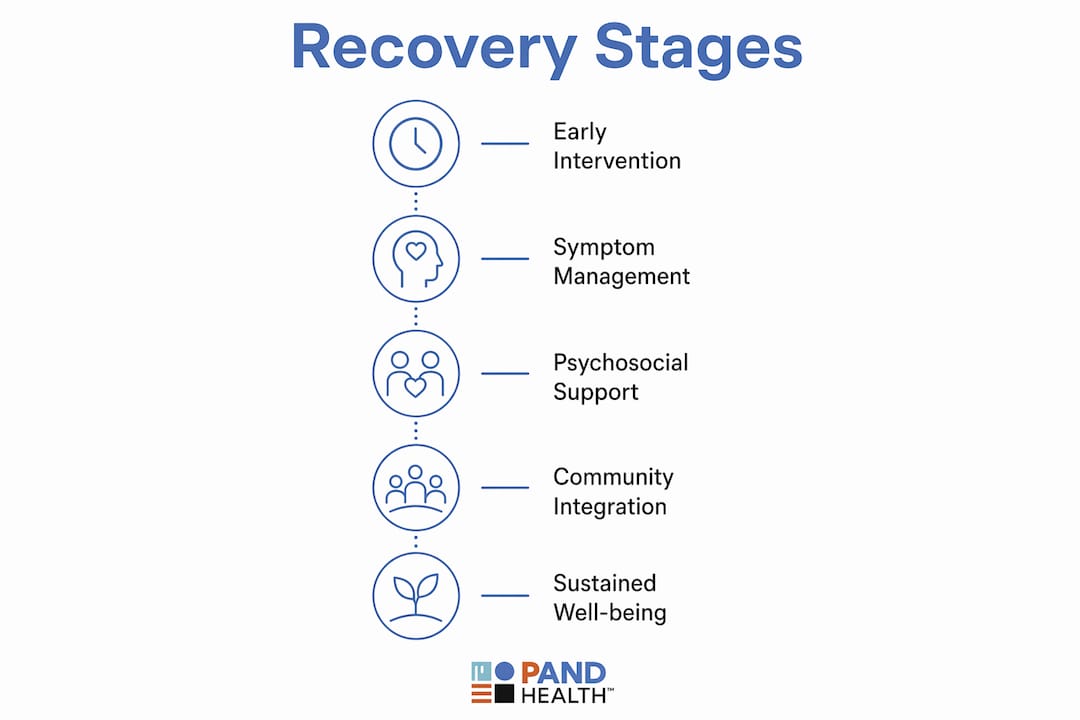
Social support networks are not a nice addition to treatment. They are a clinical necessity. Peer support groups and community-based activities reduce isolation, provide coping strategies, and reinforce the belief that recovery is possible. The National Alliance on Mental Illness (NAMI) offers peer-led support groups across California, and many participants describe them as turning points in their acceptance of the diagnosis.
Stigma remains one of the most persistent barriers to living well with schizophrenia. Internalized stigma, the belief that the diagnosis defines a person’s worth or potential, can be more damaging than the symptoms themselves. Countering it requires education, connection with others who have recovered, and deliberate reframing of identity. Recovery does not mean returning to who you were before the diagnosis. Many people describe becoming more empathetic, more purposeful, and more grounded as a result of what they have been through.
Practical supports matter too:
- Supportive housing: Structured living environments help people rebuild independent living skills after a hospitalization or acute episode.
- Vocational rehabilitation: Programs that match people with appropriate employment and provide on-the-job support reduce the gap between clinical stability and economic participation.
- Self-care practices: Regular sleep, physical activity, reduced cannabis use, and stress management all reduce relapse risk and improve day-to-day functioning.
For families navigating this alongside a loved one, understanding peer and family support roles in treatment can make a meaningful difference in how effectively they contribute to recovery without burning out.
Pro Tip: California’s network of community mental health centers, peer-run organizations, and supported housing programs is among the most developed in the country. Asking your care team specifically about local resources in your county often surfaces options that are not widely advertised.
Pandhealth’s schizophrenia treatment program in Los Angeles brings together psychiatry, therapy, cognitive remediation, and supported employment under one coordinated team. For teens and young adults in California ready to take the next step, early psychosis care is available with both in-person and telehealth options. Pandhealth also offers specialized programs for schizoaffective disorder and related thought disorders.

Key Takeaways
People with schizophrenia can achieve meaningful recovery when they receive coordinated specialty care, consistent social support, and early intervention.
| Point | Details |
|---|---|
| Recovery is common | 24.2% of people with schizophrenia meet full recovery criteria, 35.5% achieve a good or better outcome, and 59.7% reach a moderate or better outcome over 20-plus years. |
| Functional goals define recovery | Employment, education, and relationships matter more than symptom absence alone. |
| CSC outperforms standard care | Coordinated specialty care improves symptoms, quality of life, and work or school involvement. |
| Early intervention is decisive | Shortening untreated psychosis duration is the strongest predictor of better long-term outcomes. |
| Community support is clinical | Peer groups, family involvement, and supported housing are essential parts of sustained recovery. |
FAQ
Can someone with schizophrenia live a normal life without medication?
Most people with schizophrenia benefit significantly from antipsychotic medication, and stopping it without medical guidance substantially raises relapse risk. A small number achieve sustained remission without ongoing medication, but this is not predictable in advance and requires close clinical monitoring.
How long does recovery from schizophrenia take?
Recovery is ongoing rather than a fixed endpoint. The 2022 systematic review tracked outcomes over 20-plus years, showing that many people continue to improve well into adulthood, particularly when they maintain treatment and social engagement.
What is coordinated specialty care and why does it matter?
Coordinated specialty care (CSC) is a team-based treatment model for first-episode psychosis that combines psychiatry, psychotherapy, family education, and supported employment. NIMH research shows CSC produces better symptom control and greater involvement in work and school than standard care.
Does schizophrenia get worse over time?
Not necessarily. The 2022 meta-analysis found that a deteriorating course is not a defining feature of schizophrenia. Outcomes vary widely, and early, sustained treatment significantly improves the long-term trajectory.
How can families best support a loved one with schizophrenia?
Family psychoeducation, clear communication, and involvement in the care team are the most evidence-backed approaches. Learning about the illness, avoiding high-criticism environments, and connecting with intensive outpatient programs that include family components all contribute to better outcomes for the person in recovery.