The Power of Play: A Narrative on Games & Supportive Environments for Cognitive & Social Enhancement
By Pand Health Clinical Team
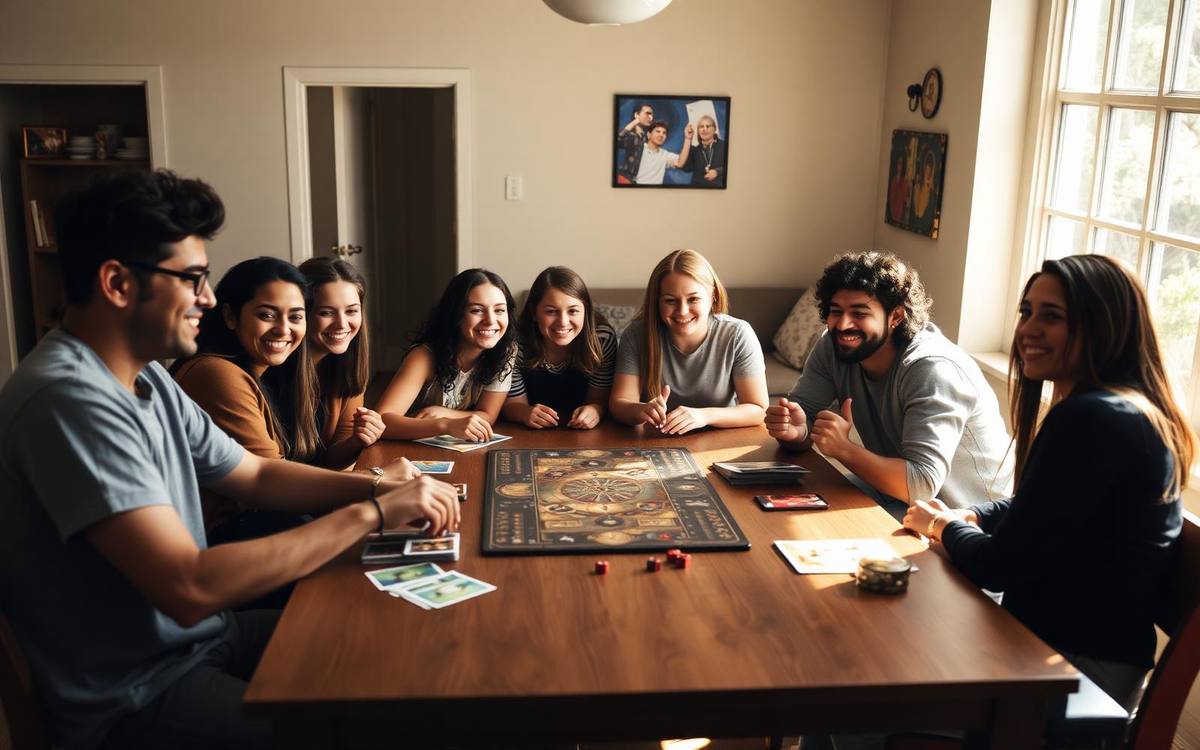
Navigating the complexities of the social world or embarking on the journey of recovery from challenges like psychosis requires a multifaceted approach. While traditional therapies form a vital foundation, the integration of supplementary methods, particularly structured play through games within supportive social environments, offers a uniquely powerful avenue for growth and healing. Often perceived as mere diversions, games and communal activities, such as those found in clubhouse models or facilitated groups, can profoundly benefit adults by targeting key areas like social cognition, problem-solving, and interpersonal skills – areas frequently impacted by conditions on the autism spectrum or during psychosis recovery.
The effectiveness of play as a therapeutic tool is well-documented in children's therapy, where it provides a natural medium for expressing complex emotions and processing experiences when abstract thought or verbal articulation is difficult¹. This principle, however, is not confined to childhood. Adults facing challenges with abstraction, understanding social cues, navigating interpersonal dynamics, or solving problems can similarly benefit from the structured interaction that games provide. Just as play empowers children, games offer adults a safe, engaging, and comprehensible context to practice and hone these essential life skills.
The diverse landscape of modern games allows for the targeted engagement of a wide array of cognitive and social functions. Game mechanics inherently require players to exercise skills such as abstraction and category formation to understand rules and concepts, various forms of attention (divided, selective, sustained) to track gameplay, and cognitive flexibility to adapt strategies. Many games demand logic and reasoning for effective decision-making, challenge both long-term and working memory, and rely on pattern recognition. Furthermore, games can enhance information processing speed (both auditory and visual) and necessitate response inhibition to avoid impulsive errors. Crucially, numerous games provide fertile ground for developing Theory of Mind (ToM) – the cornerstone of social cognition, involving the understanding that others possess their own distinct thoughts, beliefs, intentions, perspectives, and emotions.
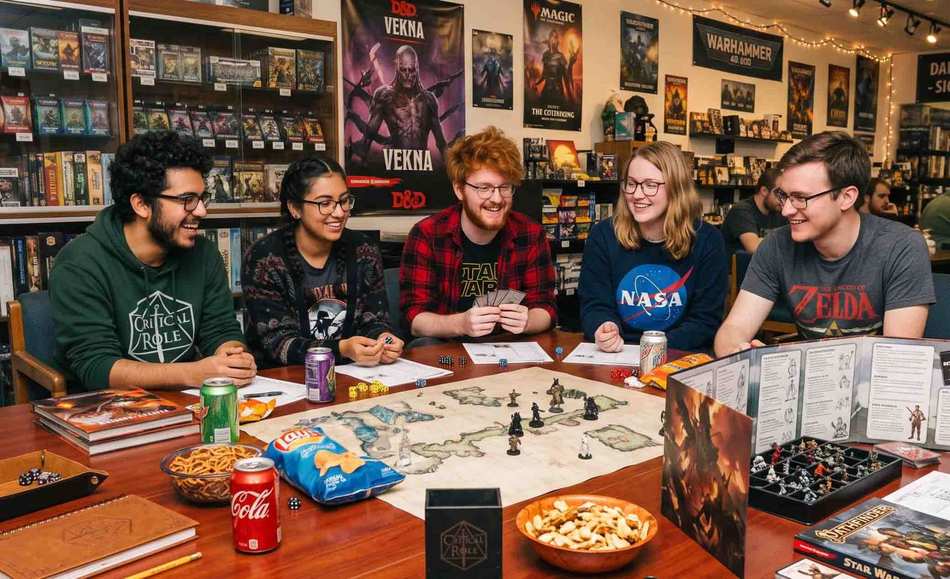
The selection of specific games within therapeutic or supportive settings is often deliberate, aimed at addressing particular needs. For instance, the California OnTrack treatment program utilizes games like Dungeons & Dragons (D&D), Wavelength, and Dutch Blitz. D&D and similar Role-Playing Games (RPGs) excel in fostering social skills, communication, and ToM through collaborative storytelling, adopting character personas, and group problem-solving. Players must constantly consider their character's viewpoint alongside the perspectives and intentions of others in the game, making it an excellent tool for navigating complex social dynamics within a narrative framework²⁻³.
Wavelength, in contrast, directly targets social cognition and perspective-taking. Its core mechanic involves players attempting to align their understanding by giving and interpreting clues on subjective spectrums (like "Hot - Cold" or "Fantasy - SciFi"). Success demands gauging how others perceive concepts and understanding their unique point of view, offering explicit practice in navigating ambiguity and inferring perspective.
Not all games focus primarily on social cognition. Dutch Blitz, a fast-paced card game, is valuable for enhancing processing speed, visual scanning, reaction time, and response inhibition. While useful for these cognitive skills, its mechanics don't inherently require understanding others' mental states, illustrating how different games can be selected to target distinct skill sets.
Other game genres also offer significant benefits. Social Deduction Games like The Resistance: Avalon or Among Us provide intense practice in inferring intentions and beliefs, as players analyze behavior and communication to uncover hidden roles, though the deception element may require careful facilitation. Cooperative Board Games such as Pandemic foster teamwork and shared intentionality, requiring players to anticipate teammates' needs and coordinate actions towards a common goal. Even Storytelling and Improvisation Games like Charades or Pictionary enhance ToM by requiring players to effectively convey and interpret meaning, considering the perspective and shared knowledge of others.
Beyond the games themselves, the environment in which they are played is critical. Supportive settings, exemplified by the clubhouse model used in psychosis recovery but also applicable to facilitated therapy or social groups, provide a crucial backdrop. These environments offer safety – a non-judgmental space for social practice – along with structure through predictable routines and rules. They combat isolation by fostering social connection and camaraderie through shared, enjoyable experiences. Furthermore, they create opportunities for peer learning and the real-time application of communication, collaboration, and perspective-taking skills.
To fully harness the therapeutic potential of games within these settings, certain considerations are key. Establishing explicit goals helps participants understand the skills being practiced. Ensuring clear rules provides necessary structure and predictability. Supportive facilitation is vital for guiding interactions, managing challenges constructively, and encouraging participation. It's also important to match the game's complexity to the group's abilities and comfort levels. Finally, debriefing after play – discussing strategies, perspective-taking moments, communication successes, and challenges – solidifies the learning experience. Emphasizing the process of skill practice over simply winning ensures the focus remains therapeutic.
In conclusion, integrating games into therapeutic or supportive settings represents a valuable, engaging, and effective strategy for enhancing cognitive and social functioning in adults facing diverse challenges. By strategically using games like D&D, Wavelength, and others to target specific skills such as Theory of Mind, problem-solving, and social interaction within nurturing environments, individuals can build confidence, strengthen connections, and develop crucial life skills. Embracing the power of play offers a holistic and empowering path towards recovery, growth, and well-being, proving itself to be a meaningful therapeutic intervention far exceeding mere diversion.
References
¹ Koukourikos, K., Tsaloglidou, A., Tzeha, L., Iliadis, C., Frantzana, A., Katsimbeli, A., & Kourkouta, L. (2021). An Overview of Play Therapy. Materia socio-medica, 33(4), 293–297. https://doi.org/10.5455/msm.2021.33.293-297
² Olivet, J., Haselden, M., Piscitelli, S., Kenney, R., Shulman, A., Medoff, D., & Dixon, L. (2019). Results from a pilot study of a computer-based role-playing game for young people with psychosis. Early intervention in psychiatry, 13(4), 767–772. https://doi.org/10.1111/eip.12556
³ Walsh, O., & Linehan, C. (2024). Roll for insight: Understanding how the experience of playing Dungeons & Dragons impacts the mental health of an average player. International Journal of Role-Playing, (15), 36–60. https://doi.org/10.33063/ijrp.vi15.321