Reading the Mind in the Eyes
A 36-item measure of emotion perception and social cognition, revised by Baron-Cohen and colleagues in 2001. Educational demonstration, not a diagnostic test.
What the test measures
The Reading the Mind in the Eyes Test (RMET, or "Eyes Test") has been widely used to measure theory of mind, the ability to recognize and understand another person's mental state, and social intelligence more broadly. A 2021 meta-analysis found the RMET is more strongly related to emotion perception (ρ = .48) than to other theory-of-mind measures (ρ = .39), so it is best understood as a measure of reading emotion from the eye region.
Group averages differ modestly: roughly 27.3 ± 0.5 correct for non-autistic adults and 24.9 ± 0.7 for autistic adults (Sato et al., 2017), with ranges that overlap heavily. Individual scores therefore cannot confirm or rule out autism.
Basic information
- Test items
- 36 (plus 1 practice item)
- Duration
- 2–20 minutes
- Type
- Research / screening measure
- Author
- Simon Baron-Cohen
- Published
- 1997, revised 2001
- Designed for
- Adults with IQ in the typical range
Instructions
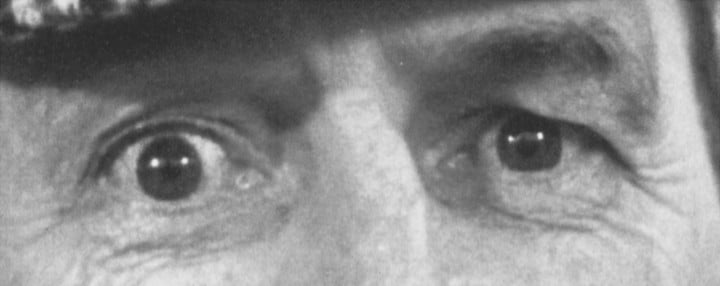
For each set of eyes, choose the word that best describes what the person is thinking or feeling. You may feel more than one word applies, choose the single word you consider most suitable, and read all four before deciding. Start with the practice item; it does not count toward your score. The timer starts when you answer your first item and stops when you score the test.
Limitations worth knowing
- • The photographs are drawn from 1990s magazines and show only white faces, which limits generalizability across cultures.
- • The word options prime recognition; free responses would be far harder for most people.
- • Alexithymia, trauma history, fatigue, and language familiarity all influence scores independently of autism.
Test materials: Baron-Cohen, Wheelwright, Hill, Raste & Plumb (2001), The "Reading the Mind in the Eyes" Test revised version. This page is an educational demonstration; results are not stored and do not constitute a diagnosis.
Keep reading
All clinician tools pages →- Clinician toolsPand testingInteractive cognitive and social-cognitive tasks.For clinicians
- Clinician toolsHinting task (SCOPE)Social-cognitive inference task.For clinicians
- Clinician toolsSRS-2 digital formSocial Responsiveness Scale, digital entry and scoring.For clinicians
- Clinician toolsProvider resourcesReferral information, tools, and materials for clinicians.For clinicians
- Clinician toolsScreening questionnairesPQ-16, PQ-B and other downloadable screening instruments.For clinicians