
Can Schizophrenia Run in the Family? A Risk Guide
By Pand Health
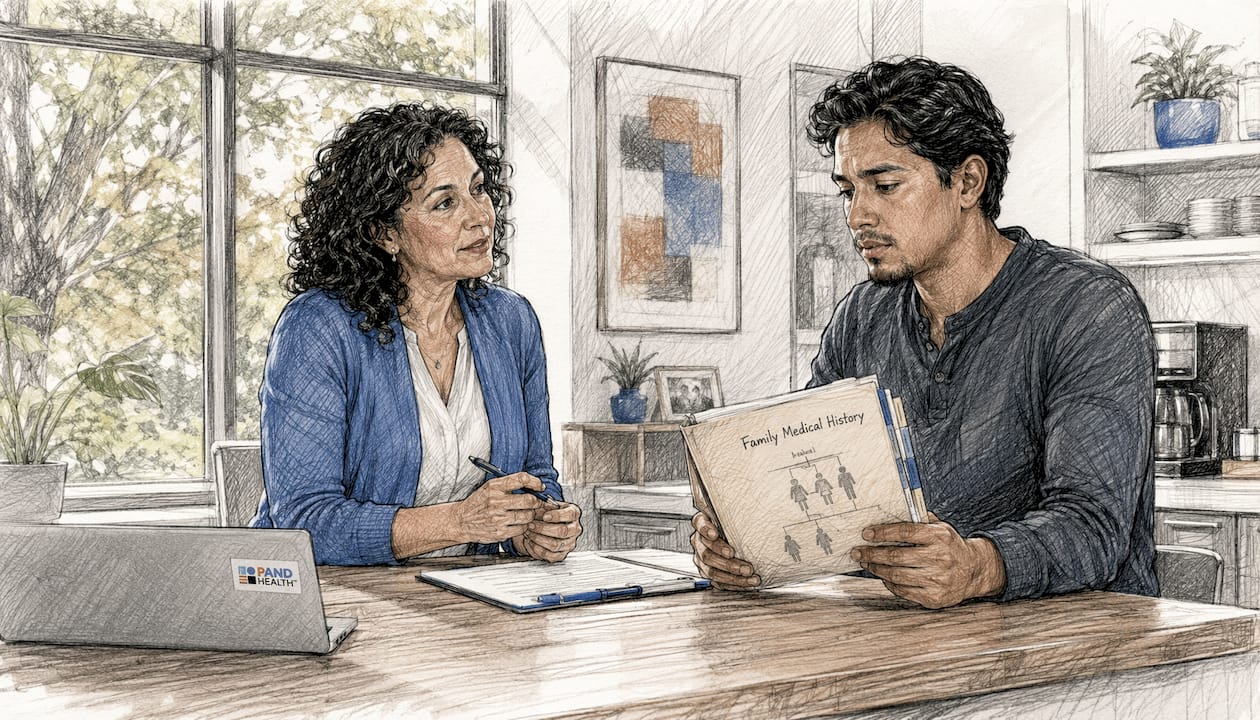
Yes, schizophrenia can run in the family, and the genetic risk scales directly with how closely you are related to an affected person. The general population risk is about 0.5–1%, but first-degree relatives face a risk around 9%. Children of two affected parents have approximately a 27% risk, and identical twins have the highest observed risk at about 50%. Those numbers are meaningful, but they also tell a reassuring story: even with a strong family history, most relatives do not develop the disorder. Schizophrenia is not inherited like eye color. It follows a complex, polygenic pattern shaped by dozens of genetic variants and, critically, by environmental conditions that can either trigger or moderate illness in genetically vulnerable people.
Can schizophrenia run in the family? Understanding the genetics
Schizophrenia has an estimated heritability of approximately 80%, yet no single gene causes it. The disorder involves hundreds of common variants, each contributing a small amount of risk, alongside rarer variants with larger individual effects. This polygenic architecture explains why the condition clusters in families without following a predictable Mendelian pattern.
- Polygenic risk scores aggregate the effect of many common variants; people with a family history of schizophrenia tend to carry higher polygenic loading than those without.
- Rare copy number variants (CNVs) such as the 22q11.2 deletion confer substantially elevated individual risk and are more likely to appear in familial cases.
- Epigenetic changes alter how genes are expressed without changing the DNA sequence itself, meaning stress, nutrition, and prenatal exposures can switch risk genes on or off across generations.
- Having a parent with a schizophrenia-spectrum disorder raises a child’s risk of similar psychosis-spectrum conditions by nearly sixfold compared to children of unaffected parents.
If your uncle or aunt has schizophrenia, your risk is lower than that of a first-degree relative but still elevated above the general population baseline. The more affected relatives you have, and the closer those relationships, the higher your inherited susceptibility. Genetic risk increases with the number of affected family members, but it never guarantees illness.
What environmental factors raise your risk?
Genetics load the gun; environment pulls the trigger. Modifiable environmental factors play a substantial role in whether a genetically predisposed person develops schizophrenia, and several are well-documented.
- Cannabis use: Heavy, early cannabis use is one of the most consistently identified modifiable risk factors, particularly high-potency THC products. Pandhealth’s cannabis-induced psychosis program addresses this specific pathway.
- Prenatal complications: Maternal infections, malnutrition, and obstetric complications during pregnancy are associated with increased risk in offspring.
- Childhood adversity: Trauma, abuse, and neglect during development compound genetic vulnerability.
- Urban upbringing: Growing up in densely populated urban environments correlates with elevated risk, likely through chronic social stress.
- Social isolation: Prolonged isolation, whether from migration, discrimination, or circumstance, amplifies risk in predisposed individuals.
Gene-environment interactions explain a meaningful share of schizophrenia risk variance. This is clinically significant because it means that managing environmental exposures, especially during adolescence, can genuinely shift the trajectory for someone with a family history.
When does schizophrenia typically appear?

Schizophrenia is typically diagnosed from the late teens through the early thirties. Males tend to develop symptoms in late adolescence to the early twenties; females more often in the early to mid-thirties. Diagnosis before age 12 or after 40 is uncommon.
The prodromal phase precedes full psychosis and often goes unrecognized for months or years. Families frequently notice behavioral changes first:
- Social withdrawal and reduced interest in relationships
- Declining academic or occupational performance
- Increased irritability or emotional flatness
- Unusual or disorganized thinking that seems out of character
- Sleep disturbances and heightened anxiety
Early symptoms are often nonspecific, which delays diagnosis and causes understandable frustration for families. Longitudinal tracking of behavioral changes over time improves diagnostic accuracy and, more importantly, opens the door to earlier intervention.
Pro Tip: If you have a family history of schizophrenia and notice prodromal signs in a teen or young adult, request a clinical evaluation from a specialist in early psychosis rather than waiting for symptoms to become severe. Earlier care consistently produces better outcomes.
How to cope when a family member has schizophrenia
Supporting a loved one with schizophrenia is demanding, and families who understand the illness as a medical condition, not a character flaw, cope more effectively and provide better support.
- Learn the illness: Psychoeducation about symptoms, triggers, and treatment options reduces fear and improves communication.
- Use motivational interviewing: Approaching a reluctant loved one with open-ended questions and reflective listening, rather than confrontation, increases the likelihood they will engage with treatment.
- Connect with peer support: Organizations like the National Alliance on Mental Illness (NAMI) offer family support groups that reduce caregiver isolation.
- Set sustainable boundaries: Protecting your own mental health is not selfish. Caregiver burnout directly undermines the quality of support you can provide.
- Coordinate care actively: Stay in contact with the treatment team, attend family psychoeducation sessions, and help your loved one maintain medication adherence.
Effective family support reduces stress, promotes treatment adherence, and is one of the most reliable predictors of better long-term outcomes.
How Pandhealth’s coordinated specialty care model supports early intervention
Pandhealth, based in Los Angeles, uses an augmented version of the California OnTrack coordinated specialty care (CSC) model, specifically designed for teens and young adults ages 13–35 experiencing thought disorders. CSC is an evidence-based framework that brings multiple disciplines together around a single patient, rather than routing them through disconnected providers.
- Psychiatry and medication management tailored to the individual’s clinical profile
- Individual and group therapy addressing both psychotic symptoms and the social challenges that accompany them
- Cognitive remediation to rebuild attention, memory, and executive function
- Family psychoeducation that equips relatives with practical tools for communication and support
- Supported education and employment to maintain real-world functioning during treatment
Early detection and comprehensive coordinated care reduce hospitalizations and support community reintegration. Functional recovery is the expectation, not the exception.
Pro Tip: California’s Early Psychosis Initiative funds cost-free care for teens ages 13–17 through programs like Pandhealth’s. If your teenager is showing early warning signs, cost should not be a barrier to getting an evaluation.
Prevention strategies and early interventions for at-risk individuals
For people with a family history of schizophrenia, prevention focuses on reducing modifiable risk and catching early warning signs before a first psychotic episode.
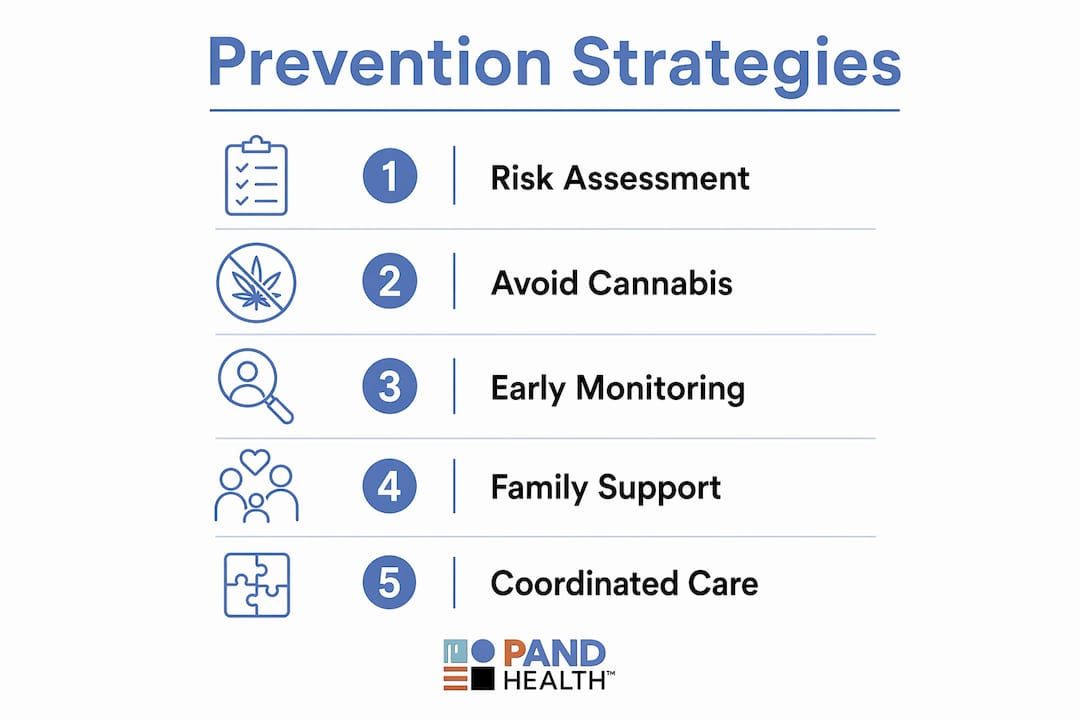
Avoiding heavy cannabis use is the single most actionable step for genetically predisposed individuals, particularly during adolescence when the brain is still developing. Maintaining stable sleep, managing chronic stress, and building strong social connections all reduce environmental load on a vulnerable system.
Clinical high-risk (CHR) programs monitor individuals who show prodromal signs without meeting full diagnostic criteria. These programs use structured assessments to track symptom progression and intervene with therapy, psychoeducation, and, when appropriate, low-dose medication before a first episode occurs. Research consistently shows that intervening during the prodromal phase improves long-term outcomes compared to waiting for full psychosis to emerge.
For families in California, Pandhealth’s early psychosis program provides exactly this kind of proactive, structured monitoring and care.
How family dynamics and support systems shape outcomes
Family environment does not cause schizophrenia, but it powerfully shapes how the illness progresses. High expressed emotion, a clinical term for household environments marked by criticism, hostility, or emotional overinvolvement, is associated with higher relapse rates. Families who learn to lower expressed emotion through psychoeducation and structured communication training directly reduce their loved one’s risk of relapse.
Conversely, a stable, supportive home environment is one of the strongest protective factors available. Consistent routines, low conflict, and active engagement with the treatment team all contribute to better functional outcomes. The World Health Organization notes that community-based care models, which include family involvement, outperform institutional settings for long-term recovery. Families are not bystanders in treatment. They are active participants whose behavior, knowledge, and emotional regulation shape the clinical course of the illness.
Key Takeaways
Family history of schizophrenia raises risk significantly, but genetics alone do not determine outcome: environmental management and early coordinated care are the most powerful tools available.
| Point | Details |
|---|---|
| Risk scales with genetic closeness | — |
| Polygenic, not single-gene | Schizophrenia involves many variants with small effects, making it unpredictable by simple inheritance rules. |
| Environment is modifiable | Heavy cannabis use, childhood adversity, and social isolation increase risk and can be actively reduced. |
| Onset is typically late teens to early 30s | Males present earlier; prodromal signs often precede diagnosis by months or years. |
| Early intervention changes outcomes | Coordinated specialty care during the prodromal or first-episode phase reduces hospitalizations and supports recovery. |
FAQ
How late in life can schizophrenia develop?
Schizophrenia is typically diagnosed from the late teens through the early thirties, with onset after age 40 considered uncommon. Late-onset cases do occur but are clinically distinct and less frequent.
How do you support a family member with schizophrenia?
Effective support combines psychoeducation about the illness, motivational interviewing to encourage treatment engagement, and connecting with peer support groups such as NAMI. Staying actively involved with the treatment team and attending family psychoeducation sessions improves both caregiver well-being and patient outcomes.
Where do people with schizophrenia typically live?
Most people with schizophrenia live in community settings, including family homes, supported housing, or independent living arrangements, rather than institutional care. The WHO emphasizes that community-based care models produce better long-term outcomes than hospitalization.
Is life worth living with schizophrenia?
Yes. At least one in three people with schizophrenia achieve full recovery, according to the WHO, and many more lead meaningful, satisfying lives with appropriate treatment. Early intervention, medication, therapy, and strong social support all substantially improve quality of life.
If you or someone in your family is showing early signs of psychosis, Pandhealth’s multidisciplinary team in Los Angeles is here to help. Pandhealth offers schizophrenia treatment and schizoaffective disorder care for teens and young adults ages 13–35, including cost-free options for eligible teens through California’s Early Psychosis Initiative. Contact Pandhealth for a free consultation.