Treatment Centers in Los Angeles for Psychosis Care
By Pand Health

Treatment Centers in Los Angeles for Psychosis Care
Treatment centers in Los Angeles are defined as licensed clinical facilities that provide structured psychiatric and psychosocial care for individuals experiencing mental health conditions, including psychosis and related thought disorders. Los Angeles County operates one of the largest public mental health systems in the United States, administered by the Los Angeles County Department of Mental Health. Families navigating this system will encounter a spectrum of care options: crisis stabilization, inpatient hospitalization, partial hospitalization, and specialized outpatient programs. The evidence-based Coordinated Specialty Care (CSC) model, including California’s OnTrack program, represents the current standard for early psychosis intervention. Understanding these options is the first step toward getting the right care at the right time.
What levels of care do treatment centers in Los Angeles provide for psychosis?
Los Angeles mental health centers offer four distinct levels of psychiatric care, each matched to a patient’s clinical needs and safety risk. Choosing the wrong level delays recovery. Choosing the right one accelerates it.
Inpatient psychiatric hospitalization is the most intensive level. Inpatient care is reserved for individuals who present acute safety risks or cannot care for themselves. Stays typically last 7–10 days and focus on stabilization, not long-term psychotherapy. Clinical teams use this time to adjust medications, monitor safety, and prepare a discharge plan.

Crisis Stabilization Units (CSUs) serve patients who need urgent intervention but do not yet meet the threshold for full hospitalization. CSUs provide 24-hour observation and focus on rapid safety stabilization before transitioning patients to the appropriate next level of care. They are a critical bridge between emergency rooms and ongoing outpatient services.
Partial hospitalization programs (PHPs) and intensive outpatient programs (IOPs) sit in the middle of the care spectrum. PHPs typically involve five days per week of structured programming for several hours per day. IOPs offer a lighter schedule, usually three days per week, for patients who are stable enough to sleep at home but still need daily clinical support.
Standard outpatient care is the foundation of long-term recovery. Outpatient care is the mainstay for sustained recovery, with inpatient care functioning as a temporary stabilizing intervention during acute crises. Outpatient services include individual therapy, medication management, group therapy, and family psychoeducation.
- ✅ Inpatient: Acute safety risk, inability to self-care, medication crisis
- ✅ CSU: Urgent but sub-acute presentation, needs rapid stabilization
- ✅ PHP/IOP: Stable enough for home, still requires structured daily support
- ✅ Outpatient: Ongoing recovery, symptom management, functional restoration
Pro Tip: When calling a recovery center in Los Angeles for the first time, ask specifically whether they offer a “step-down” pathway. A program that can move a patient from inpatient to IOP to standard outpatient within the same clinical team produces far better outcomes than one that discharges patients into an uncoordinated system.
How do specialized programs like Coordinated Specialty Care support early psychosis treatment?
Coordinated Specialty Care is the most evidence-supported model for treating first-episode and early psychosis. It is not a single therapy. It is a team-based treatment architecture designed to address every dimension of a young person’s life simultaneously.
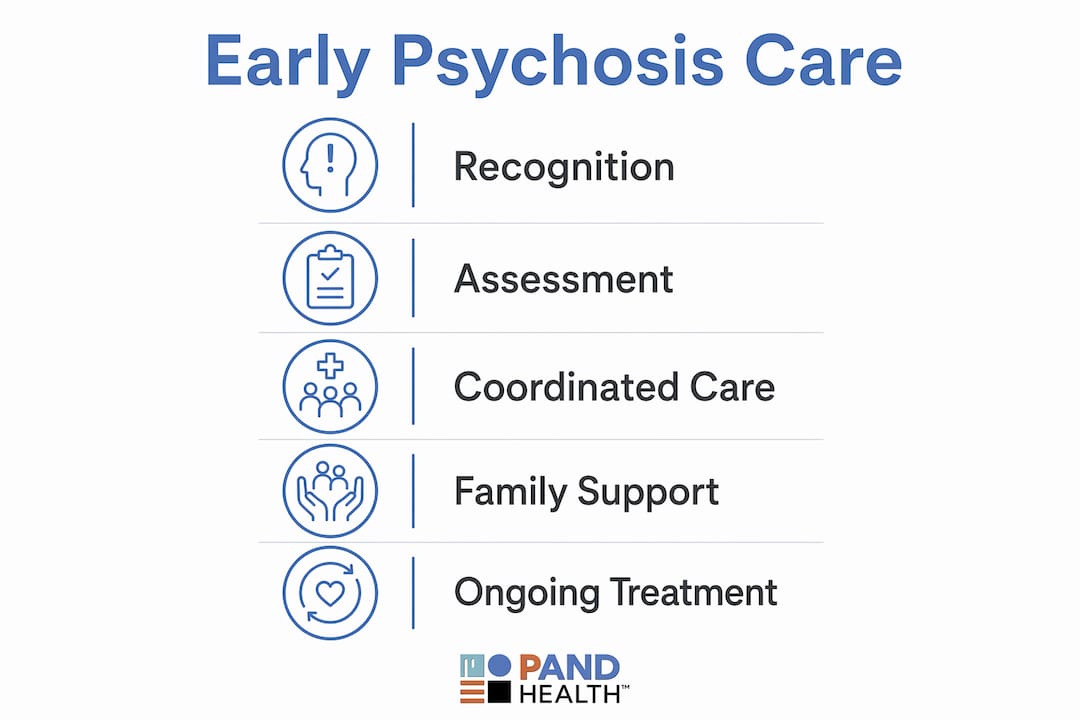
CSC programs like California OnTrack integrate medication management, family education, supported employment, resiliency training, and group therapy for patients aged 12–40. That age range is deliberate. Psychosis most commonly emerges in adolescence and early adulthood, and intervening during this window can fundamentally alter the illness trajectory.
The core components of a CSC program include:
- Psychiatric evaluation and medication management: A psychiatrist works with the patient to find the lowest effective dose of antipsychotic medication, minimizing side effects while controlling symptoms.
- Individual therapy: Cognitive behavioral therapy for psychosis (CBTp) addresses distorted thinking patterns and builds coping skills.
- Family psychoeducation: Families learn to recognize warning signs, reduce expressed emotion, and support recovery without enabling avoidance.
- Supported education and employment: A specialist helps the patient stay enrolled in school or maintain a job, because functional recovery matters as much as symptom reduction.
- Resiliency and group therapy: Peer support normalizes the experience and builds social skills that psychosis often erodes.
Early intervention signs for thought disorders include social withdrawal, suspiciousness, and rapid or nonsensical speech. Prompt response to these signals can significantly improve long-term outcomes. CSC programs are specifically designed to engage patients before crisis escalation occurs.
Families often underestimate early warning signs, which delays crucial interventions. Educating caregivers on symptom recognition is one of the most impactful things a treatment team can do. Pandhealth uses an augmented version of the California OnTrack CSC model, extending its reach to teens and young adults ages 13–35 with conditions including schizophrenia, schizoaffective disorder, and bipolar disorder with psychotic features.
What role do Medi-Cal and local policies play in accessing mental health treatment?
Access to mental health centers in Los Angeles is shaped significantly by insurance coverage and county policy. Knowing these policies removes barriers that stop families from getting help.
Medi-Cal members can initiate mental health services through the “No Wrong Door” policy without a prior referral. This means a patient or family member can contact the Los Angeles County Department of Mental Health directly and receive a clinical assessment to determine eligibility for Specialty Mental Health Services (SMHS). No referral from a primary care physician is required.
| Service Category | What Is Covered | Access Method |
|---|---|---|
| Specialty Mental Health Services | Psychiatric consultation, psychotherapy, medication monitoring | Direct contact via No Wrong Door |
| Outpatient behavioral health | Individual and group counseling, medication management | Medi-Cal provider directory |
| Substance use disorder services | Counseling, detox, residential treatment | Integrated behavioral health referral |
| Youth behavioral health (under 21) | Applied Behavior Analysis, therapy, crisis services | School-based or county referral |
Medi-Cal behavioral health benefits also cover outpatient mental health counseling, medications, substance use disorder services, and Applied Behavior Analysis for youth under 21. Multiple access points, including telephone support and provider directories, help patients find suitable services quickly.
Pro Tip: When calling the Los Angeles County Department of Mental Health for the first time, have a written summary of the patient’s recent behaviors, sleep changes, and any medications already prescribed. Clinicians use this information to triage accurately and connect you to the right level of care faster.
What can patients and families expect during inpatient stays and transitions to outpatient care?
Inpatient psychiatric hospitalization is frequently misunderstood. Most families expect intensive one-on-one therapy sessions. The reality is different, and knowing what to expect reduces anxiety for everyone involved.
Inpatient hospitalization focuses on medication management and safety monitoring. Daily psychiatrist interactions are brief, typically focused on medication adjustments rather than extended psychotherapy. Therapeutic activities during a stay include group psychoeducation and recreational therapy. In-depth individual psychotherapy generally begins after discharge, once the patient is stable.
A typical inpatient stay involves structured programming for 6–8 hours per day under continuous clinical supervision. The multidisciplinary team includes a psychiatrist, nurses, social workers, and occupational therapists. Each team member plays a distinct role:
- Psychiatrist: Leads medication decisions and daily clinical reviews
- Nurses: Monitor physical health, administer medications, and observe behavior around the clock
- Social worker: Coordinates discharge planning and connects the patient to community resources
- Occupational therapist: Assesses daily functioning and supports skill-building for independent living
Discharge planning begins on the day of admission. Outpatient follow-up appointments within 48 hours of discharge are the standard of care because this transition period carries the highest relapse risk. Families should confirm that a follow-up appointment is scheduled before a loved one leaves the hospital. Gaps in care during this window are the most common cause of rapid rehospitalization.
During crisis assessments, clinicians evaluate sleep patterns, stress levels, medication history, and behavioral observations provided by family members. Detailed behavioral history from family improves the accuracy of assessment and the quality of the resulting care plan. Bring notes. Write things down before the appointment.
Key Takeaways
The most effective approach to psychosis treatment in Los Angeles combines crisis stabilization, evidence-based inpatient care, and specialized outpatient programs like Coordinated Specialty Care to support sustained functional recovery.
| Point | Details |
|---|---|
| Match care to clinical need | Inpatient care is for acute safety crises; outpatient CSC programs drive long-term recovery. |
| CSC is the gold standard | California OnTrack integrates medication, therapy, family support, and employment for ages 12–40. |
| No Wrong Door removes barriers | Medi-Cal members in Los Angeles can access Specialty Mental Health Services without a referral. |
| Discharge planning is critical | Follow-up within 48 hours of inpatient discharge is the single most effective way to prevent relapse. |
| Early signs matter | Social withdrawal, suspiciousness, and disorganized speech are actionable warning signals, not phases to wait out. |
What I’ve learned about choosing the right level of care in Los Angeles
The single most common mistake I see families make is waiting too long for outpatient care to work before seeking a higher level of support. Outpatient therapy is powerful, but it requires a patient who is stable enough to engage. When someone is actively psychotic, asking them to sit in a weekly therapy session and practice coping skills is like asking someone with a broken leg to run physical therapy drills. The sequence matters.
The second mistake is the opposite: expecting inpatient hospitalization to be the cure. Families sometimes feel relief when a loved one is admitted, as if the hard work is done. Inpatient care stabilizes. It does not treat. The real clinical work happens in the months of outpatient care that follow. Families who understand this distinction show up differently. They ask better questions at discharge. They follow through on appointments. They see the 48-hour follow-up rule not as a bureaucratic checkbox but as a clinical lifeline.
I also want to address a misconception about specialized early psychosis programs. Some families assume these programs are only for patients who have already had a full psychotic break. That is not accurate. Programs built on the CSC model are specifically designed to engage patients at the earliest warning signs, including what clinicians call the prodromal phase, before a first episode occurs. Getting into a program like Pandhealth’s early psychosis care at that stage can change the entire illness trajectory. Functional recovery should be the expectation, not the exception.
— eric
Pandhealth’s Coordinated Specialty Care for psychosis in Los Angeles
Pandhealth is a specialized mental health treatment center in Los Angeles focused exclusively on teens and young adults ages 13–35 experiencing thought disorders. The clinical team uses an augmented California OnTrack CSC model to deliver psychiatry, medication management, individual and group therapy, cognitive remediation, and family psychoeducation under one coordinated program.

Pandhealth treats conditions including schizophrenia, schizoaffective disorder, bipolar disorder with psychotic features, and clinically high-risk early warning signs. The program is built to reduce hospitalizations, support school and employment reintegration, and help patients build meaningful lives while managing their symptoms. Families can explore admissions and care options directly through Pandhealth to find the right fit for their situation.
FAQ
What is Coordinated Specialty Care for psychosis?
Coordinated Specialty Care (CSC) is a team-based treatment model for early psychosis that integrates psychiatry, therapy, family education, and supported employment. California’s OnTrack program is the state’s primary CSC framework, serving patients ages 12–40.
How long does inpatient psychiatric hospitalization typically last?
Inpatient psychiatric stays typically last 7–10 days and focus on stabilization and medication management rather than long-term psychotherapy. In-depth individual therapy begins after discharge.
Can I access mental health treatment in Los Angeles without a referral?
Yes. Medi-Cal members in Los Angeles can initiate Specialty Mental Health Services through the county’s “No Wrong Door” policy without a prior referral from a primary care physician.
What are the early warning signs of psychosis in teens and young adults?
Early signs include social withdrawal, suspiciousness, disorganized or rapid speech, and declining school or work performance. Engaging a CSC program at this stage, before a full psychotic episode, produces significantly better outcomes.
Does Medi-Cal cover outpatient mental health and substance use treatment?
Yes. Medi-Cal covers outpatient mental health counseling, psychiatric medications, substance use disorder services, and Applied Behavior Analysis for youth under 21 across Los Angeles County.