Schizophrenia Treatment Centers: A Guide for Families
By Pand Health

Schizophrenia Treatment Centers: A Guide for Families
TL;DR:
- Specialized schizophrenia treatment centers use multidisciplinary, evidence-based care models to improve recovery outcomes.
- They integrate medication management, cognitive therapies, family education, and community support into coordinated programs.
Schizophrenia treatment centers are specialized facilities that deliver coordinated, evidence-based care for individuals living with schizophrenia and related psychotic disorders. These centers go far beyond basic symptom management. They combine psychiatry, psychotherapy, family education, and community support into one connected system of care. For families in California searching for the right help, especially after a first episode of psychosis, understanding what separates a specialized center from a standard outpatient program can make a meaningful difference in long-term recovery.
What do schizophrenia treatment centers actually offer?
Specialized schizophrenia treatment centers are defined by their use of multidisciplinary teams and structured, evidence-based care models. A standard intensive outpatient program (IOP) or partial hospitalization program (PHP) may offer group therapy and medication management, but it rarely integrates the full range of services that schizophrenia requires. The gap between average outpatient care and true specialty care is significant.

The gold standard framework is Coordinated Specialty Care (CSC). The 2026 APA guidelines recommend CSC as the centerpiece of first-episode psychosis treatment. CSC integrates medication management, cognitive behavioral therapy for psychosis (CBTp), psychoeducation, supported employment, and family interventions into one coordinated plan.
A second model, Assertive Community Treatment (ACT), targets patients with low engagement or frequent relapse. ACT delivers multidisciplinary care in community settings, reducing hospitalization risk for those who struggle to stay connected to clinic-based services. ACT teams typically include a psychiatrist, nurse, case manager, and peer specialist who meet patients where they are, literally.
Core services at a specialized center include:
- Medication management and monitoring, including evaluation for long-acting injectable antipsychotics when adherence is a concern
- CBT for psychosis (CBTp), which targets distressing beliefs and perceptual experiences directly
- Family psychoeducation, which teaches relatives how to support recovery without reinforcing symptoms
- Supported employment and education, helping patients return to school or work as part of functional recovery
- Cognitive remediation, which rebuilds attention, memory, and processing speed affected by psychosis
- Peer specialist support, connecting patients with trained individuals who have lived experience of psychosis
Pro Tip: When evaluating any center, ask specifically whether CBTp is delivered by a clinician trained in that protocol. General CBT and CBT for psychosis are not the same treatment.
Accreditation by bodies like The Joint Commission or CARF signals that a center meets safety and quality standards beyond basic state licensure. Accreditation is not a guarantee of excellence, but its absence is a warning sign worth taking seriously.
What levels of care are available for schizophrenia?
Different levels of care exist to match the intensity of treatment to the severity of a patient’s condition. Choosing the wrong level, either too little or too much, can slow recovery. Families benefit from understanding each tier before making a decision.
-
Inpatient psychiatric hospitalization. This is the most intensive level, providing 24/7 medical monitoring for patients in acute crisis. Inpatient care stabilizes severe symptoms, manages medication adjustments, and ensures safety. It is typically short-term, lasting days to a few weeks, and transitions to a lower level of care once the patient is stable.
-
Residential treatment. Schizophrenia residential treatment centers offer 24-hour structured support without the acute medical intensity of a hospital. Patients live on-site and receive daily therapy, medication management, and skills training. This level suits patients who are stable enough to leave the hospital but not yet ready to live independently.
-
Partial Hospitalization Programs (PHP). PHP provides structured treatment for five to six hours per day, five days per week, while patients return home in the evenings. It functions as a step-down from inpatient or residential care, or as a step-up for patients whose symptoms are worsening in standard outpatient settings.
-
Intensive Outpatient Programs (IOP). IOP typically involves nine or more hours of treatment per week across three to five days. It suits patients who are stabilized and functioning at a basic level but still need frequent clinical contact. Many standard IOPs, however, are not designed for psychotic disorders and lack CBTp, cognitive remediation, or peer support.
-
Maintenance outpatient care. This is ongoing, lower-frequency support for patients in sustained recovery. It includes regular psychiatry appointments, individual therapy, and periodic family check-ins.
The critical distinction for schizophrenia care programs is not just the level of intensity but the degree of specialization within each level. A PHP at a general mental health clinic and a PHP at a specialized psychosis center are structurally similar but clinically very different.
How do evidence-based treatments improve outcomes?
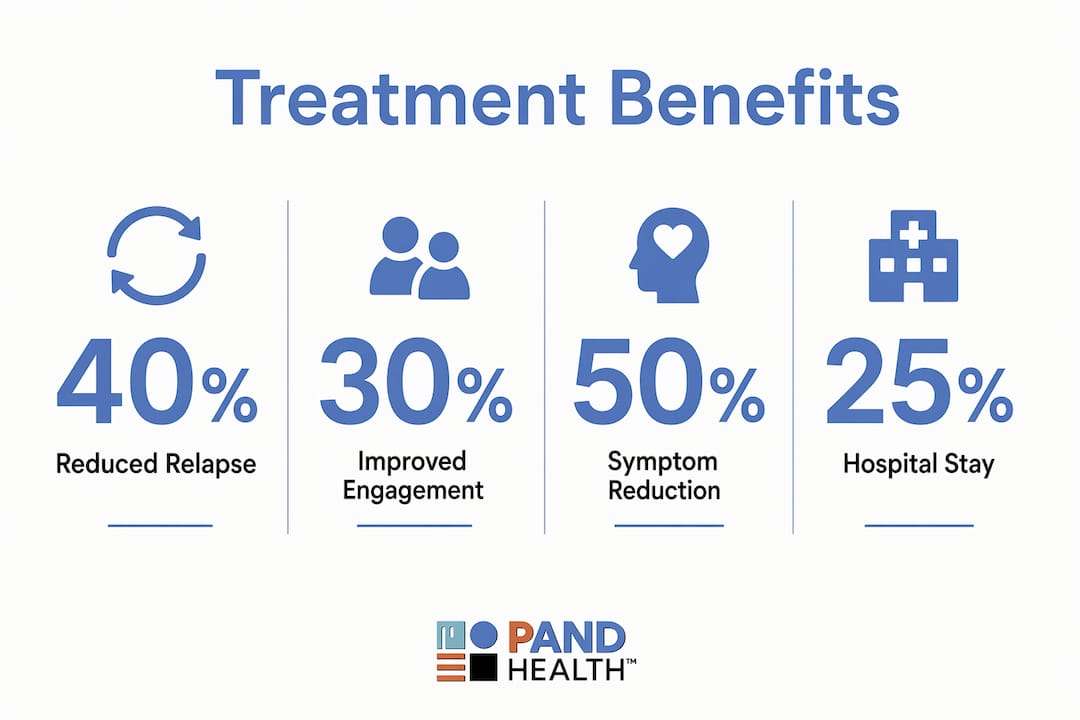
The evidence for specialized schizophrenia care is clear and consistent. CSC programs reduce symptom severity, improve education and employment outcomes, and lower relapse rates compared to traditional care. These findings come from randomized controlled trials and state-level program evaluations, not just observational data.
Combining medication with psychosocial treatments produces better functional recovery than medication alone. Pharmacotherapy controls positive symptoms like hallucinations and delusions. Psychosocial treatments address the cognitive, social, and vocational deficits that medication does not fully resolve.
“Functional recovery should be the expectation, not the exception. Coordinated Specialty Care programs exist precisely because schizophrenia requires more than a prescription. When medication, therapy, family support, and employment assistance work together, patients achieve outcomes that isolated treatment cannot produce.”
For patients with treatment-resistant schizophrenia, clozapine is recommended with careful monitoring, which requires specialist psychiatric infrastructure that most general outpatient programs do not have. This is one concrete reason why specialized centers matter for complex cases.
Family engagement is critical for sustaining participation and improving recovery trajectories. Patients whose families receive structured psychoeducation show better treatment adherence and fewer hospitalizations over time. This finding holds across multiple studies and cultural contexts.
| Treatment component | Documented benefit |
|---|---|
| Coordinated Specialty Care (CSC) | Reduces relapse rates and improves employment outcomes |
| CBT for psychosis (CBTp) | Reduces distress from hallucinations and delusional thinking |
| Supported employment | Increases return-to-work and school rates |
| Family psychoeducation | Improves adherence and reduces caregiver burden |
| Long-acting injectable antipsychotics | Improves medication adherence in patients with poor compliance |
Coordination across disciplines is itself a treatment variable. When a psychiatrist, therapist, case manager, and family educator share information and align on goals, patients receive consistent messages and fewer conflicting recommendations. That consistency directly supports adherence.
What challenges should families expect when searching for care?
Finding the right schizophrenia care program in California takes more effort than a basic internet search. Several practical barriers slow families down, and knowing them in advance reduces frustration.
- Insurance verification is the first step, not an afterthought. Insurance companies vary widely on reimbursing intensive schizophrenia programs. Out-of-network inpatient costs can be substantial. Call your insurer before contacting a center, and ask specifically about coverage for PHP, IOP, and residential levels of care.
- Accreditation and staff credentials matter. Confirm that the center holds accreditation from The Joint Commission or CARF. Verify that the clinical team includes board-certified psychiatrists and licensed psychologists, not just master’s-level counselors working without specialist supervision.
- Location and community ties affect outcomes. Schizophrenia care is long-term. A center that is geographically accessible and connected to local employment and education resources supports reintegration in ways that a distant facility cannot.
- Schizophrenia care in the US is often fragmented. Many programs focus only on short-term symptom stabilization rather than building the connected, sustainable care ecosystems that improve long-term outcomes. Ask any prospective center how they coordinate care after discharge.
- Financial aid options exist. Some centers offer sliding-scale fees, payment plans, or assistance navigating Medi-Cal coverage. Ask directly. Centers that specialize in schizophrenia treatment for young adults often have experience helping families access state-funded programs.
Pro Tip: Before committing to any program, request a clinical consultation. A reputable center will assess your family member’s specific needs and explain exactly how their model addresses those needs. Vague answers about “individualized care” without specifics are a red flag.
CSC programs remain underutilized despite strong evidence of improving long-term outcomes for first-episode psychosis patients. That gap means families must actively seek out specialized programs rather than assuming any mental health clinic will provide equivalent care.
Pandhealth’s specialized care for schizophrenia and early psychosis
Pandhealth is a Los Angeles-based mental health center dedicated to teens and young adults ages 13–35 experiencing thought disorders, including schizophrenia, schizoaffective disorder, and bipolar disorder with psychotic features.
Pandhealth uses an augmented version of the California OnTrack CSC model, integrating psychiatry, medication management, CBTp, cognitive remediation, family psychoeducation, and supported employment into one coordinated program. For families searching for early psychosis treatment or specialized schizophrenia care in Los Angeles, Pandhealth offers a clinically grounded, patient-centered path toward functional recovery. The team also provides care for schizoaffective disorder and other complex psychotic conditions. Contact Pandhealth for a free consultation to discuss your family’s specific needs.
FAQ
What is Coordinated Specialty Care for schizophrenia?
Coordinated Specialty Care (CSC) is an evidence-based treatment model that integrates medication management, CBT for psychosis, family education, and supported employment into one connected program. The 2026 APA guidelines recommend CSC as the primary approach for first-episode psychosis.
How is a specialized center different from a standard IOP?
A standard IOP provides group therapy and medication management but typically lacks CBT for psychosis, cognitive remediation, peer specialist support, and family psychoeducation. Specialized schizophrenia centers deliver all of these components through an integrated, multidisciplinary team.
What level of care is right for a first episode of psychosis?
Most first-episode cases benefit from a PHP or CSC-based outpatient program following any necessary inpatient stabilization. The goal is the least restrictive level of care that still provides daily or near-daily clinical contact and family involvement.
How do I verify a center’s quality before enrolling?
Confirm accreditation by The Joint Commission or CARF, verify that the team includes board-certified psychiatrists and licensed psychologists, and ask specifically which evidence-based protocols they use for psychosis. A clinical consultation before enrollment is the most reliable way to assess fit.
Does insurance cover schizophrenia residential treatment centers?
Coverage varies by plan and provider. Verify benefits directly with your insurer before contacting a center, and ask about both in-network and out-of-network options. Many specialized centers have staff who assist families with insurance navigation and financial aid applications.
Key Takeaways
Specialized schizophrenia treatment centers deliver measurably better outcomes than standard outpatient programs because they combine medication, psychotherapy, family education, and community support into one coordinated system of care.
| Point | Details |
|---|---|
| CSC is the evidence-based standard | The 2026 APA guidelines recommend Coordinated Specialty Care for first-episode and ongoing schizophrenia treatment. |
| Specialization beats general outpatient care | Standard IOPs and PHPs rarely include CBTp, cognitive remediation, or peer support essential for psychosis recovery. |
| Levels of care must match severity | Inpatient, residential, PHP, IOP, and maintenance care each serve a distinct stage of recovery. |
| Family involvement improves outcomes | Structured family psychoeducation reduces relapse rates and improves long-term treatment adherence. |
| Verify accreditation and insurance early | Confirm Joint Commission or CARF accreditation and insurance coverage before committing to any program. |