How to Get Help for Someone With Schizophrenia
By Pand Health

How to Get Help for Someone With Schizophrenia
Getting help for someone with schizophrenia means connecting them to medical evaluation, psychiatric treatment, and ongoing support services as quickly as possible. The clinical term for this process is coordinated specialty care (CSC), and it is the standard of care recommended by SAMHSA and the National Institute of Mental Health. Key resources include NAMI, the 988 Suicide and Crisis Lifeline, and Early Psychosis Intervention (EPI) programs. Research is clear: shorter duration of untreated psychosis leads to better long-term outcomes. Acting early is not just helpful. It is clinically significant.
How do you recognize early warning signs and get help fast?
The first step in helping someone with schizophrenia is recognizing that something is wrong before a full psychotic break occurs. The period before acute psychosis is called the prodromal phase. Symptoms during this phase are easy to dismiss as stress, teenage behavior, or depression. That delay costs real recovery time.
Common early warning signs include:
- Social withdrawal and loss of interest in friends or activities
- Sleep disturbances, often with an inverted schedule
- Increasing suspiciousness or paranoid thinking
- Disorganized speech or unusual beliefs
- Decline in school or work performance
- Neglect of personal hygiene
Early intervention programs significantly reduce hospitalizations and improve long-term function. That means the window between first symptoms and first treatment is one of the most consequential periods in the entire illness course.
When you notice these signs, start with a family doctor or primary care physician. Request a psychiatric referral and be specific about what you have observed. Many California counties operate Early Psychosis Intervention clinics that accept self-referrals from families. You do not need a formal diagnosis to make the call.
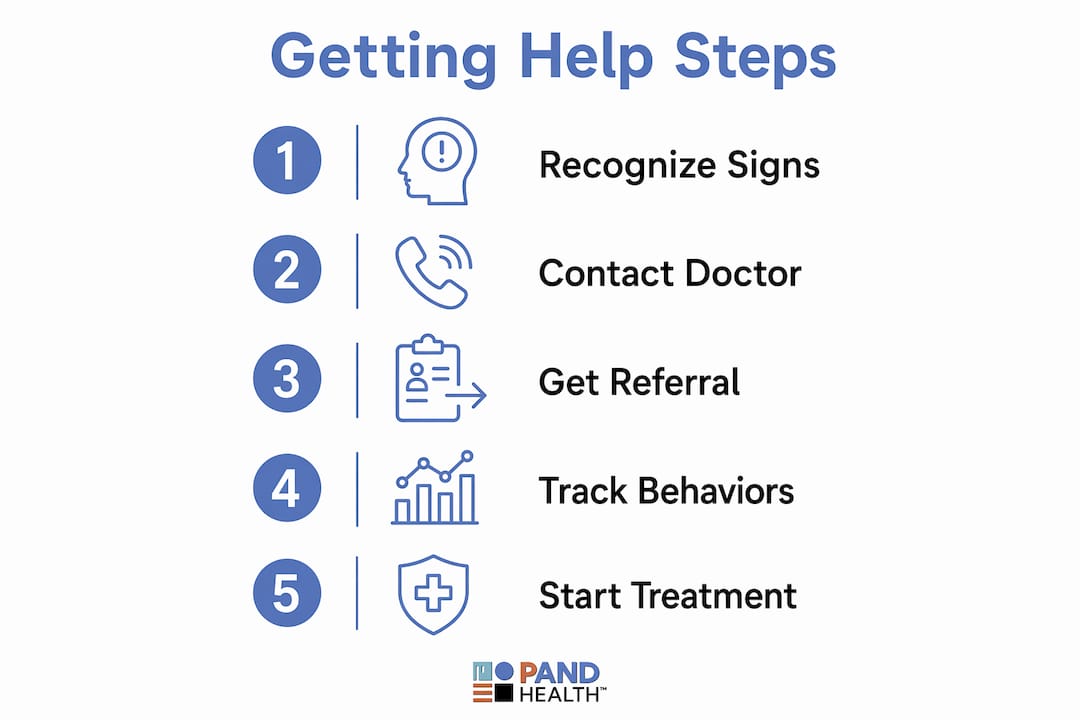
Pro Tip: Keep a written log of specific behaviors you observe, including dates and descriptions. Clinicians use this information during initial assessments, which typically last 30–60 minutes. A clear record helps them make faster, more accurate decisions.

What do you do when someone with schizophrenia refuses help?
Refusal is one of the most painful and common situations caregivers face. A person experiencing psychosis often lacks insight into their own illness, a clinical condition called anosognosia. This is not stubbornness. It is a neurological symptom of the disorder itself.
The most effective communication framework for engaging someone who refuses treatment is the LEAP technique. LEAP stands for Listen, Empathize, Agree, and Partner. Developed to support engagement with people who reject care, LEAP promotes better engagement by keeping the relationship intact rather than forcing a confrontation.
Here is how to apply LEAP in practice:
- Listen without interrupting. Let your loved one speak fully, even if what they say sounds irrational.
- Empathize with the emotion, not the delusion. Say “That sounds really frightening” rather than “That’s not real.”
- Agree on something small. Find one point of shared concern, such as sleep, stress, or feeling overwhelmed.
- Partner by framing treatment as a joint decision. “Would you be willing to talk to someone with me?” works better than “You need help.”
Challenging a delusion directly almost always worsens paranoia. Validating the distress without confirming the false belief keeps the door open. That distinction is the difference between a productive conversation and a complete shutdown.
When communication breaks down and safety becomes a concern, calling for help is the right call. For immediate danger, call 911. For a mental health crisis without immediate violence, the 988 Lifeline connects you to trained crisis counselors. Stabilization of acute psychosis can take weeks of intensive care, so early de-escalation matters.
When you do call emergency services, use specific language. Stating “mental health crisis” explicitly reduces the risk of police escalation and increases the chance of a specialized mental health response. Meet responders outside your home and brief them calmly before they enter.
Pro Tip: If your county has a mobile crisis team, save that number separately from 911. Many California counties, including Los Angeles, operate mental health mobile response units that are better equipped for psychiatric emergencies than standard law enforcement.
How do you build long-term support for someone with schizophrenia?
Recovery from schizophrenia is a lifelong process that requires ongoing medication adherence, family involvement, and structured support. Functional recovery should be the expectation, not the exception. Getting there requires a coordinated plan across multiple domains.
Medication adherence and coordinated specialty care
Medication is the cornerstone of relapse prevention. Missing doses is the leading cause of psychiatric hospitalization in schizophrenia. Coordinated specialty care (CSC) programs integrate psychiatry, therapy, family education, and employment support into one treatment plan. Pandhealth uses an augmented version of the California OnTrack CSC model, which is the evidence-based standard for first-episode psychosis care in California.
Family psychoeducation and caregiver support
NAMI’s Family-to-Family program is an 8-session course that teaches caregivers how to navigate the mental health system, manage crises, and practice effective coping skills. It is free, peer-led, and available across California. Completing this program changes how caregivers respond under pressure. That change directly affects the person they are supporting.
Home supports also matter more than most families realize. Non-clinical tools like medication calendars, pillboxes, and visual daily schedules reduce cognitive load and lower relapse risk. Structuring daily routines reduces anxiety and gives the person with schizophrenia a predictable framework to function within.
| Support type | Purpose | Example |
|---|---|---|
| Medication management | Prevent relapse | Pillbox, phone reminders, long-acting injections |
| Family psychoeducation | Build caregiver skills | NAMI Family-to-Family program |
| Coordinated specialty care | Integrate all treatment | California OnTrack CSC model |
| Home structure | Reduce cognitive load | Visual schedules, daily routines |
| Caregiver peer support | Prevent burnout | NAMI support groups, AARP caregiver resources |
Caregiver burnout is real and clinically documented. Peer support and shifting to a partnering mindset improve caregiving outcomes. Moving from trying to control the situation to focusing on quality of life is not giving up. It is the more effective strategy.
Where can you find professional resources for schizophrenia care?
California has more mental health resources than most states, but they are not always easy to find. The following contacts and tools are reliable starting points.
- NAMI California Helpline: Call or text the NAMI helpline for referrals, crisis guidance, and caregiver support. Staffed by trained volunteers with lived experience.
- 988 Suicide and Crisis Lifeline: Available 24/7 by call or text. Connects to local crisis counselors and can dispatch mobile mental health teams in many California counties.
- SAMHSA Treatment Locator: Available at findtreatment.gov. Searchable by zip code, insurance type, and condition. Filters for early psychosis programs specifically.
- County mental health departments: Every California county operates a public mental health system. Los Angeles County’s Department of Mental Health (LACDMH) offers free assessments and can connect families to CSC programs.
- Emergency rooms: Use only when the person is in immediate danger. ERs stabilize acute crises but rarely provide the ongoing psychiatric care needed for schizophrenia.
For families supporting a teen or young adult, Early Psychosis Intervention programs are the most targeted resource available. These programs accept referrals from families, schools, and primary care providers. You do not need to wait for a crisis to make contact. If you are concerned about caregiver mental health alongside your loved one’s care, peer support resources address both simultaneously.
Key Takeaways
Getting help for someone with schizophrenia requires early action, consistent communication, and a coordinated care plan that includes medication, family education, and professional psychiatric support.
| Point | Details |
|---|---|
| Act on early warning signs | Contact a doctor or EPI clinic at the first signs of withdrawal, paranoia, or disorganized thinking. |
| Use LEAP when facing refusal | Listen, Empathize, Agree, and Partner to keep communication open without confronting delusions. |
| Call 988 for mental health crises | State “mental health crisis” explicitly to increase the chance of a specialized response. |
| Build structure at home | Use medication calendars, visual schedules, and daily routines to reduce relapse risk. |
| Access coordinated specialty care | CSC programs like California OnTrack integrate psychiatry, therapy, and family support into one plan. |
What caregiving for schizophrenia actually taught me
The hardest shift for most caregivers is not learning the clinical facts. It is letting go of the idea that you can fix this through sheer effort or the right argument. I have seen families exhaust themselves trying to reason someone out of a delusion, and it never works. What does work is patience, consistency, and accepting that your role is to stay present, not to cure.
Caregiver burnout is not a sign of weakness. It is a predictable outcome of sustained high-stress caregiving without adequate support. The families who sustain their involvement over years are the ones who treat their own mental health as part of the treatment plan. They attend NAMI support groups. They talk to therapists. They set limits on what they can realistically provide.
Recovery from schizophrenia is not linear. There will be setbacks, medication changes, and hospitalizations. The caregivers who hold up through all of that are the ones who stopped measuring success by symptom elimination and started measuring it by quality of life. That reframe is not resignation. It is the most clinically sound position you can take.
— eric
Pandhealth’s specialized care for schizophrenia and early psychosis
Pandhealth is a Los Angeles-based mental health treatment center specializing in schizophrenia, schizoaffective disorder, and early psychosis for patients ages 13–35. The center uses the California OnTrack coordinated specialty care model, integrating psychiatry, cognitive remediation, family psychoeducation, and employment support into one personalized plan.

If your loved one is showing signs of psychosis or has already received a diagnosis, Pandhealth offers schizophrenia treatment in Los Angeles with dedicated programs for both teens and adults. The admissions team works with families directly to assess fit and begin care quickly. You can also learn more about early psychosis intervention for first-episode cases. Reaching out early makes a measurable difference in outcomes.
FAQ
What is the first step to get help for someone with schizophrenia?
Contact a primary care physician or an Early Psychosis Intervention clinic and describe the specific behaviors you have observed. Early treatment significantly reduces hospitalizations and improves long-term function.
How do you convince someone with schizophrenia to get help when they refuse?
Use the LEAP technique: Listen, Empathize, Agree, and Partner. Avoid challenging delusions directly, as this worsens paranoia and closes off communication.
What should I do if a schizophrenic family member refuses medication?
Document missed doses and behavioral changes, then share this information with their psychiatrist. Long-acting injectable medications are a clinically effective option for patients with consistent adherence problems.
When should I call 911 versus 988 for a mental health crisis?
Call 911 when there is immediate physical danger. Call 988 for a mental health crisis without active violence. Always state “mental health crisis” explicitly to request a specialized response.
What resources are available for schizophrenia caregivers in California?
NAMI’s Family-to-Family program, the SAMHSA treatment locator at findtreatment.gov, and Los Angeles County’s Department of Mental Health all provide free or low-cost support for caregivers navigating schizophrenia care.