
Delusional Jealousy Treatment: Your 2026 Guide
By Pand Health

Delusional Jealousy Treatment: Your 2026 Guide
Delusional jealousy treatment is defined as a combined clinical approach using second-generation antipsychotics and structured psychotherapy to reduce symptom severity and restore daily functioning. The condition itself, known clinically as the Othello syndrome or delusional disorder, jealous type, involves fixed, false beliefs of partner infidelity that no amount of evidence can shake. Unlike ordinary jealousy, these beliefs are psychotic in nature. They cause serious harm to relationships, safety, and quality of life. Effective treatment rarely eliminates the delusion entirely, but it reliably improves functioning and reduces the distress that jealous delusions create for everyone involved.
What are the key treatment components for delusional jealousy?
Second-generation antipsychotics are the first-line pharmacological treatment for delusional jealousy. Medications like aripiprazole and risperidone are most commonly prescribed. These drugs work by modulating dopamine pathways that drive the intensity of delusional thinking.
Dosing follows a “start low, go slow” principle. Clinicians titrate doses gradually over 4–6 weeks to minimize side effects and build the patient’s trust in the process. Rushing this phase often leads to early dropout, which is one of the most common treatment failures in this population.
Psychotherapy runs alongside medication, not after it. Cognitive Behavioral Therapy (CBT) helps patients identify and challenge the thought patterns that reinforce jealous delusions. Family therapy adds another layer by educating loved ones on how to respond without accidentally strengthening the delusion.
Key components of a full treatment plan include:
- Second-generation antipsychotics (aripiprazole, risperidone) as the pharmacological foundation
- Gradual dose titration over 4–6 weeks to manage tolerability and build alliance
- SSRIs as adjuncts when comorbid depressive or obsessive symptoms are present alongside the jealousy delusion
- CBT to address distorted thinking patterns tied to the delusion
- Family therapy to support relational stability and psychoeducation
- Maintenance therapy for at least 1–2 years after symptom remission to prevent relapse
Pro Tip: If a patient struggles with anger in close relationships alongside jealous delusions, exploring relationship anger dynamics can help partners understand what they are experiencing and respond more constructively.
How to differentiate delusional jealousy from obsessional jealousy
Correct diagnosis is the single most important step in treating jealousy delusions. Misclassification between delusional and obsessional jealousy leads directly to inappropriate treatment and poor outcomes.
The core distinction is insight. Delusional jealousy involves zero insight: the patient holds an unshakable conviction that their partner is unfaithful, regardless of contradicting evidence. Obsessional jealousy, by contrast, involves at least partial insight. The person recognizes their fears may be excessive, even if they cannot stop the thoughts. That difference determines whether antipsychotics or SSRIs with CBT form the backbone of care.
Clinicians must also rule out other causes before confirming a primary diagnosis. The differential includes:
- Substance-induced psychosis — alcohol dependence is a well-documented trigger for jealous delusions, particularly in middle-aged men
- Neurodegenerative disorders — conditions like frontotemporal dementia can produce jealousy delusions as an early symptom
- Bipolar disorder with psychotic features — manic or mixed episodes can generate jealous delusional thinking that resolves with mood stabilization
- Schizophrenia — jealousy delusions may appear as part of a broader psychotic syndrome rather than as an isolated delusional disorder
Ruling out these underlying causes is not optional. A patient whose jealous delusion stems from alcohol dependence needs addiction treatment, not just antipsychotics. Getting this step right shapes every decision that follows.
What are the practical steps in initiating and managing treatment?
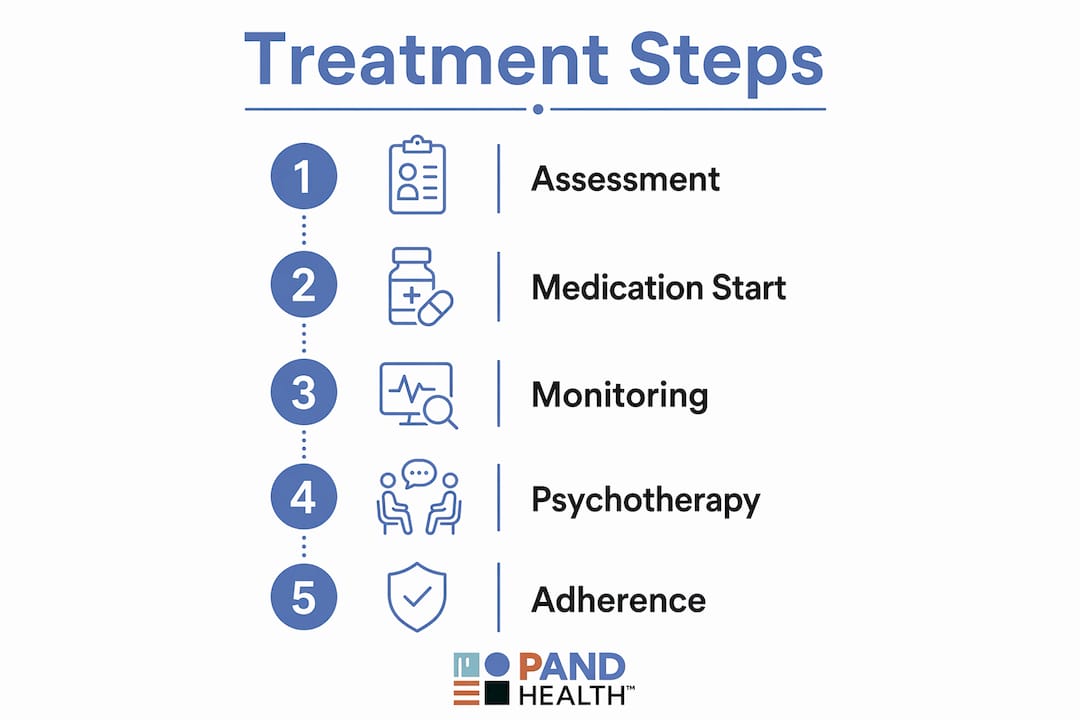
Treatment initiation follows a structured sequence. Skipping steps increases the risk of poor adherence and relapse.
Step 1: Comprehensive clinical assessment
The first appointment focuses on history, mental state examination, and collateral information from family members when available. Clinicians assess the duration, intensity, and behavioral consequences of the jealousy delusion. They also screen for substance use, neurological symptoms, and mood disorder features.
Step 2: Starting medication safely
Antipsychotics begin at the lowest effective dose. Starting low and increasing gradually reduces the chance of side effects that cause patients to stop treatment. This phase also builds the therapeutic alliance, which is critical because most patients with delusional jealousy do not believe they need treatment at all.

Step 3: Monitoring and adjusting
Regular follow-up appointments track both efficacy and tolerability. Clinicians watch for metabolic side effects with second-generation antipsychotics, including weight gain and blood glucose changes. Dose adjustments happen based on clinical response, not on a fixed schedule.
The table below summarizes the core management phases:
| Phase | Action | Timeline |
|---|---|---|
| Assessment | Full history, mental state exam, rule out secondary causes | Week 1 |
| Initiation | Start low-dose antipsychotic, establish therapeutic alliance | Weeks 1–2 |
| Titration | Gradual dose increase, monitor side effects | Weeks 2–6 |
| Consolidation | Add CBT and family therapy, assess symptom response | Months 2–6 |
| Maintenance | Continue medication, relapse prevention planning | 1–2 years post remission |
Step 4: Incorporating psychotherapy and family education
CBT sessions begin once the patient is stable enough to engage. Family education runs in parallel. Partners and family members learn how the condition works, how to respond to accusations without reinforcing the delusion, and how to protect their own mental health.
Step 5: Addressing adherence with LAI antipsychotics
When oral medication adherence is poor, Long-Acting Injectable (LAI) antipsychotics provide a reliable alternative. LAIs are administered every 2–4 weeks by a clinician, removing the daily decision to take medication. This approach is particularly useful when lack of insight is severe.
Pro Tip: Maintenance therapy lasting 1–2 years after remission is the clinical standard. Stopping medication early is the most common cause of relapse in delusional disorder.
How can partners and families support someone with delusional jealousy?
Family involvement is not optional in treating jealous delusions. It is a clinical necessity. Family therapy provides psychoeducation that equips loved ones to support the patient without accidentally reinforcing the delusion. That distinction matters enormously.
The most common mistake partners make is trying to argue against the delusion with evidence. This approach never works and often escalates the patient’s distress. Instead, family members learn to acknowledge the emotional pain behind the belief without confirming its content.
Practical strategies for partners and families include:
- Do not debate the delusion. Arguing with evidence reinforces the patient’s sense that no one understands them.
- Set clear behavioral limits. Jealous delusions can lead to surveillance, controlling behavior, or verbal aggression. Boundaries protect everyone.
- Attend family therapy sessions. Psychoeducation for partners reduces caregiver burnout and improves the patient’s treatment outcomes.
- Seek your own support. Living with someone experiencing paranoid jealousy is genuinely distressing. Individual therapy or support groups for family members are appropriate and necessary.
- Know when to call for help. If the patient becomes threatening or violent, contact a mental health crisis line or emergency services immediately.
“The goal for families is not to fix the delusion. The goal is to stay connected to the person, maintain safety, and support the treatment process without losing themselves in it.”
Understanding how to respond to anger in close relationships can also help partners navigate the emotional intensity that jealous delusions generate.
Common challenges and how to overcome them during treatment
Treatment for delusional jealousy rarely runs smoothly. Knowing the most common obstacles in advance makes them easier to manage.
-
Poor insight and treatment resistance. Most patients with jealous delusions do not believe they are unwell. They seek treatment only under pressure from family or legal systems. Clinicians address this by focusing on the patient’s distress rather than the delusion itself. Reducing anxiety and improving sleep are goals the patient can accept, even when they reject the diagnosis.
-
Medication non-adherence. Patients who stop medication are at high risk of relapse. LAI antipsychotics solve this problem for many patients. For others, motivational interviewing techniques help build internal reasons to continue treatment.
-
Residual delusions despite treatment. Medication and psychotherapy rarely eliminate delusions completely. The realistic goal is reduced intensity, improved functioning, and better relationship stability. Clinicians who set this expectation early prevent patients and families from feeling that treatment has failed when the belief persists at a lower intensity.
-
Treatment-resistant cases. When standard antipsychotics produce insufficient response, clozapine is considered. Clozapine requires strict blood monitoring due to the risk of agranulocytosis, but it remains the most effective option for refractory delusional disorder.
-
Delayed help-seeking. Early intervention consistently produces better outcomes. Patients who receive treatment within the first year of symptom onset respond more fully than those who wait years before engaging with care.
Pro Tip: Building a strong therapeutic alliance before challenging the delusion directly is the most reliable way to keep a resistant patient engaged in treatment.
Key Takeaways
Effective delusional jealousy treatment requires accurate diagnosis, gradual antipsychotic titration, sustained psychotherapy, and active family involvement across a minimum of 1–2 years.
| Point | Details |
|---|---|
| Medication is first-line | Aripiprazole and risperidone are the primary pharmacological treatments, titrated slowly over 4–6 weeks. |
| Diagnosis determines treatment | Distinguishing delusional from obsessional jealousy and ruling out secondary causes shapes the entire care plan. |
| Functional goals over cure | Treatment aims to improve daily functioning and relationship stability, not to eliminate the delusion entirely. |
| Family involvement is clinical | Psychoeducation for partners reduces relapse risk and protects caregivers’ emotional health. |
| Maintenance therapy prevents relapse | Continuing medication for 1–2 years after remission is the evidence-based standard for preventing recurrence. |
What I have learned treating patients with jealousy delusions
The hardest part of this work is not the medication decisions. It is convincing a patient who is absolutely certain their partner is unfaithful that treatment is worth trying. I have seen patients sit across from me with years of “evidence” they have collected, completely convinced. The clinical instinct is to challenge that evidence. That instinct is almost always wrong.
What actually works is finding the suffering underneath the belief. Every patient with paranoid jealousy is in pain. They are terrified, hypervigilant, and exhausted. When you address that suffering directly, without touching the delusion, you create enough trust to keep them in treatment. And staying in treatment is what changes outcomes.
I also want to be honest about expectations. Functional recovery should be the expectation, not the exception. But that does not mean the delusion disappears. Many patients I have worked with continue to hold the belief at some level even after significant improvement. What changes is the intensity, the behavioral response, and the quality of life. A patient who was previously monitoring their partner’s phone every hour and making accusations daily can reach a point where they hold the thought but do not act on it. That is a meaningful clinical success.
The families who do best are the ones who come to treatment alongside the patient. They learn to stop debating, stop proving, and start supporting the person rather than fighting the belief. That shift is often harder than it sounds, especially after months or years of living with the emotional toll of jealous paranoia. But it is the shift that makes the most difference.
If you are in California and you are watching someone you love struggle with this, or if you are the one struggling, early intervention is the most powerful tool available. Do not wait for a crisis.
— eric
Pandhealth supports patients with delusional jealousy in Los Angeles
Pandhealth is a specialized mental health center in Los Angeles serving teens and young adults ages 13–35 who are experiencing thought disorders, including delusional disorder and early psychosis. The team uses the evidence-based California OnTrack coordinated specialty care model, combining psychiatry, medication management, CBT, cognitive remediation, and family psychoeducation into one coordinated plan.

If you or someone you care about is showing signs of jealous delusions or paranoid thinking, Pandhealth offers a structured path forward. The clinical team provides early psychosis evaluation and care tailored to each patient’s needs. You can also review the full range of conditions Pandhealth treats to find the right starting point. A free consultation is available to help you understand your options and take the first step toward care.
FAQ
What is the first-line medication for delusional jealousy?
Second-generation antipsychotics, specifically aripiprazole and risperidone, are the first-line pharmacological treatment. Doses are titrated gradually over 4–6 weeks to manage side effects and build patient trust.
How long does delusional jealousy treatment take?
Maintenance therapy is recommended for at least 1–2 years after symptom remission. Stopping medication earlier significantly increases the risk of relapse.
Can delusional jealousy be cured completely?
Treatment rarely eliminates the delusion entirely. The primary goal is improved daily functioning, reduced behavioral consequences, and greater relationship stability despite the persistence of the belief.
How is delusional jealousy different from obsessional jealousy?
Delusional jealousy involves a fixed, unshakable belief with no insight. Obsessional jealousy involves intrusive fears with at least partial recognition that the fears may be excessive. This distinction determines whether antipsychotics or SSRIs with CBT lead the treatment plan.
What should a partner do if someone has jealous delusions?
Partners should avoid arguing against the delusion with evidence, set clear behavioral limits, attend family therapy, and seek their own support. If the situation becomes unsafe, contacting a mental health crisis service is the appropriate step.